

Why Estimates Deserve More Than a Glance
Most people hand over their car keys, receive an estimate, and nod - often without reading past the total. That's understandable; automotive repair language can feel like a foreign dialect. But an itemized estimate is actually a straightforward document once you know what each section represents. Taking ten minutes to review it carefully can reveal errors, prompt useful questions, and occasionally identify charges that shouldn't be there.
This is especially relevant when insurance is involved. If your insurer is covering the repair, they'll typically review the estimate too - and understanding what's on it helps you advocate for your vehicle effectively. For context on where repair costs fit into your overall ownership picture, see everything that goes into the true annual cost of owning a car.
What you will need
How to Read Your Estimate Step by Step
Use the steps below to work through any repair estimate methodically. You don't need mechanical expertise - just a willingness to ask questions and verify the math.
Confirm the estimate is itemized and written
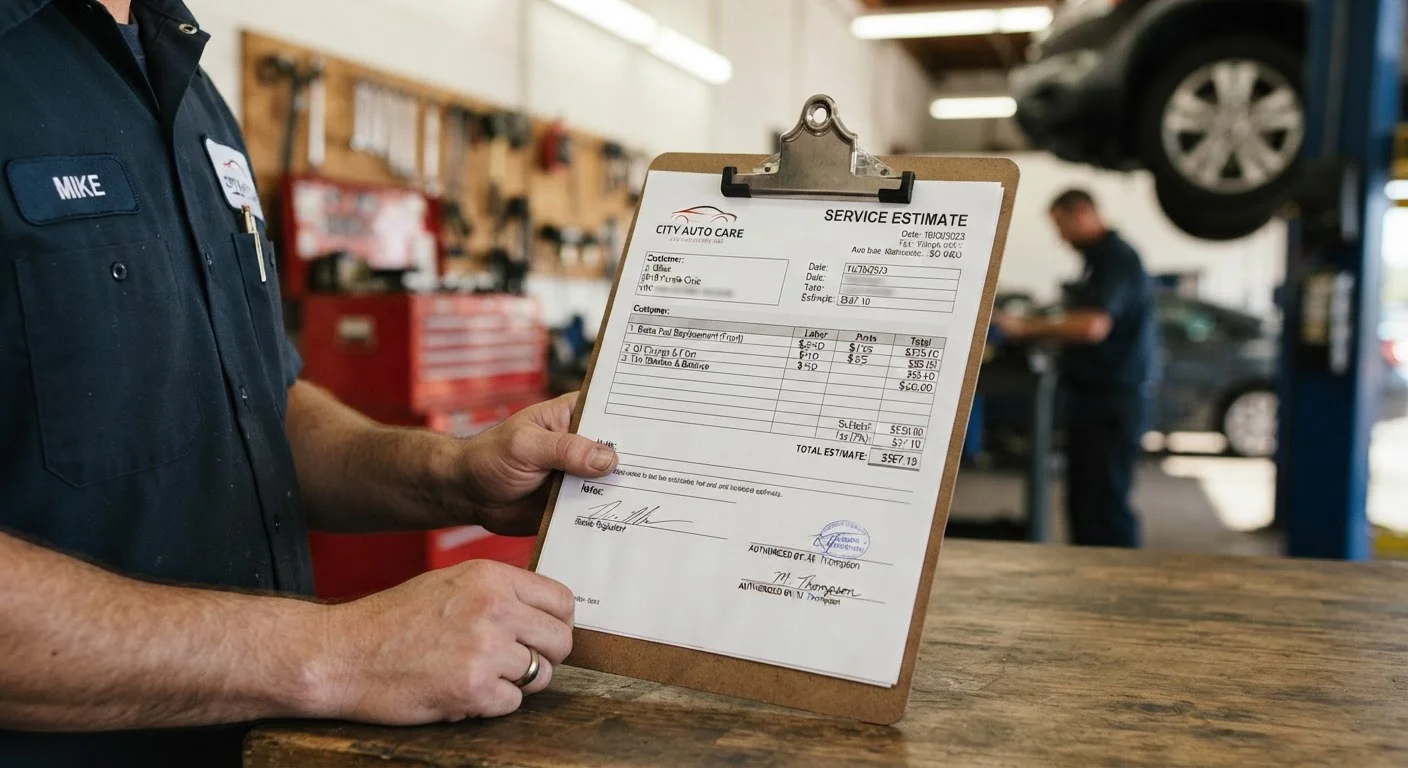
Before reviewing a single line, make sure you have a written, itemized estimate - not a handwritten note or a ballpark figure. It should list each repair separately, with associated parts and labor broken out. If the shop hands you a single lump sum, ask them to itemize it. This is a standard request and a legitimate shop will accommodate it.
Understand how labor is calculated
Labor charges are typically listed as a flat-rate hour figure multiplied by the shop's hourly labor rate (which varies by region and shop type). Flat-rate hours come from industry guides - published references that assign a standard time allowance to each type of repair, regardless of how long the actual job takes. A technician who finishes faster than the guide time still bills the full flat-rate; one who takes longer usually doesn't charge extra. This system is widespread and not inherently deceptive, but it's worth understanding.
The shop's posted labor rate (often displayed by law at the front desk) tells you the dollar-per-hour figure. Multiply it by the flat-rate hours to verify the labor subtotal on your estimate.
Decode the parts section
Parts listings typically include a part number, description, quantity, and unit price. Three sourcing categories matter here:
- OEM (Original Equipment Manufacturer): Made by or for the vehicle's original manufacturer. Generally the most expensive option and often required to maintain certain warranties.
- Aftermarket: Made by third-party manufacturers. Quality varies significantly - some aftermarket parts meet or exceed OEM standards; others do not. Price is usually lower.
- Remanufactured: Used cores that have been rebuilt to specification. Common for components like alternators and starters. Can be a cost-effective middle ground.
The estimate should specify which type of part is being used. If it doesn't, ask before you sign.
Review fees and miscellaneous charges
Near the bottom of most estimates, you'll find additional line items that aren't parts or labor:
- Shop supply fee: A percentage-based or flat charge covering rags, fluids, small hardware, and consumables. Some shops list this as a fixed amount; others calculate it as a percentage of the total.
- Hazardous waste/environmental fee: Covers proper disposal of oil, coolant, or other regulated materials.
- Diagnostic fee: Charged when a technician uses equipment or time to identify the problem before any repair begins. Ask upfront whether this fee is waived if you proceed with the recommended repair.
These charges are legitimate, but they should be disclosed on the estimate - not added to the final bill as surprises.
Check totals and tax
Add up the individual line items yourself and compare against the subtotal shown. Then verify that sales tax (where applicable to parts in your state) is calculated correctly. Labor is generally not taxed in most U.S. states, though this varies - a mismatch here is worth a polite question. Confirm the final total matches what you're expected to pay before authorizing any work.
Decide whether to seek a second estimate
For routine, low-cost jobs - oil changes, wiper replacements, air filters - a second estimate rarely justifies the time. But for repairs in the hundreds of dollars or involving major components (transmission, engine work, suspension overhaul), getting a second written estimate from another reputable shop is a reasonable and widely accepted practice. Compare both estimates line by line: parts type, labor hours, and fee structure.
Repair costs are one component of the broader true annual cost of owning a car, so understanding where each dollar goes helps you make better decisions over time.
Ask About Parts Before You Approve
Before signing off, ask whether the estimate uses OEM, aftermarket, or remanufactured parts - and whether substituting one for another would change the price or your warranty coverage. A good shop will explain the trade-offs without pressure. This is a routine question and any reputable mechanic expects it.
Authorize Work in Writing Only
Most states require a shop to get your written or documented verbal authorization before starting repairs. Never agree to work on the spot without reviewing a written estimate first. If the shop discovers additional problems mid-repair, they are generally required to contact you for approval before proceeding. Ask about this policy before dropping off your vehicle.
Not sure whether a repair is worth doing yourself? Our guide on why DIY car repairs go wrong covers where the line between safe home repairs and professional-only work typically falls.
Verbal Estimates Offer Little Protection
A rough number quoted over the phone carries no legal weight. Always request a written, itemized estimate before your car enters the shop. If a final bill comes in significantly higher than the written estimate without your prior approval, you have grounds to dispute the difference in most states.
The content on this site is for informational purposes only and is not a substitute for professional advice. Always consult a qualified professional for guidance specific to your situation.