

Our Verdict
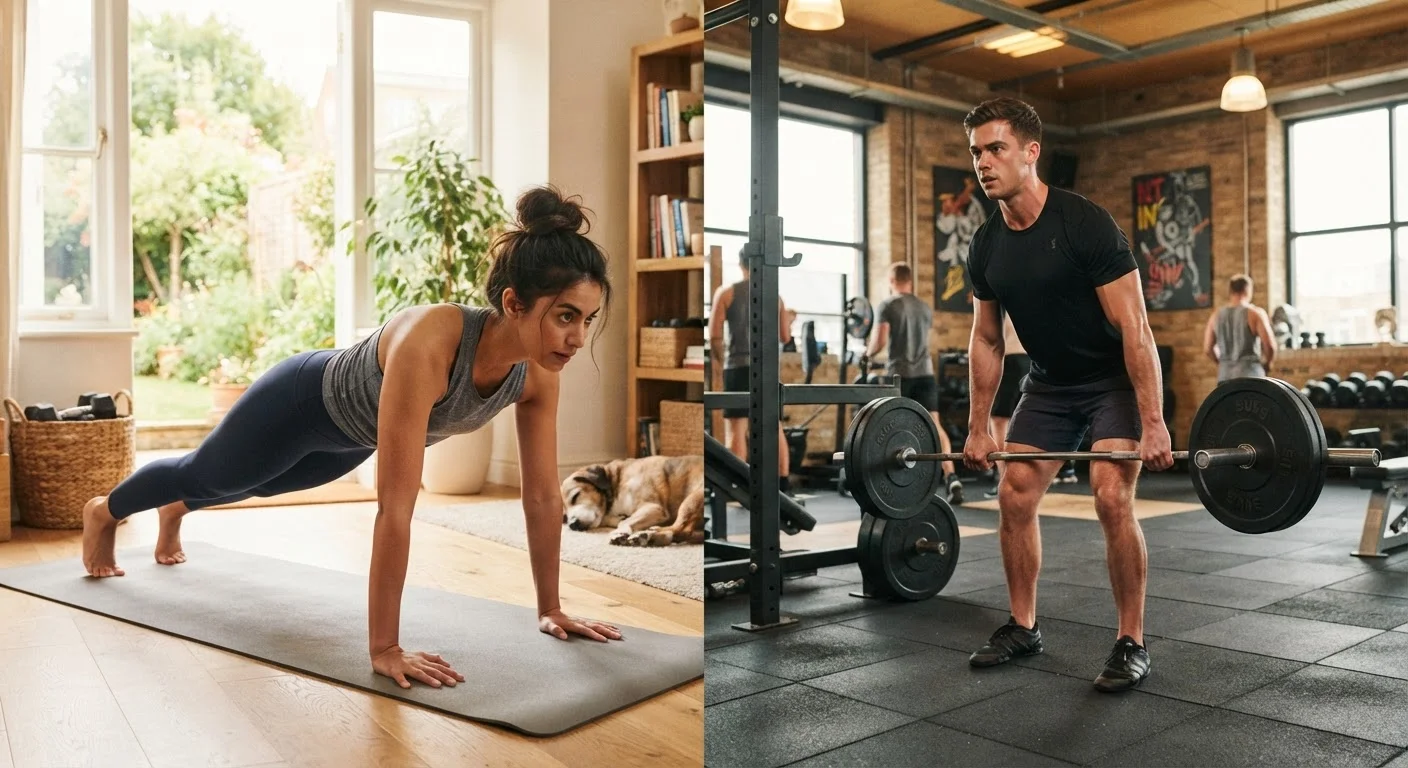
Home and gym workouts each offer genuine advantages that suit different people and circumstances. Home exercise wins on convenience, cost, and privacy; gyms win on equipment access, variety, and social motivation. Research consistently shows that the most effective workout is the one you'll actually do regularly.
A home setup tends to suit time-pressed, budget-conscious, or privacy-preferring individuals, while gyms are a stronger fit for those who thrive on structure, need specialized equipment, or benefit from professional coaching.
Why the Setting You Choose Actually Matters
Where you exercise shapes more than convenience - it influences how often you show up, what exercises you can perform, and whether the habit sticks. Physical activity guidelines from the U.S. Department of Health and Human Services recommend at least 150 minutes of moderate-intensity aerobic activity per week for most adults, plus muscle-strengthening activities on two or more days. Meeting that target is possible in either a home or gym environment, but each comes with real trade-offs worth understanding before you commit.
Rather than declaring a winner, this article lays out the concrete advantages and drawbacks of each setting so you can match your choice to your actual life - not an idealized version of it. For a broader look at how workout type affects your body, see our overview of cardio vs. strength training.
The Real Drawbacks to Consider
Every environment has friction points. Understanding these before you invest time or money prevents frustration down the road.
~67%
Gym members who rarely or never use their membership
Industry analyses suggest a significant majority of gym memberships go underutilized, highlighting the gap between intention and follow-through.
150 min
Weekly moderate activity recommended for adults
According to the U.S. Department of Health and Human Services Physical Activity Guidelines for Americans, this target is achievable in either a home or gym environment.
2x
Muscle-strengthening days recommended per week
The same federal guidelines recommend strength-training at least twice weekly - a goal that can be met with bodyweight, resistance bands, or gym-based free weights.
What the Evidence Says About Adherence
Exercise adherence - sticking with a routine over months and years - is where most fitness plans break down. Studies published in journals such as the American Journal of Preventive Medicine have found that perceived barriers like travel time and scheduling conflicts are among the most commonly cited reasons adults drop regular exercise. Home workouts remove several of those barriers entirely.
That said, social accountability and environmental cues also matter. Some exercisers perform better when a dedicated space - the gym - signals "workout mode" in a way a living room simply doesn't. Consistency, not intensity, is what drives lasting fitness gains, so the setting that helps you show up most reliably wins, regardless of how it compares on paper.
A Hybrid Approach Is a Valid Strategy
Many exercisers combine both settings effectively - using home workouts for shorter weekday sessions and the gym for longer, equipment-dependent training on weekends. There is no rule requiring an exclusive commitment to one environment. If access, cost, or motivation varies by week, mixing both can sustain a higher overall activity level than rigidly sticking to one option.
Making a Practical Decision
A few questions can sharpen your thinking:
- Budget: Can you absorb a monthly membership fee without stress, or would that pressure undermine motivation?
- Space: Do you have a dedicated area at home, or would clutter and interruptions derail sessions?
- Goals: Bodyweight strength, yoga, and cardio translate well to home settings. Heavy compound lifting and sports-specific training typically benefit from gym access.
- Schedule: If your free time is fragmented, eliminating a commute may be the single biggest factor in how often you actually exercise.
- Social preference: Some people are energized by a busy gym floor; others find it distracting or intimidating.
If sore muscles after new workouts are making you hesitant about either option, our guide to muscle soreness myths separates fact from folklore.
This article is for general informational and educational purposes only and does not constitute medical or professional fitness advice. Consult a qualified healthcare provider or certified fitness professional before beginning any new exercise program, especially if you have an existing health condition.
The content on this site is for informational purposes only and is not a substitute for professional advice. Always consult a qualified professional for guidance specific to your situation.