

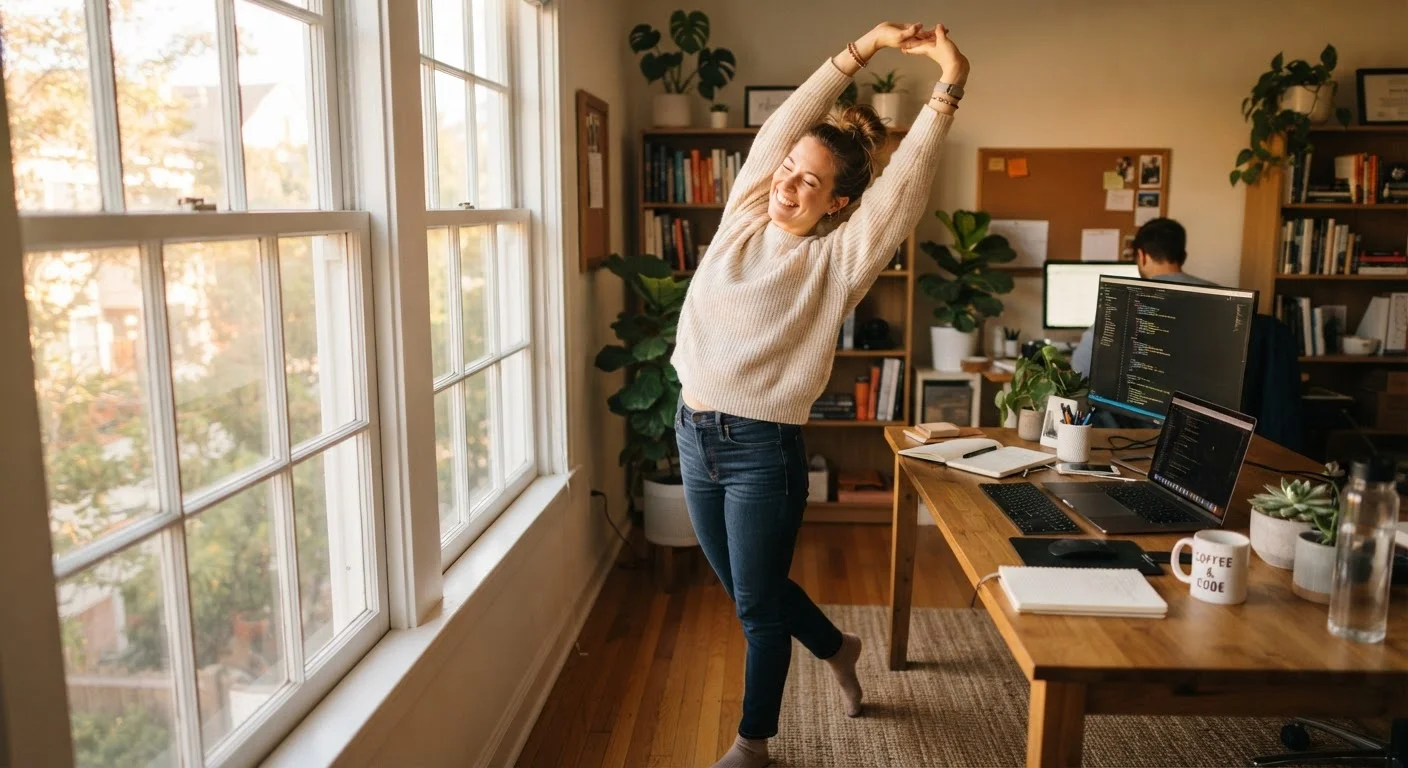
What Is a Movement Snack?
The term "movement snack" borrows its logic from nutrition: just as small, frequent meals can sustain energy across a day, small, frequent bursts of movement can contribute to your body's activity needs. A movement snack is typically one to five minutes of intentional physical effort - enough to raise your heart rate slightly, engage your muscles, or simply interrupt prolonged stillness.
This approach has gained attention partly because of how sedentary modern life has become. Many Americans spend six to eight hours or more sitting each day, whether at a desk, in a vehicle, or in front of a screen. Research suggests that long, unbroken periods of sitting are associated with adverse health outcomes independently of how much structured exercise a person gets - meaning even people who exercise regularly can be affected by excessive sitting the rest of the day.
Movement snacking directly addresses this gap by distributing activity throughout waking hours. For a deeper look at what types of activity count toward your health, broader definitions of physical activity are worth understanding.
6-8 hrs
Average daily sitting time for many U.S. adults
Estimates from national health surveys and occupational research suggest many working-age Americans spend the majority of their waking hours sedentary.
~1 min
Minimum bout length shown to benefit blood sugar
Research published in exercise physiology journals has found that activity breaks as short as one minute can produce measurable improvements in postmeal glucose regulation.
150 min/wk
Recommended moderate aerobic activity for adults
U.S. Physical Activity Guidelines for Americans set 150 minutes of moderate-intensity aerobic activity per week as a key benchmark for health maintenance.
What the Research Shows
The science supporting brief exercise bouts is growing. Studies published in journals focused on exercise physiology and public health have found that short activity breaks - even as brief as one minute - can improve blood glucose regulation, lower blood pressure in the short term, and support cardiovascular function when performed consistently across the day. A 2022 study in the Journal of Physiology found that "exercise snacks" performed before meals helped improve postmeal blood sugar levels in sedentary adults.
Research has also shown benefits for muscle strength and physical capacity. A study from McMaster University found that brief stair-climbing sessions repeated across a day produced meaningful improvements in cardiorespiratory fitness over several weeks in previously inactive participants.
It's worth noting that most of this research involves small sample sizes and short durations, and scientists continue to refine their understanding of optimal frequency, intensity, and duration. Still, the direction of evidence is consistent: more movement, distributed across the day, supports health more effectively than sitting with one isolated burst of exercise.
“Accumulating physical activity in short bouts throughout the day is a viable strategy for improving health, particularly for those who cannot achieve sustained exercise sessions.”
— U.S. Physical Activity Guidelines Advisory Committee, Scientific advisory body to the U.S. Department of Health and Human Services
How to Build Movement Snacks Into Your Day
The practical appeal of movement snacking is its flexibility. You don't need a gym, equipment, or a block of free time. Here are evidence-informed strategies for weaving activity breaks into a typical day:
- Pair movement with existing habits. Stand and walk during phone calls, do calf raises while making coffee, or take a short walk immediately after lunch. Linking activity to existing routines reduces the effort required to remember and start.
- Use transitions as triggers. Every time you switch tasks, move for two minutes. This works especially well for remote workers or people in desk-based roles.
- Set gentle reminders. A simple phone alarm or app notification every 45 to 60 minutes can prompt you to get up and move. Over time, the habit often becomes self-sustaining.
- Start small and build. If you're returning to activity after a break, even 60-second bouts are meaningful. Easing back into movement gradually reduces injury risk and builds confidence.
For people managing irregular schedules, movement snacking fits naturally into unpredictable days. See how to build a movement routine with an unpredictable schedule for broader strategies.
Make Movement Snacks Feel Natural
The most effective movement snacks are ones that don't feel like obligations. Try activities you actually enjoy or that serve a double purpose - a walk to refill your water bottle, stretching while watching television, or marching in place during a video call. When movement is woven into moments you're already experiencing, adherence tends to be much higher.
Movement Snacking and the Bigger Picture
Movement snacking works best when viewed as part of a broader commitment to an active lifestyle, not a workaround that eliminates the need for structured exercise. Current public health guidelines in the United States recommend that adults get at least 150 minutes of moderate-intensity aerobic activity per week, along with muscle-strengthening activities on two or more days. Movement snacks contribute to that total, but longer sessions still offer benefits - including deeper cardiovascular adaptation and social engagement through group activity - that brief bouts may not fully replicate.
The mental health dimension is also worth noting. Physical activity has well-documented effects on mood and stress, and some research suggests that frequent, smaller doses of movement may help sustain those benefits across the day rather than concentrating them in a single session. For those managing stress, anxiety, or fatigue, building in movement breaks may support everyday emotional well-being in practical, accessible ways.
If you're interested in understanding why repeated, moderate effort tends to produce better long-term results than occasional intense bursts, the principle of consistency over intensity is directly relevant here - and movement snacking is one of its clearest expressions.
This article is for general informational purposes only and is not a substitute for professional medical advice. If you have a health condition or concerns about starting physical activity, please consult a qualified healthcare provider.
Frequently Asked Questions
There's no single prescribed number. Many researchers studying activity breaks suggest interrupting prolonged sitting every 30 to 60 minutes. Even two or three brief movement breaks per day is a meaningful improvement over unbroken sedentary time. Aim for what's sustainable and gradually build from there.
Movement snacking can provide real health benefits, but for most adults it works best as a complement to, rather than a full replacement for, structured exercise. Public health guidelines still recommend both aerobic and muscle-strengthening activity weekly. That said, movement snacks are far better than no movement at all.
Almost any brief physical activity qualifies - a brisk walk around the block, a set of bodyweight squats, climbing a flight of stairs, or a few minutes of stretching. The key is that it gets your body moving and breaks a period of sitting or inactivity. See <a href="/health-wellness/fitness-movement/what-counts-as-physical-activity-a-plain-english-breakdown">what counts as physical activity</a> for a broader breakdown.
It can be, with appropriate modifications. Low-impact options like seated marching, gentle range-of-motion movements, or slow walks are accessible for many people with joint concerns. Anyone managing a chronic condition or injury should consult a healthcare professional before starting a new activity routine.
Early evidence suggests that even brief activity bouts can improve mood and reduce fatigue in the short term. The relationship between physical activity and mental well-being is well established more broadly - movement snacking may offer a low-barrier way to access some of those benefits throughout the day.
The content on this site is for informational purposes only and is not a substitute for professional advice. Always consult a qualified professional for guidance specific to your situation.