

Why Sleep Hygiene Is a Day-Long Practice
Most people associate sleep hygiene with what happens in the hour before bed - dimming lights, putting down the phone, maybe a cup of herbal tea. But sleep researchers consistently find that the conditions for good sleep are built across the entire waking day. The choices you make at 7 a.m. can influence how readily your body transitions into rest 15 hours later.
Sleep hygiene refers to a set of behavioral and environmental practices that support consistent, restorative sleep. Unlike sleep medications or clinical interventions, these are habits - adjustable, low-cost, and within most people's control. The challenge is that their effects are cumulative and often invisible until they compound over weeks.
This article outlines evidence-backed practices drawn from sleep science and public health guidance. It is intended as general health information, not a substitute for medical advice. If you experience persistent insomnia, excessive daytime sleepiness, or other significant sleep disruptions, consulting a licensed healthcare provider is the appropriate next step.
Core Habits That Shape Sleep Quality
The following practices represent areas where research most consistently points to meaningful impact on sleep. None require expensive equipment or drastic lifestyle changes - most involve timing and consistency.
Anchor your schedule with a consistent wake time every day
Your circadian rhythm - the internal biological clock regulating sleep and wakefulness - is most powerfully cued by a fixed morning wake time. Irregular wake times, particularly sleeping in significantly on weekends, can shift your circadian phase and make falling asleep on subsequent nights harder. Stability in the morning creates stability at night.
Get bright light exposure within an hour of waking
Morning light - particularly natural sunlight - is the primary zeitgeber (time-giver) for the human circadian system. Exposure early in the day helps synchronize your internal clock, promoting earlier and more reliable sleep onset at night. This effect is strongest from natural outdoor light but can be supported by bright indoor lighting when outdoor access is limited.
Cut off caffeine consumption by early-to-mid afternoon
Caffeine works by blocking adenosine receptors - adenosine is the chemical that builds sleep pressure across the day. With a half-life of approximately five to seven hours in most adults, caffeine consumed in the afternoon may still be pharmacologically active at bedtime, reducing sleep depth and quality even when it doesn't appear to delay falling asleep.
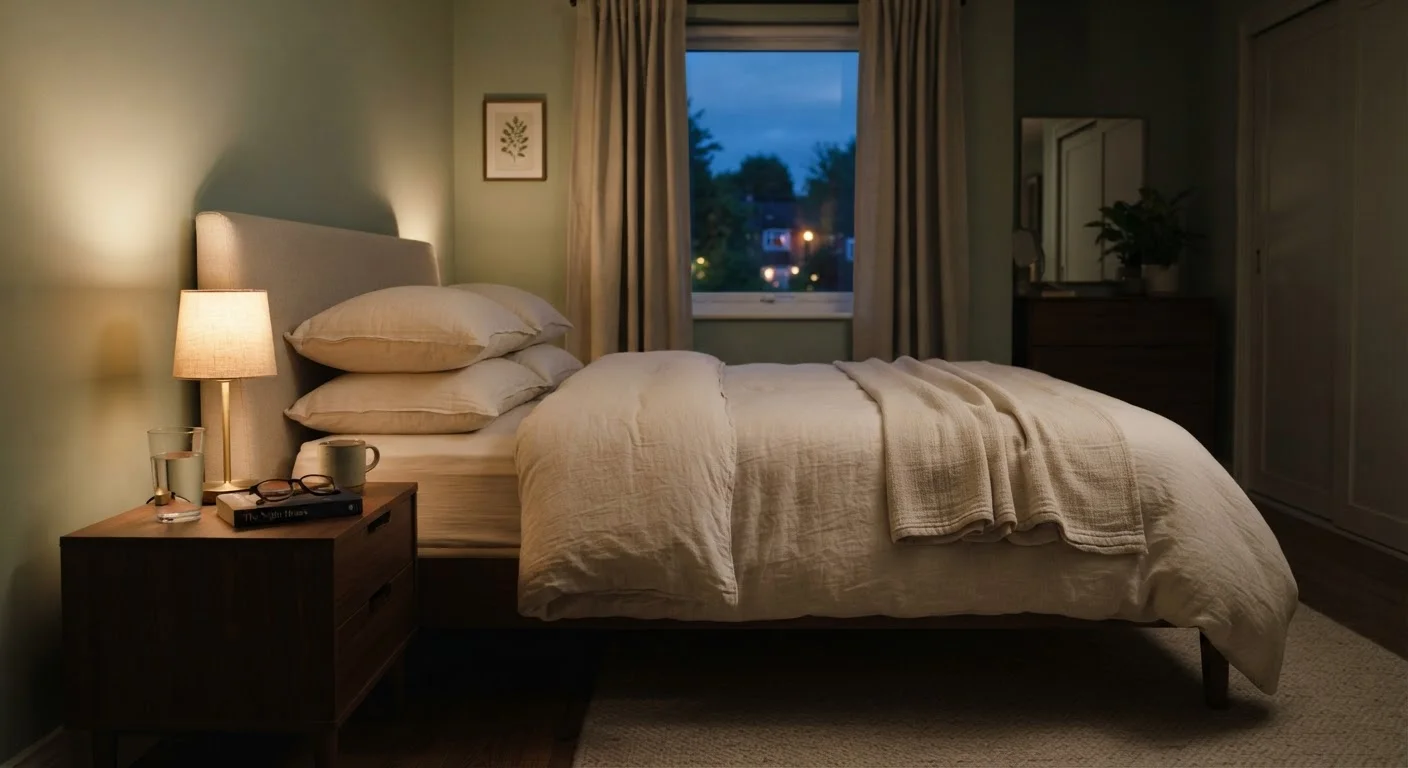
Keep your bedroom cool, dark, and quiet
Core body temperature naturally drops during sleep initiation, and a cooler ambient room temperature supports this process. Light - even small amounts - can signal wakefulness through photoreceptors in the eye. Noise disruptions, even without full awakening, fragment sleep architecture and reduce restorative slow-wave and REM stages.
Reserve the bed primarily for sleep
The brain forms strong associations between environments and behaviors. Using the bed for work, scrolling, or watching content trains the brain to associate that space with alertness rather than sleep - a concept called stimulus control in behavioral sleep medicine. Strengthening the bed-sleep association is one of the most durable behavioral tools available.
1 in 3
U.S. adults not getting enough sleep
According to the CDC, approximately one-third of American adults report regularly sleeping less than the recommended seven hours per night.
5-7 hrs
Caffeine half-life in most adults
Research on caffeine pharmacokinetics indicates the half-life varies widely between individuals but averages five to seven hours, meaning afternoon intake routinely affects nighttime sleep.
Screens, Stress, and the Wind-Down Window
Two of the most studied - and most commonly undermined - aspects of sleep hygiene are evening screen use and pre-sleep stress management. Blue-wavelength light emitted by phones, tablets, and televisions can suppress melatonin secretion and delay sleep onset. The issue isn't screens themselves, but how and when they're used. For a deeper look at the relationship between device habits and rest, see our article on how screen time habits interact with stress and sleep.
Psychological arousal - worry, rumination, to-do list rehearsal - is another major barrier to sleep onset. Structured wind-down practices such as journaling, light reading, or brief breathing exercises can help lower cognitive activation before bed. Research on mindfulness-based approaches also shows promise; our piece on mindfulness and the evidence behind it separates well-supported practices from overstated claims.
Build a Simple Wind-Down Routine
A 20-30 minute pre-sleep routine signals to the brain that it's time to transition toward rest. This might include dimming overhead lights, light stretching, reading physical print, or brief journaling. Consistency matters more than any specific activity - doing the same sequence each night builds a conditioned cue for sleep. For ideas on integrating this into a broader self-care rhythm, see our guide on building a weekly mental health check-in routine.
This article is for general informational purposes only and does not constitute medical advice. Speak with a qualified healthcare professional about any persistent sleep concerns.
The content on this site is for informational purposes only and is not a substitute for professional advice. Always consult a qualified professional for guidance specific to your situation.