

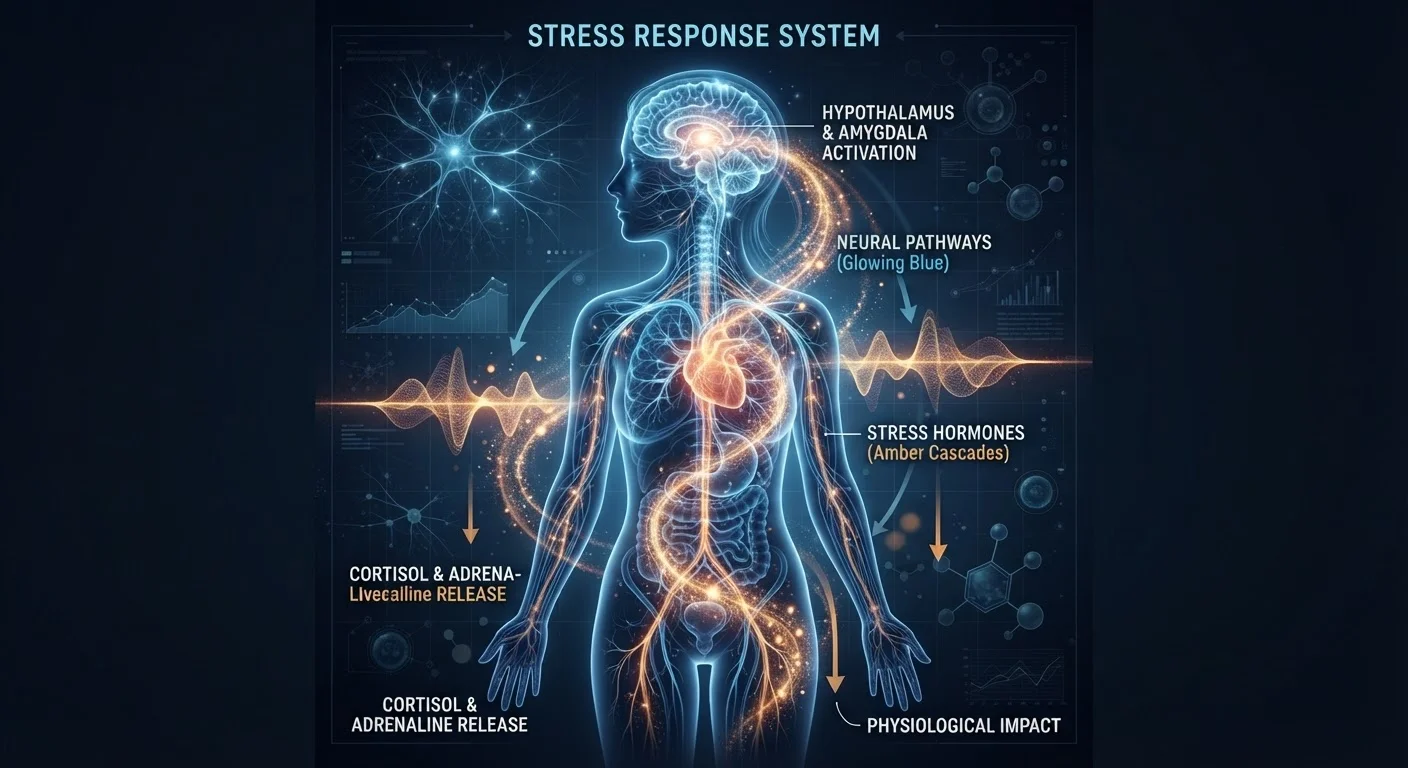
How the Body Responds to Stress: The Basics
When the brain perceives a threat, the hypothalamus triggers a rapid hormonal cascade. The adrenal glands release adrenaline (epinephrine) and, shortly after, cortisol. Heart rate rises, blood flow redirects to major muscle groups, digestion slows, and the immune system reconfigures. This sequence - commonly called the fight-or-flight response - is well-understood and, in short doses, genuinely adaptive.
The problem arises when this system stays switched on. Modern stressors - financial pressure, relationship conflict, workplace demands, chronic illness - do not resolve the way a physical threat does. The body's alarm system keeps firing without meaningful recovery, and that sustained activation is where documented health consequences begin.
Acute vs. Chronic: An Important Distinction
Not all stress is harmful. Acute stress - the kind triggered by a job interview or a near-miss while driving - is a normal, functional response. The health concerns documented in research are primarily associated with chronic, unresolved stress. Recognizing this distinction helps avoid the counterproductive belief that any stress is dangerous, which can itself become a source of anxiety.
What Research Has Established About Cortisol and Disease Risk
Cortisol is essential for survival, but chronically elevated levels interfere with a wide range of normal processes. Published research in psychoneuroimmunology - the field studying mind-body interactions - has documented several consistent associations:
- Cardiovascular system: Chronic stress is associated with higher rates of hypertension, arterial inflammation, and increased risk of cardiac events. A large body of prospective research identifies it as an independent cardiovascular risk factor.
- Immune function: Extended cortisol exposure suppresses lymphocyte activity (a key class of immune cells) while promoting inflammatory cytokines - a pattern linked to slower wound healing and greater susceptibility to infection.
- Metabolism: Cortisol promotes glucose release and can contribute to insulin resistance over time, increasing metabolic disease risk.
- Mental health: Dysregulation of the HPA axis is implicated in the neurobiology of depression and anxiety disorders, though the causal pathways are complex and not fully resolved.
77%
Adults reporting physical symptoms of stress
According to the American Psychological Association's Stress in America surveys, a large majority of adults regularly experience physical symptoms they attribute to stress.
2-3×
Elevated inflammatory marker risk under chronic stress
Research published in psychoneuroimmunology literature finds chronically stressed individuals can show two to three times higher levels of pro-inflammatory cytokines compared to low-stress controls.
40%
Increased cardiovascular event risk linked to work stress
A meta-analysis of occupational stress studies published in The Lancet found that high job strain was associated with approximately a 23-40% increased risk of coronary heart disease events.
The Brain Under Pressure
Neuroimaging studies have added important depth to our understanding. The hippocampus, which supports memory consolidation, and the prefrontal cortex, responsible for reasoning and impulse regulation, appear particularly sensitive to sustained glucocorticoid exposure. Animal studies and some human research suggest that chronic stress can reduce synaptic density in these regions.
At the same time, the amygdala - the brain's threat-detection center - may become more reactive, making individuals more sensitive to perceived danger. This partly explains why chronically stressed people often report heightened anxiety and difficulty concentrating. Importantly, neuroplasticity means many of these changes are not necessarily permanent; research supports that intervention can promote recovery.
“The brain and the body are not separate. Stress activates biological processes that have real, measurable consequences - and that also means the interventions we use to reduce stress have real, measurable benefits.”
— Dr. Bruce McEwen, Neuroendocrinologist and researcher on allostatic load, Rockefeller University
Stress, Inflammation, and the Gut
One of the more active areas of current research involves the gut-brain axis - the bidirectional communication between the central nervous system and the gastrointestinal tract. Chronic stress alters gut motility, intestinal permeability, and the composition of the microbiome. These changes may contribute to symptoms like irritable bowel syndrome and can feed back into mood regulation, since a substantial portion of the body's serotonin is produced in the gut.
Systemic inflammation is another key mechanism. Chronic stress promotes the release of pro-inflammatory cytokines - signaling proteins that, in excess, are associated with a broad range of conditions from metabolic syndrome to autoimmune flares. This inflammatory link helps explain why stress is found as a contributing factor across seemingly unrelated health outcomes.
What Evidence-Based Tools Can Do
Understanding the biology of stress is not just academic - it points directly toward interventions that work at the same physiological level. Research supports that structured approaches such as CBT and mindfulness-based stress reduction can reduce cortisol reactivity and inflammatory markers in measurable ways. Similarly, regular physical activity has strong evidence behind its role in regulating the HPA axis and supporting mood.
Habits that seem behavioral - sleep consistency, managing screen time, social connection - also produce downstream physiological effects. For readers looking to move from understanding to action, building a personal stress-management toolkit is a practical next step.
Track Patterns, Not Just Moments
Rather than reacting to individual stressful events, try keeping a brief journal of when you feel most depleted - physically and mentally. Over two to three weeks, patterns often emerge that point to specific, addressable stressors. This kind of self-monitoring is a foundational step in evidence-based stress management and supports more targeted intervention choices.
This article is for general informational and educational purposes only and is not a substitute for professional medical advice, diagnosis, or treatment. If you are experiencing symptoms you believe may be related to chronic stress, consult a qualified healthcare professional.
Frequently Asked Questions
Research shows that chronic stress does not directly "cause" disease in a simple one-to-one way, but it is a significant contributing factor. Sustained elevated cortisol and inflammatory markers are associated with increased risk of cardiovascular disease, weakened immune function, and metabolic disorders. The relationship is well-established in epidemiological and clinical research, though individual risk depends on many factors.
Studies using neuroimaging have found that prolonged stress is associated with structural changes in the hippocampus and prefrontal cortex - areas involved in memory and decision-making. Chronically elevated glucocorticoids (stress hormones) appear to reduce neuronal connectivity in these regions. However, the brain shows considerable plasticity, and many of these changes may be reversible with appropriate intervention.
Acute stress is a short-term response to a specific stressor - it activates the body's resources and resolves once the threat passes. Chronic stress persists over time without adequate recovery and is associated with cumulative wear on body systems. Most of the documented health harms of stress are linked to the chronic form.
Evidence consistently shows that chronic stress suppresses certain immune functions while simultaneously promoting systemic inflammation. This dual effect can make individuals more susceptible to infections and may worsen inflammatory conditions. Short-term acute stress, by contrast, can temporarily enhance certain immune responses.
Multiple well-studied approaches - including cognitive behavioral therapy (CBT), mindfulness-based stress reduction (MBSR), regular aerobic exercise, and adequate sleep - have demonstrated measurable reductions in cortisol and inflammatory markers in research settings. No single approach works for everyone; individualized strategies are most effective.
The content on this site is for informational purposes only and is not a substitute for professional advice. Always consult a qualified professional for guidance specific to your situation.