

Why Fiber Keeps Getting Overlooked
In a nutrition landscape crowded with protein powders, keto plans, and vitamin supplements, fiber rarely grabs headlines. Yet public health data consistently shows it's one of the most significant gaps in the American diet. The average U.S. adult takes in around 15 grams of fiber per day - roughly half of what dietary guidelines recommend. This shortfall isn't trivial.
Part of the problem is structural. Highly processed foods, which dominate much of the American food supply, have fiber stripped away during manufacturing. White bread, packaged snacks, and fast food are all low-fiber by design. As ultra-processed options have grown as a share of daily calories, fiber intake has declined accordingly.
Even health-conscious eaters can fall into this trap - choosing foods that appear wholesome but are actually fiber-poor. Understanding what fiber is and why it matters is the first step toward changing the pattern.
~15g
Average daily fiber intake for U.S. adults
The Dietary Guidelines for Americans report that most adults consume roughly 15 grams of fiber per day, compared to recommended targets of 25-38 grams.
95%
Americans falling short of fiber recommendations
According to analysis cited in nutrition research literature, an estimated 95% of American adults and children do not meet recommended fiber intake levels.
7-15g
Fiber per serving of cooked legumes
Cooked lentils, black beans, and chickpeas consistently rank among the most fiber-dense commonly eaten foods, providing 7-15 grams per cup depending on variety.
What Fiber Actually Does in the Body
Fiber's benefits reach well beyond preventing constipation, though that function alone is clinically significant. Soluble fiber - found in oats, apples, beans, and flaxseed - slows digestion and helps blunt post-meal blood sugar spikes. It also binds to bile acids in the gut, a process that reduces circulating LDL cholesterol over time. These mechanisms help explain why higher fiber intake is associated in observational research with lower rates of type 2 diabetes and cardiovascular disease.
Insoluble fiber, abundant in whole wheat, vegetables, and nuts, speeds transit through the colon, reducing the time potentially harmful compounds spend in contact with intestinal walls. This is one reason researchers continue to investigate fiber's relationship to colorectal health.
Fiber also serves as a primary fuel source for beneficial gut bacteria. When these microbes ferment fiber, they produce short-chain fatty acids that support the intestinal lining, modulate immune response, and may influence inflammation throughout the body. Gut microbiome research is still evolving, but the link between fiber intake and a diverse, healthy microbiome is well-established. Adequate hydration complements fiber's digestive effects by keeping stool moving smoothly.
“Dietary fiber is one of the most consistently protective dietary components in the research literature - yet it remains one of the most under-consumed. Simply eating more whole plant foods can move the needle significantly for most people.”
— Dr. David Katz, Founding director of Yale University's Yale-Griffin Prevention Research Center and specialist in lifestyle medicine
Practical Ways to Increase Daily Fiber
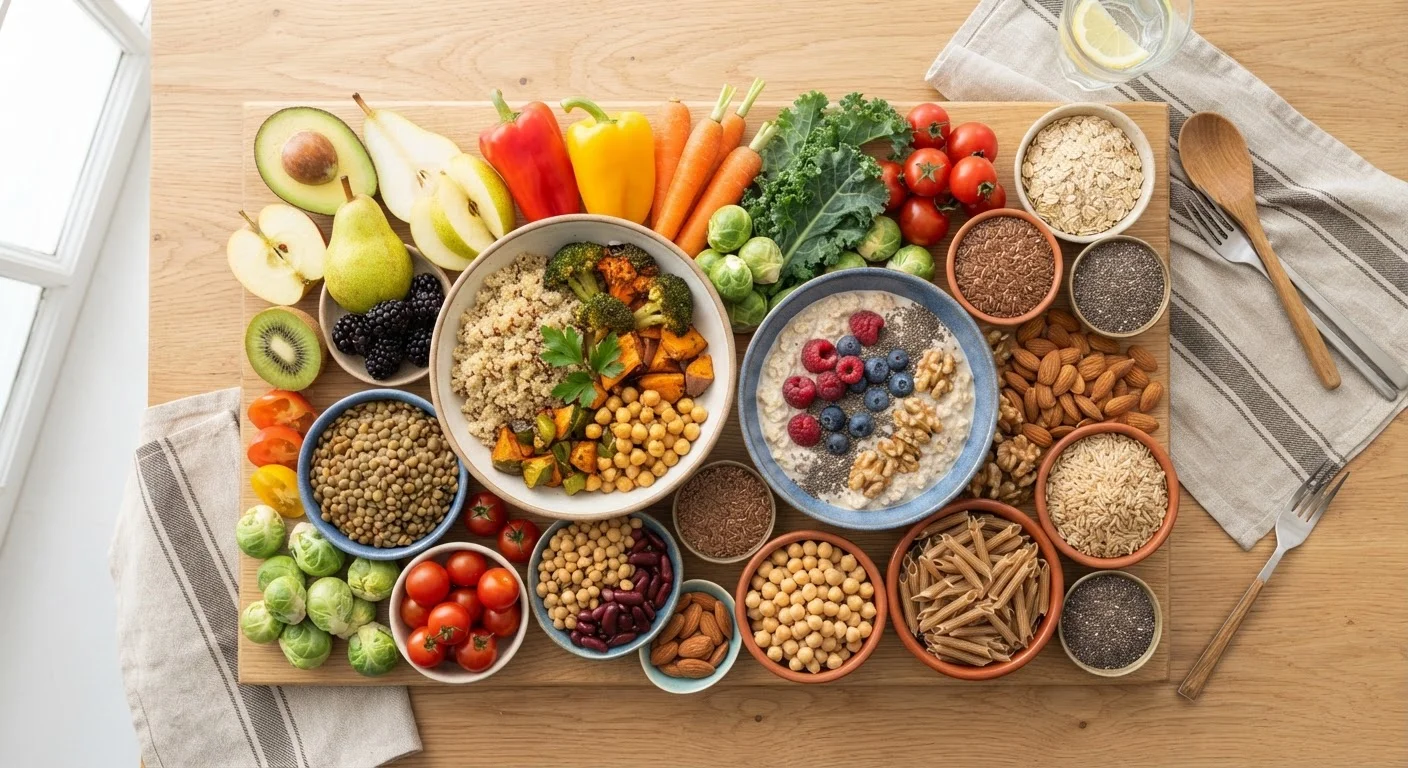
Closing the fiber gap doesn't require a dietary overhaul - it rewards small, consistent upgrades. Legumes are among the most fiber-dense foods available: a single cup of cooked lentils contains roughly 15 grams. Adding beans to soups, salads, or grain bowls is one of the most efficient ways to boost intake. Whole grains offer another straightforward swap - choosing oats over refined cereal, or whole-wheat pasta over white, meaningfully increases the fiber in a meal.
Vegetables and fruits with their skins intact contribute meaningfully too. A medium pear provides around 5-6 grams; a cup of cooked broccoli adds about 5 grams. Chia seeds and flaxseed are concentrated sources that can be stirred into yogurt or smoothies without significantly altering flavor.
Build Up Fiber Gradually
If your current diet is low in fiber, resist the urge to add large amounts all at once. Increasing intake by 3-5 grams per week gives your gut microbiome and digestive system time to adjust. Pair increases with extra water - fiber absorbs fluid, and adequate hydration helps it function effectively.
It's worth noting that increasing fiber too quickly can cause temporary digestive discomfort - gas and bloating in particular. Nutrition guidance broadly recommends a gradual increase over several weeks alongside consistent water intake. For those with irritable bowel syndrome, Crohn's disease, or other gastrointestinal conditions, individual tolerance varies, and consulting a healthcare provider before major changes is advisable. This article provides general information and is not a substitute for personalized medical guidance.
For a broader look at common nutritional blind spots, see what the evidence says about persistent nutrition myths.
This article is for general informational and educational purposes only and does not constitute medical or nutritional advice. Consult a qualified healthcare professional for guidance specific to your health needs.
Frequently Asked Questions
Dietary guidelines generally recommend 25 grams daily for adult women and 38 grams for adult men, with needs shifting slightly as people age. Most American adults currently average around 15 grams per day - well below these targets. Getting fiber from whole foods rather than supplements is generally the preferred approach.
Soluble fiber dissolves in water and forms a gel in the digestive tract, which helps slow digestion, stabilize blood sugar, and lower LDL cholesterol. Insoluble fiber does not dissolve and adds bulk to stool, supporting regularity and preventing constipation. Most fiber-rich foods contain both types in varying proportions.
Increasing fiber intake too quickly can cause gas, bloating, and cramping, especially if your digestive system isn't accustomed to it. Adding fiber gradually over several weeks - alongside adequate fluid intake - typically minimizes these effects. People with certain gastrointestinal conditions should consult a healthcare provider before significantly altering their fiber intake.
Fiber supplements can help some people close the gap when diet alone falls short, but they generally don't replicate the full package of vitamins, minerals, and phytonutrients that come with whole plant foods. Most nutrition experts and clinical guidelines favor food-first approaches. A healthcare provider can help determine whether a supplement is appropriate for your situation.
Legumes - including lentils, black beans, and chickpeas - rank among the densest fiber sources per serving. Other high-fiber options include oats, barley, chia seeds, avocados, pears, broccoli, and whole-grain products. Even small swaps, like choosing whole-grain bread over white or snacking on an apple instead of crackers, can meaningfully add up.
The content on this site is for informational purposes only and is not a substitute for professional advice. Always consult a qualified professional for guidance specific to your situation.