

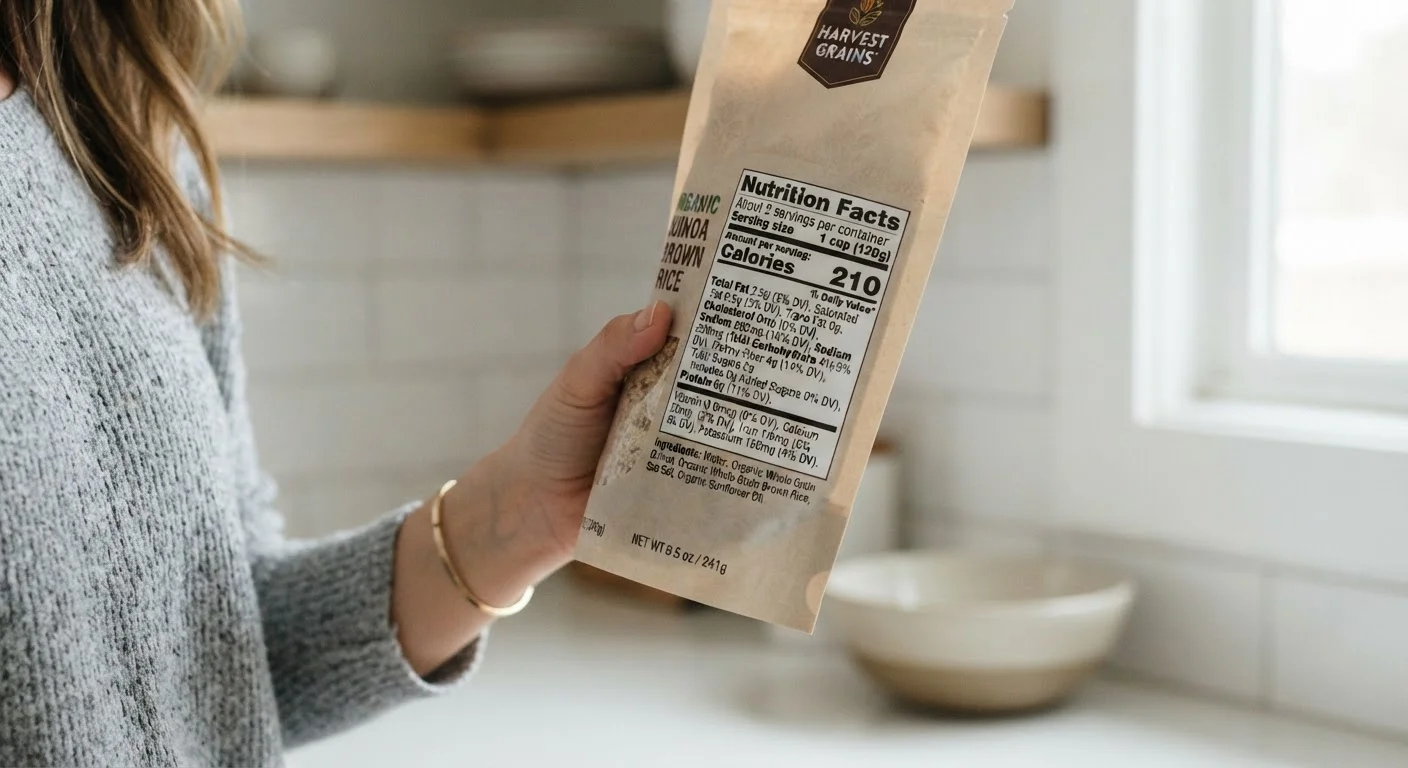
Why Nutrition Labels Matter for Everyday Decisions
The Nutrition Facts label is a federally standardized tool regulated by the U.S. Food and Drug Administration (FDA). Its format was significantly modernized in 2016 - with updates fully phased in by 2020 - to better reflect current nutrition science and real-world eating habits. Despite being widely available on nearly every packaged food, research consistently shows that many consumers find labels confusing or don't know which numbers matter most.
Reading a label effectively isn't about tracking every gram - it's about understanding the framework so you can make quick, informed comparisons. Whether you're monitoring sodium for cardiovascular reasons, increasing fiber intake, or simply trying to understand what's in a product, the label gives you standardized data to work with. This guide walks through each section in the order it appears, so you can apply the same logic to any product you pick up.
What you will need
This article provides general nutrition education and is not a substitute for personalized advice from a registered dietitian or physician. Consult a qualified healthcare professional for guidance specific to your health conditions or dietary needs.
How to Read Every Section of the Label
Food package with Nutrition Facts label
The primary reference you'll be reading and interpreting throughout this guide.
Dietary reference from a healthcare provider
Personalizes general label information to your specific health goals or conditions.
Start with serving size and servings per container
The serving size listed is the standardized amount the FDA uses as the reference point for all other numbers on the label. It reflects what people typically eat in one sitting - not necessarily what you should eat. Check servings per container immediately below. If a bag lists 2.5 servings and you eat the whole bag, every calorie and nutrient figure must be multiplied by 2.5.
Note the calories per serving
Calories measure the energy one serving provides. This number sits prominently near the top of the label for easy reference. Calorie needs vary significantly by age, sex, body size, and activity level - the label's 2,000-calorie reference diet is a general benchmark, not a personal prescription. Use calories as one context clue, not the sole measure of a food's nutritional value.
Scan the nutrients to limit
The label groups nutrients to limit near the top of the nutrient list: saturated fat, trans fat, sodium, and added sugars. A %DV of 5% or less is generally considered low; 20% or more is considered high. Most Americans exceed recommended limits for saturated fat and sodium, so these lines deserve close attention. For a deeper look at how added sugars hide on labels, see how added sugars are listed under different names.
Review total carbohydrates, fiber, and sugars
Total carbohydrates include dietary fiber, total sugars, and added sugars - all indented beneath the main line. Dietary fiber supports digestive health and is a nutrient most Americans fall short on; aim for a higher %DV here. Total sugars include both naturally occurring sugars (from fruit or dairy) and added sugars. The added sugars sub-line tells you how much sugar was introduced during processing - this is the figure most worth monitoring.
Check protein and the beneficial nutrients
Protein does not carry a %DV on most labels because requirements vary widely. Use the gram amount as a general reference. Below protein, you'll find nutrients the label encourages you to get enough of: vitamin D, calcium, iron, and potassium. These are highlighted because many Americans don't meet recommended intakes. For a full overview of key vitamins and minerals, see micronutrients every adult should know.
Use %DV to compare foods at a glance
Percent Daily Value is your quickest comparison tool. Rather than memorizing gram targets, scan the %DV column to judge whether a food is a good or poor source of a given nutrient. Use it to compare two similar products side by side - same serving size assumed - and to balance your intake across the day. Remember: %DV is anchored to a 2,000-calorie diet, so if your personal calorie needs differ substantially, adjust your interpretation accordingly.
The 5/20 Rule Simplifies %DV
A quick rule of thumb: 5% DV or less means a food is low in that nutrient; 20% DV or more means it is high. Use this to rapidly flag foods that are high in nutrients you want to limit (like sodium) or encouragingly high in ones you want more of (like fiber or potassium).
Label literacy is a practical skill that gets faster with repetition. Once you know what to look for - serving size first, then the nutrients to limit, then the beneficial ones - a useful scan takes seconds. If you're also curious about how similar decoding applies in other consumer contexts, the same critical-reading approach used here applies when evaluating product descriptions online.
Putting Label Reading Into Practice
No single food makes or breaks a healthy diet. Labels are most useful when you use them to compare similar products - for example, two brands of canned beans or two types of breakfast cereal - rather than to judge a food in isolation. Look for consistent patterns: lower added sugars, higher fiber, moderate sodium, and adequate protein across the foods you eat regularly.
If a label's ingredient list is where your questions begin rather than end, nutrition guidance from a registered dietitian can help translate general label knowledge into habits that fit your life. Smart shopping starts with informed reading - the same critical thinking that helps you make better consumer decisions overall applies directly to the grocery aisle.
The content on this site is for informational purposes only and is not a substitute for professional advice. Always consult a qualified professional for guidance specific to your situation.