

What Closing Costs Actually Are
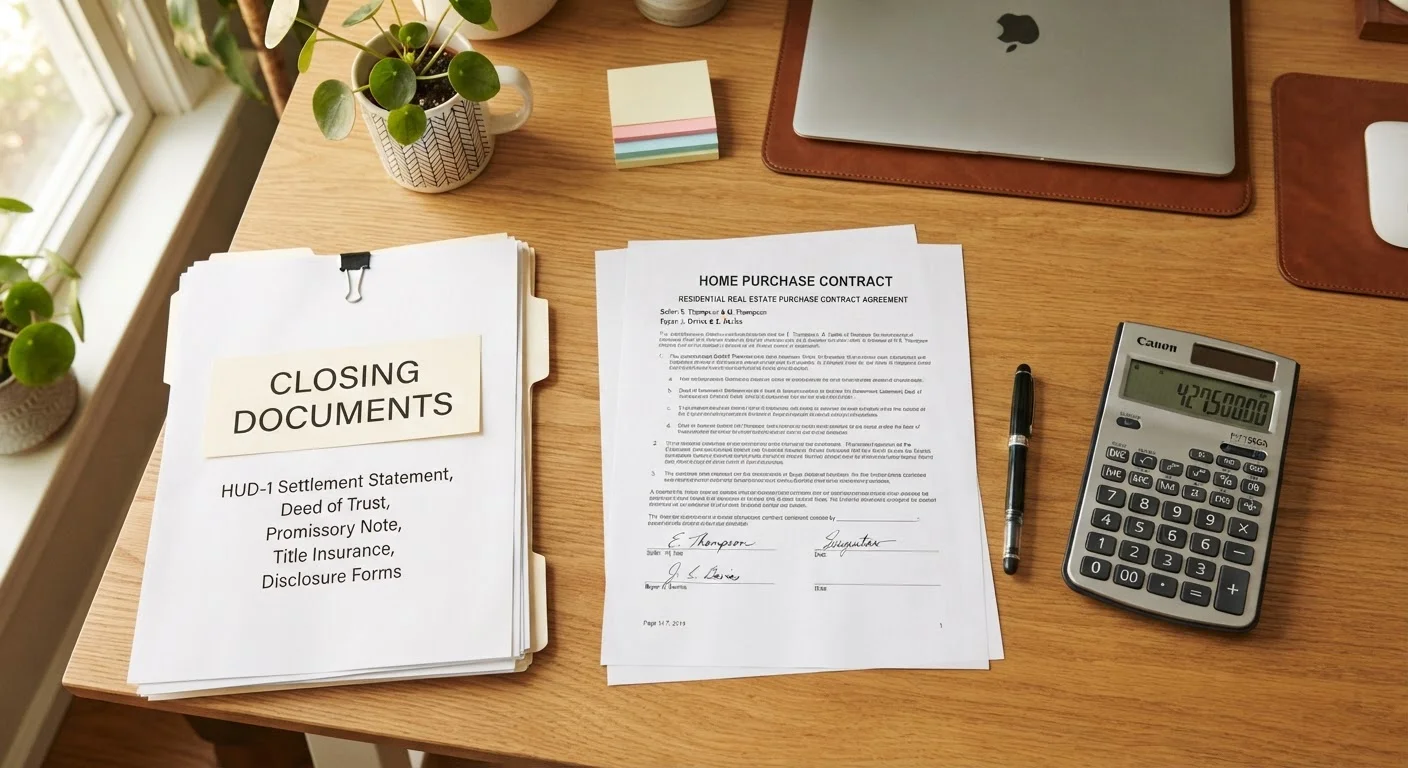
When you reach settlement day on a home purchase, you'll be asked to pay more than just your down payment. Closing costs are the collection of fees and prepaid expenses required to finalize a mortgage and transfer ownership of a property. For most buyers, these costs run between 2% and 5% of the loan amount - which means on a $350,000 home, you could owe anywhere from $7,000 to $17,500 on top of your down payment.
These charges aren't arbitrary. Each line item on your Closing Disclosure - a federally required document your lender must provide at least three business days before settlement - corresponds to a specific service or legal requirement. Understanding what you're paying for removes the sticker shock and puts you in a stronger negotiating position.
For a broader look at how settlement fits into the overall purchase timeline, see our complete guide to the homebuying process.
The Major Categories of Closing Costs
Closing costs fall into three broad buckets: lender fees, third-party service fees, and prepaid items and escrow deposits.
Lender Fees
These are charges your mortgage lender imposes to process and underwrite your loan. Common examples include the origination fee (sometimes expressed as a percentage of the loan, sometimes as a flat charge), discount points if you've chosen to buy down your interest rate, and underwriting or application fees. Lender fees are among the most negotiable items at closing - comparing Loan Estimates from multiple lenders is one of the most effective ways to reduce this portion of your costs.
Third-Party Service Fees
These cover professionals and services required by your lender or by law. A home appraisal - typically $300 to $600 - verifies that the property value supports the loan amount. Title search and title insurance fees protect both the lender and, separately, you as the new owner against ownership disputes or liens from the property's past. An attorney or settlement agent oversees the closing itself in many states. Home inspection fees, while usually paid before closing, may appear here if invoiced at settlement.
For a deeper look at which line items are most commonly misunderstood, see our breakdown of hidden closing cost line items.
Prepaid Items and Escrow Deposits
These aren't fees in the traditional sense - they're money collected in advance for ongoing obligations. Prepaid interest covers the days between closing and your first full mortgage payment period. Homeowners insurance premiums are often collected for the first year upfront. Your lender will also likely establish an escrow account and collect initial deposits for property taxes and insurance so funds are ready when those bills come due.
Closing Disclosure (CD)
A federally mandated five-page document your lender must provide at least three business days before closing. It details the final loan terms, monthly payment, and all closing costs.
Loan Estimate (LE)
A standardized three-page form issued within three business days of a mortgage application. It provides an early estimate of loan terms and closing costs, allowing buyers to compare lenders.
Title Insurance
A one-time premium that protects against losses from ownership disputes, liens, or title defects discovered after purchase. Lender's title insurance is typically required; an owner's policy is optional but recommended.
Origination Fee
A charge by the lender for processing and underwriting your loan. It may be a flat dollar amount or a percentage of the loan and is listed on both the Loan Estimate and Closing Disclosure.
Escrow Account
A third-party account held by your loan servicer that collects monthly contributions from your mortgage payment to cover property taxes and homeowners insurance when they come due.
Discount Points
Optional fees paid upfront to reduce your mortgage interest rate. One point equals 1% of the loan amount and typically lowers the rate by a fraction of a percentage point, with the break-even period varying by loan.
Seller Concessions
An agreement where the seller credits a portion of the purchase price toward the buyer's closing costs. Concession limits are set by the loan type and typically range from 2% to 9% of the purchase price.
Prepaid Interest
Mortgage interest collected at closing that covers the partial month between your settlement date and the start of your first full payment period.
Costs You Can Negotiate or Shop For
Federal law (RESPA) gives buyers the right to shop for certain settlement services rather than accepting whoever the lender recommends. Title insurance, settlement agents, and some inspection services are among the categories where independent quotes can reduce your total. Your Loan Estimate will include a section clearly labeled "Services You Can Shop For" - take that list seriously.
You can also negotiate with the seller. Seller concessions - where the seller agrees to credit a portion of closing costs - are common in slower markets. The amount a seller can contribute is capped by loan type and property classification, but even a 2-3% contribution on a conventional loan can meaningfully offset your out-of-pocket total.
Your Closing Disclosure Is a Comparison Tool
Three days before closing, compare your Closing Disclosure line by line against the Loan Estimate you received at application. Lenders are legally restricted from raising most fees beyond specific tolerances. If you spot a significant discrepancy, ask your lender to explain it in writing before you sign.
Finally, some costs are fixed. Government recording fees and transfer taxes are set by local and state law. There's no negotiating those, but knowing they exist helps you budget accurately. If you're concerned about overall cash requirements, common down payment misconceptions is also worth reviewing - many buyers underestimate total cash needed at the table.
Once you've closed, costs don't stop there. the ongoing costs of homeownership covers what comes next.
This article is for general informational and educational purposes only. It does not constitute legal, financial, or tax advice. Consult a licensed real estate attorney, HUD-approved housing counselor, or qualified financial professional regarding your specific circumstances.
The content on this site is for informational purposes only and is not a substitute for professional advice. Always consult a qualified professional for guidance specific to your situation.