

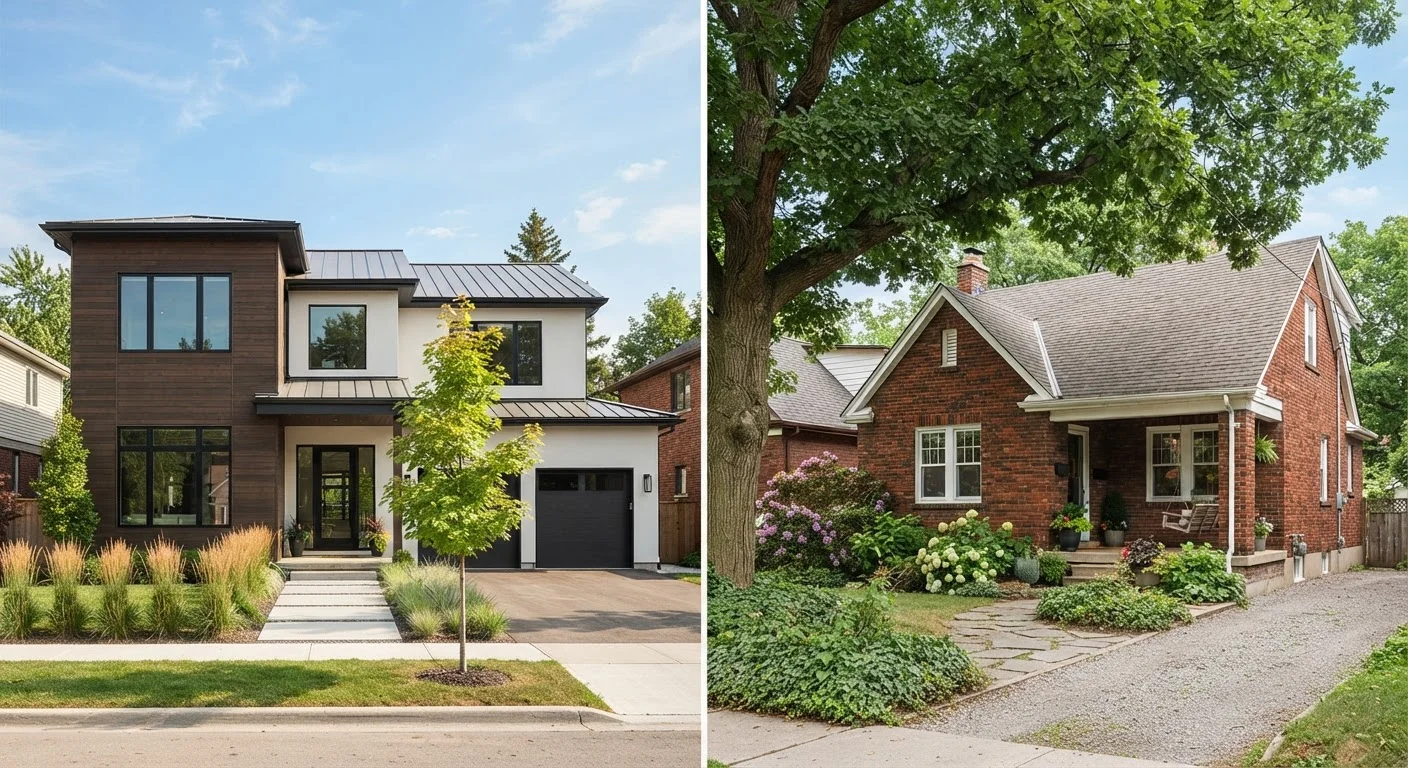
Our Verdict
Neither new construction nor existing homes is universally superior - the right choice depends on your timeline, risk tolerance, and priorities. New builds offer modern systems and warranty coverage but demand patience and contract vigilance. Existing homes offer faster closings and more negotiating leverage, but may carry deferred maintenance costs.
| Best for | Recommended |
|---|---|
| Buyers who want move-in-ready modern features and can wait 6-18 months | New Construction |
| Buyers on a tighter timeline or who want an established neighborhood | Existing Home |
| Those who want stronger negotiating leverage on price and contingencies | Existing Home |
| Buyers seeking builder warranties and fewer near-term repair concerns | New Construction |
How the Purchase Contract Differs
In a resale transaction, buyers and sellers typically negotiate using a standardized state-approved purchase agreement. The terms - price, contingencies, closing date - are genuinely open to negotiation. In a new construction deal, the builder presents its own contract, drafted by the builder's attorneys. These documents are often lengthy, heavily weighted toward the builder's interests, and less flexible than resale contracts.
Key clauses to scrutinize in a builder contract include:
- Closing date language: Builders frequently include provisions allowing them to push back the closing date with limited notice or compensation to the buyer.
- Change order policies: Upgrades selected during the design phase may not be locked in at the price you were quoted.
- Arbitration clauses: Many builder contracts require disputes to go to arbitration rather than court, which limits your legal options.
- Deposit terms: Earnest money deposits on new builds can be larger and harder to recover if you need to exit the contract.
Before signing a builder contract, consult a real estate attorney. See our buyer's checklist for purchase agreements for key terms to review across both transaction types.
Builder Contracts Are Not Standard Forms
Unlike resale transactions, builder purchase agreements are proprietary documents with clauses that can significantly limit your rights. Deposit forfeiture terms, arbitration requirements, and delay provisions can catch buyers off guard. Always have a licensed real estate attorney review the builder's contract before signing - do not rely solely on the builder's sales team for explanations.
Timeline and Closing Expectations
Closing on an existing home typically takes 30-60 days from an accepted offer, assuming financing and inspections proceed smoothly. New construction timelines are a different matter entirely. If you're buying a spec home (already built or nearly complete), the process can be similar to resale. But if you're buying during the pre-sale or early construction phase, expect 6-18 months before you can take possession.
That extended timeline creates real financial planning challenges - you may need to manage your current housing situation (rent extension, bridge financing, or temporary living arrangements) while waiting for your build to complete.
~6-18 mo.
Typical new construction build timeline
According to the National Association of Home Builders, the average time from permit to completion for a single-family home has historically ranged from 6 to 18 months depending on region and home size.
~13%
Share of home sales that are new construction
New single-family home sales have generally represented roughly 10-15% of total US home sales in recent years, according to US Census Bureau data.
For a thorough overview of how a typical home purchase unfolds from offer to keys, see our guide on the American homebuying process.
Inspections: Why New Doesn't Mean Problem-Free
A common misconception is that brand-new homes don't need independent inspections. In reality, new construction can have significant defects - from grading and drainage issues to HVAC installation errors and framing problems - that are easier to address before drywall goes up than after.
For new builds, buyers should consider three inspection opportunities:
- Pre-drywall inspection: Examines framing, plumbing rough-in, and electrical before walls are closed.
- Final walkthrough inspection: Conducted just before closing to document any incomplete or defective work.
- 11-month inspection: Many builders offer a one-year workmanship warranty; an inspection near month 11 can identify issues before that window closes.
For existing homes, the standard buyer's inspection occurs after an offer is accepted and before the contingency deadline expires. Findings from that inspection create a negotiation window - learn more about what buyers can reasonably request after an inspection.
Negotiating Power: New Construction vs. Resale
Negotiating looks very different depending on which type of home you're buying.
With existing homes, price, closing costs, repairs, and included appliances are all fair game. The seller's motivation, days on market, and local inventory levels all influence how much leverage buyers carry.
With new construction, builders rarely discount the base price - doing so would set a precedent that affects comparable sales throughout the development. Instead, builders more commonly offer:
- Upgraded finishes (flooring, countertops, fixtures) at no additional cost
- Contributions toward closing costs, particularly if you use their preferred lender
- Premium lot selection or landscaping packages
Be cautious about financing incentives tied to a builder's in-house lender. While the closing cost contributions can be valuable, the loan terms may not be competitive. Always compare independently obtained financing before committing.
| New Construction | Existing Home | |
|---|---|---|
| Typical closing timeline | 6-18 months (presale); 30-60 days (spec) | 30-60 days from accepted offer |
| Contract flexibility | Limited - builder's attorney-drafted contract | Higher - standardized, negotiable terms |
| Price negotiation | Rare; upgrades or closing credits more common | Common; depends on market and motivation |
| Inspection opportunities | Pre-drywall, final walkthrough, 11-month | Standard buyer's inspection post-offer |
| Warranty coverage | Builder warranties typically included | No warranty unless negotiated separately |
| Near-term repair risk | Generally lower - new systems throughout | Higher - varies with age and maintenance history |
| Neighborhood data availability | Limited in new developments | Established sales history, school data available |
Understanding ongoing homeownership costs is equally important regardless of which path you choose - new or existing homes both carry property taxes, insurance, maintenance, and HOA fees where applicable.
Which Path Fits Your Situation?
There's no universally correct answer between new construction and resale - the right choice depends on your timeline, financial flexibility, and priorities. New builds offer modern energy efficiency, builder warranties, and the ability to customize finishes, but they demand patience, careful contract review, and tolerance for construction delays.
Existing homes typically close faster, sit in established neighborhoods with known schools and amenities, and offer more traditional negotiating dynamics. However, older homes may require near-term investment in systems like roofing, HVAC, or plumbing.
Bring Your Own Agent to a Builder Sale
Many buyers assume they don't need a buyer's agent when purchasing directly from a builder. In most cases, having independent representation costs you nothing - the builder typically pays the commission. Your agent can review contract terms, advocate during the walkthrough, and help you compare builder incentives against the broader market.
First-time buyers in particular should be aware that common homebuying myths apply to both transaction types. The process has more nuance than most expect, and the type of home you buy shapes nearly every step of it.
This article is for general informational and educational purposes only and does not constitute legal, financial, or real estate advice. Consult a licensed real estate professional and attorney before making any home purchase decisions.
The content on this site is for informational purposes only and is not a substitute for professional advice. Always consult a qualified professional for guidance specific to your situation.