

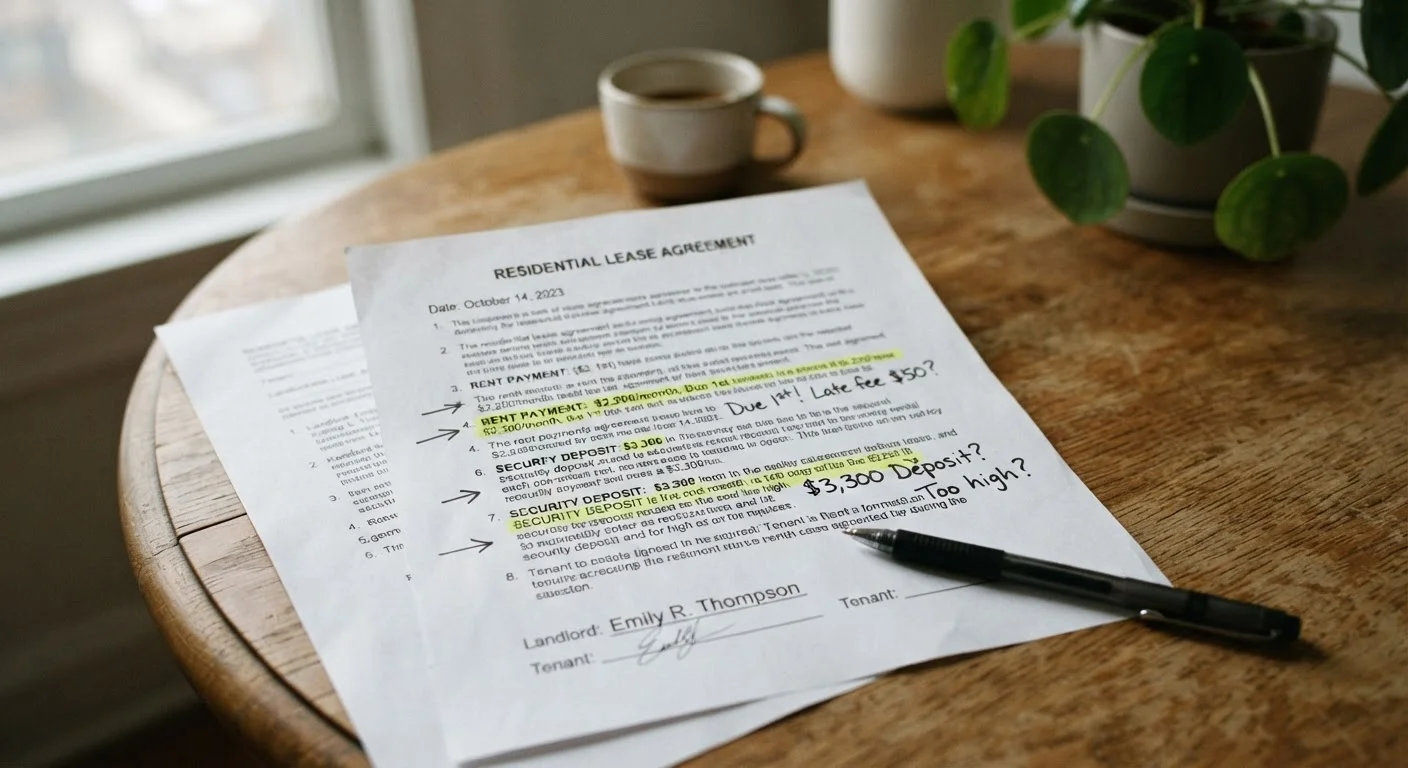
Why Lease Renewals Demand a Second Look
For many renters, a lease renewal feels like a formality — sign, pay, stay. But the renewal document you receive is not always identical to your original lease. Landlords routinely update terms at renewal, and by signing without a careful review, tenants can unknowingly accept higher costs, reduced rights, or new restrictions they never agreed to before.
Before you pick up a pen, take time to read through the renewed lease carefully, paying close attention to any language that differs from your current agreement. The sections that matter most — rent amount, notice requirements, pet policies, maintenance obligations, and early termination penalties — are exactly where changes tend to appear.
Auto-renewing without reading the updated lease document.
Why it happens: When tenants are happy in a unit, signing quickly feels safe — it's the same place, after all. Many assume the renewal is simply an extension of identical terms.
Missing the required notice deadline to vacate or renew.
Why it happens: Tenants often don't track the specific notice window buried in their lease — typically 30 to 60 days before the lease end date — and assume they can decide last minute.
Accepting a rent increase without checking local market rates.
Why it happens: Tenants often assume the landlord's number is non-negotiable, especially if they've never pushed back before.
Overlooking changes to pet, guest, or parking policies.
Why it happens: These policy sections feel routine, so tenants skim past them assuming nothing has changed from the original lease.
Failing to get verbal agreements in writing before signing.
Why it happens: A landlord may verbally agree to fix an appliance or waive a fee, and a trusting tenant signs the renewal without ensuring the promise is documented.
The Deadlines and Data That Protect You
Lease renewal decisions don't happen in a vacuum. Understanding the financial landscape around you — and your own legal obligations — puts you in a far stronger position.
30–60 days
Typical written notice window required by most leases
Most standard residential leases in the US require tenants to provide written notice within this window before the lease end date — failure to do so can trigger automatic renewal.
~$1,500–$5,000
Average landlord cost to turn over a rental unit
Industry estimates from property management associations suggest this is the typical range for cleaning, repairs, marketing, and vacancy loss — giving tenants real negotiating leverage at renewal.
43 million
Renter households in the United States
According to U.S. Census Bureau data, roughly 43 million households rent their homes, making lease literacy one of the most widely applicable financial skills for American consumers.
One of the most overlooked protections tenants have is the ability to negotiate. Landlords generally prefer keeping a reliable tenant over absorbing the cost of vacancy, cleaning, and re-listing. That gives you more leverage than you might think — especially if you've paid on time and maintained the unit well.
It's also worth understanding what happens on the other side of this decision. If you're weighing whether to renew or move on, reviewing early lease termination consequences can help you understand the full financial picture before committing either way.
Month-to-Month Conversions Can Cost More
If your lease expires and you haven't signed a renewal or given proper notice, many leases automatically convert to a month-to-month arrangement. While this offers flexibility, landlords can typically charge a higher monthly rate under month-to-month terms and may require shorter notice to end your tenancy. Check your lease's holdover clause so you know exactly what happens if you miss the renewal window.
Finally, be aware that many obligations from your original lease carry forward into a renewal — sometimes in updated form. Tenant responsibilities like maintenance reporting, noise compliance, and guest policies are often reinforced or tightened at renewal. Don't assume familiar language means identical terms.
This article is for general informational purposes only and does not constitute legal or financial advice. Lease laws and landlord-tenant regulations vary significantly by state and municipality. Consult a licensed attorney or tenant advocacy organization in your area for guidance specific to your situation.
The content on this site is for informational purposes only and is not a substitute for professional advice. Always consult a qualified professional for guidance specific to your situation.