

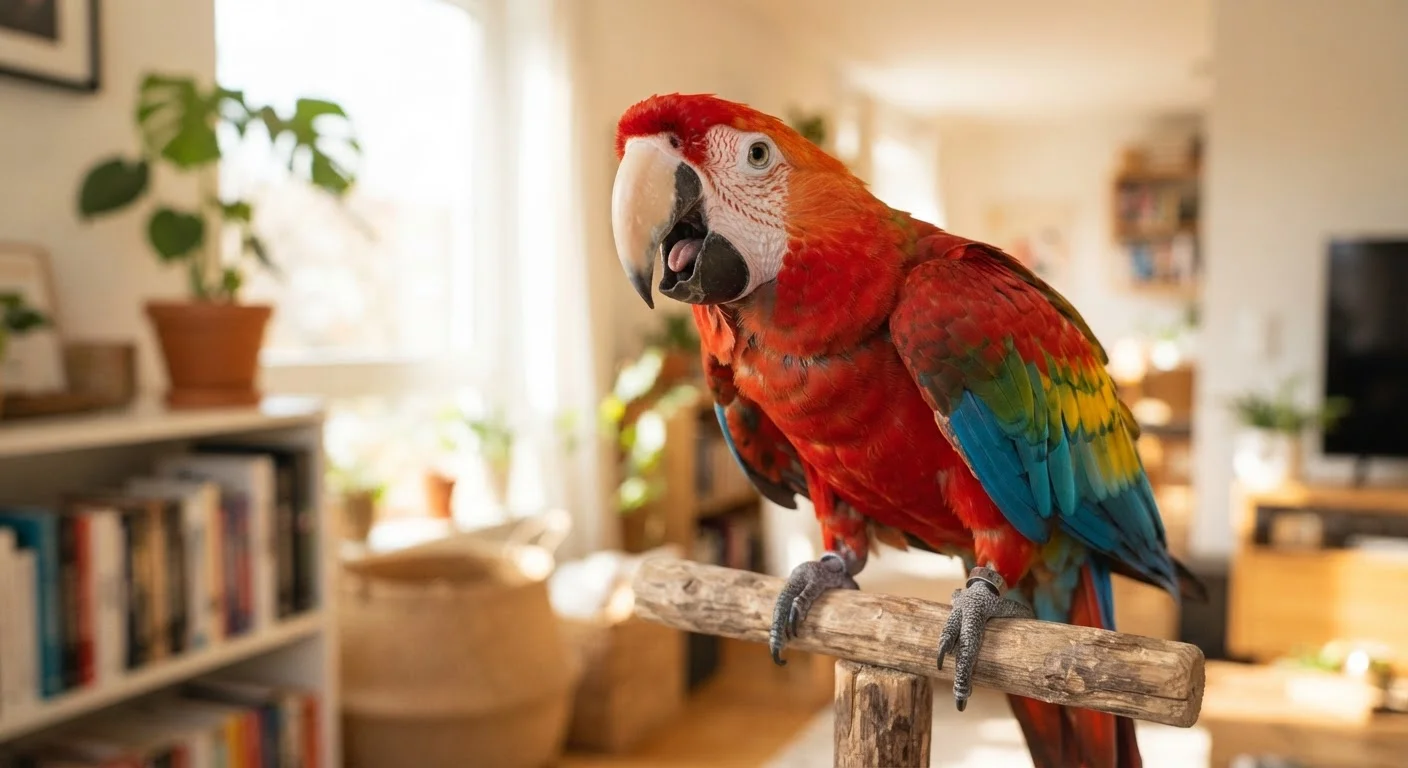
Screaming Is Communication, Not Rebellion
Wild parrots are flock animals. They use contact calls — loud, far-carrying vocalizations — to locate flock members, signal danger, and mark the start and end of their day. When a parrot screams in your living room, it is almost always doing the same thing: attempting to communicate something specific to its "flock," which now includes you.
Common screaming triggers include hunger, boredom, fear, overstimulation, attention-seeking, and the predictable dawn-and-dusk contact call cycle nearly every parrot species maintains regardless of domestication. Understanding this biological foundation matters because it means screaming cannot be eliminated entirely — nor should you try. The goal is to avoid inadvertently escalating normal vocalizations into compulsive ones through well-meaning but counterproductive responses.
This is part of a broader pattern addressed in well-meaning habits that can quietly harm your pet — small, caring actions that quietly reinforce the wrong behaviors over time.
Common Mistakes That Make Screaming Worse
Running to the parrot every time it screams.
Why it happens: The immediate instinct is to comfort a loud, seemingly distressed bird — especially for new owners who worry the parrot needs something urgent.
Completely ignoring all vocalizations in an attempt to extinguish the behavior.
Why it happens: Owners read that ignoring screaming helps, then apply that advice to every type of call without distinguishing between a contact call and a distress call.
Rewarding screaming with food, treats, or toys to quiet the bird quickly.
Why it happens: When a parrot is screaming and an owner offers a treat to distract it, the parrot learns a clear, repeatable sequence: scream loudly, receive reward.
Providing inconsistent daily schedules, leaving the parrot uncertain about when interaction will occur.
Why it happens: Modern schedules are unpredictable, and owners often underestimate how much routine matters to a highly social animal accustomed to predictable flock rhythms.
Allowing a behavior only sometimes — laughing when the bird screams on some days, then scolding it on others.
Why it happens: A screaming parrot can genuinely be amusing in small doses, and the inconsistent reaction feels harmless in the moment.
Recognizing these patterns in your own routine is the most important step. Most of the mistakes below happen gradually, making them harder to notice until the screaming has already become a deeply ingrained habit for the bird.
Building a Better Response Routine
~350
Parrot species documented worldwide
With hundreds of species — each with distinct vocal repertoires — a parrot's baseline noise level varies enormously by species, which is why matching bird to household is a critical first step.
2x daily
Typical contact-call peaks per day
Most parrot species have predictable dawn and dusk vocalization surges tied to natural flock behavior; these periods of louder calling are biologically normal and should be planned for, not punished.
Rather than reacting to screaming, the most effective approach is building a proactive routine that meets your parrot's social and mental needs before the bird feels compelled to escalate. Structured morning and evening interaction aligns with a parrot's natural contact-call windows. Foraging toys, rotation of enrichment items, and out-of-cage time all reduce the baseline frustration that fuels excessive noise.
When your parrot does scream, the goal is to wait for even a brief pause — then immediately offer calm acknowledgment. A quiet "I hear you" or a short whistle teaches the bird that a softer signal gets the response it wants. This process takes consistency measured in weeks, not days. If the behavior is deeply entrenched, an avian behavior consultant can help design a structured plan tailored to your specific bird and home environment.
This article is for general informational and educational purposes only. For personalized guidance about your parrot's health or behavior, consult a qualified avian veterinarian or certified animal behavior professional.
The content on this site is for informational purposes only and is not a substitute for professional advice. Always consult a qualified professional for guidance specific to your situation.