

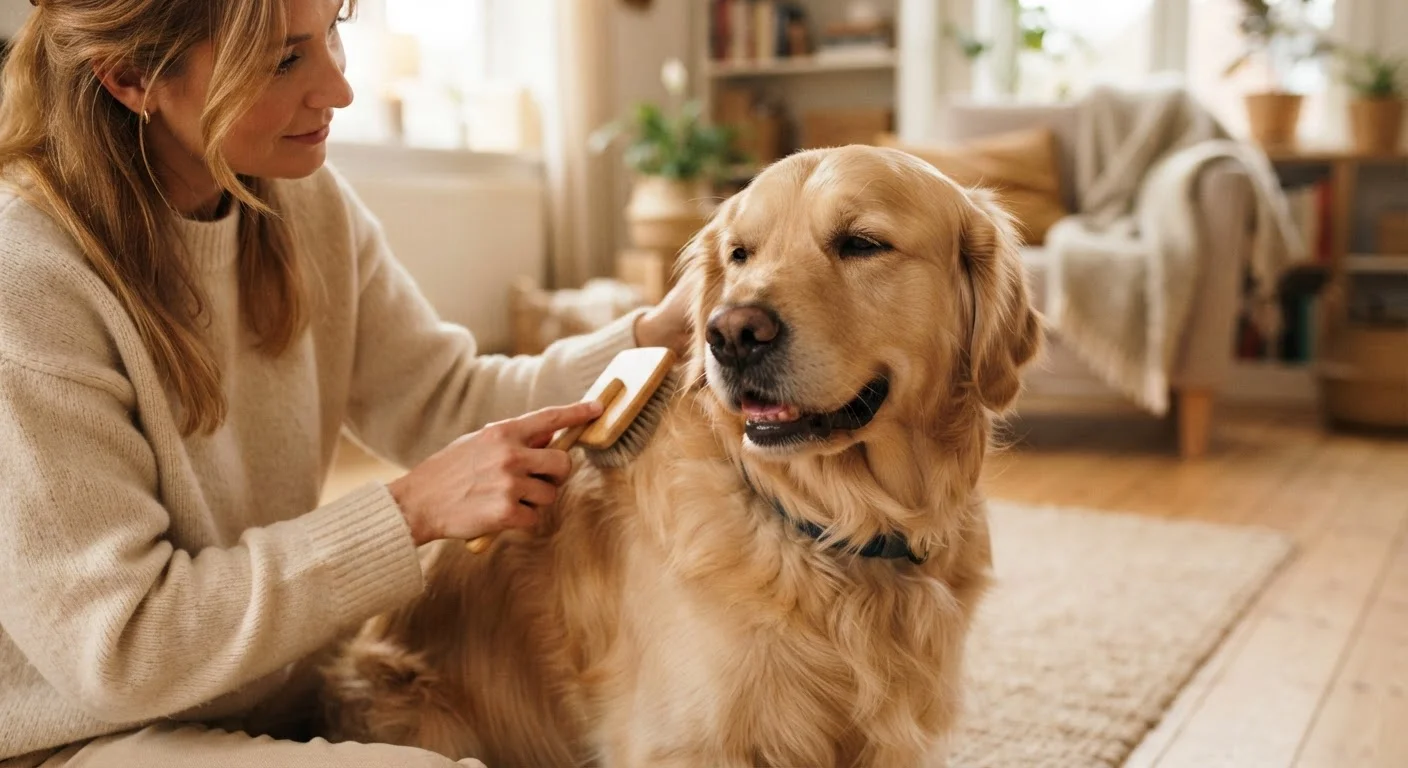
Why Home Grooming Matters Between Professional Visits
Professional groomers do important work, but most pets need routine maintenance far more often than a typical six-to-eight-week appointment cycle provides. Regular brushing, nail checks, and ear inspections at home keep your pet physically comfortable, prevent small problems from becoming expensive ones, and give you a reliable window into their overall condition.
Grooming at home is also a behavioral investment. A pet that learns grooming is safe and predictable is easier to handle at the vet, at the groomer, and in everyday life. It deepens your bond and your awareness of your pet's body — knowledge that matters when something changes. For a broader look at how home care fits into responsible ownership, see our complete overview of everyday pet care.
What you will need
Slicker brush or deshedding comb
Removes loose fur, tangles, and debris from the coat during brushing sessions.
Pet nail clippers
Trims nails safely; guillotine and scissor-style clippers are both widely used for dogs and cats.
Styptic powder
Stops minor bleeding quickly if the nail quick is accidentally nicked during trimming.
Vet-approved ear cleaning solution
Gently loosens wax and debris inside the ear canal without causing irritation.
Cotton balls or gauze pads
Used to wipe away loosened debris from the outer ear after applying cleaning solution.
Nail grinder (rotary file)
Smooths sharp nail edges after clipping; a useful alternative for pets sensitive to clippers.
Step-by-Step: Brushing, Nail Trims, and Ear Cleaning
The following steps walk you through each task in a logical order. You do not need to complete all three tasks in a single session — especially when starting out. Spreading them across different days reduces the total time your pet is handling and keeps the experience low-stress.
Set up a calm grooming environment
Choose a time when your pet is relaxed — after a walk or play session works well. Pick a non-slip surface: a rubber mat on a table for small pets, or a familiar rug on the floor for larger dogs. Gather all your supplies beforehand so you never have to leave your pet unattended mid-session. Keep sessions short at first: five to ten minutes is enough to build positive associations.
Brush the coat thoroughly
Brush in the direction of hair growth using a tool suited to your pet's coat type — slicker brushes work well on medium to long coats, while a rubber grooming mitt suits short-haired breeds. Work section by section from the neck toward the tail, then do the legs and underbelly. Pay extra attention to friction points: armpits, behind the ears, and the collar area, where mats form fastest.
As you brush, scan the skin for redness, flaking, lumps, or parasites. Catching changes early is one of the most practical benefits of regular home grooming. For more on what's normal for your pet's coat, see coat shedding and seasonal changes.
Trim the nails
Have your pet sit or lie in a comfortable position. Hold one paw gently but firmly. Clip only the curved tip of the nail — a small amount at a time — avoiding the quick, the pink blood vessel visible in light-colored nails. On dark nails, clip in tiny increments and stop when you see a small dark dot appear at the center of the cut surface, which signals you are near the quick.
If your pet pulls away, pause, reassure them, and continue. It is better to trim a little from every nail than to rush and cut too deep.
Clean the ears
Lift the ear flap and apply the recommended number of drops of vet-approved ear cleaning solution into the ear canal. Gently massage the base of the ear for about 20–30 seconds — you should hear a soft squishing sound as the solution loosens debris. Allow your pet to shake their head, then use a cotton ball or gauze to wipe away visible wax and debris from the outer ear canal only. Never insert cotton swabs or any object deep into the ear canal.
Finish with praise and a reward
Once you have finished, give your pet enthusiastic praise and a treat, regardless of how the session went. Even a partial grooming session completed calmly is a win worth reinforcing. Over time, consistent positive endings train your pet to associate grooming with something pleasant rather than stressful. This makes each subsequent session a little easier.
Build Grooming Into Your Pet's Routine
Pets that are groomed regularly from a young age tend to tolerate it far more calmly than those introduced to it later. Even if your pet is older, short daily or weekly touch sessions — handling paws, lifting ears, running a brush along the back — can gradually normalize the experience. Pairing these moments with treats and calm handling makes a lasting difference. For more on establishing predictable routines, see our guide on building a daily routine your pet can rely on.
Know When to Stop and Call Your Vet
Home grooming covers routine maintenance, not treatment. If you notice inflamed or broken skin, significant hair loss in patches, a foul smell from the ears, nails that are severely overgrown or curling into the paw pad, or a pet that is in clear distress during grooming, stop the session and contact your veterinarian. Attempting to push through these situations at home can cause injury or mask an underlying health issue that needs professional attention.
Never Use Human Grooming Products on Pets
Human shampoos, ear drops, antifungal creams, and other personal care products are formulated for human skin pH and can be harmful to dogs and cats. Always use products specifically labeled as safe for your pet's species. When in doubt, ask your veterinarian before introducing any new product into your grooming routine.
Fitting Grooming Into Your Pet's Ongoing Health Routine
At-home grooming works best as part of a broader preventive care habit rather than a standalone task you do only when something looks off. Brushing two to three times per week, checking nails every two weeks, and cleaning ears monthly (or as directed by your vet for your pet's specific anatomy) creates a maintenance rhythm that keeps small issues visible before they escalate.
If you are just setting up systems for a new pet, the new pet owner preparation checklist is a useful companion resource. For year-round health planning, building a year-round preventive care routine covers how grooming fits alongside parasite checks, dental care, and weight monitoring.
This article is for general informational purposes only and is not a substitute for professional veterinary advice. If you have concerns about your pet's health, coat, ears, or nails, consult a licensed veterinarian.
The content on this site is for informational purposes only and is not a substitute for professional advice. Always consult a qualified professional for guidance specific to your situation.