

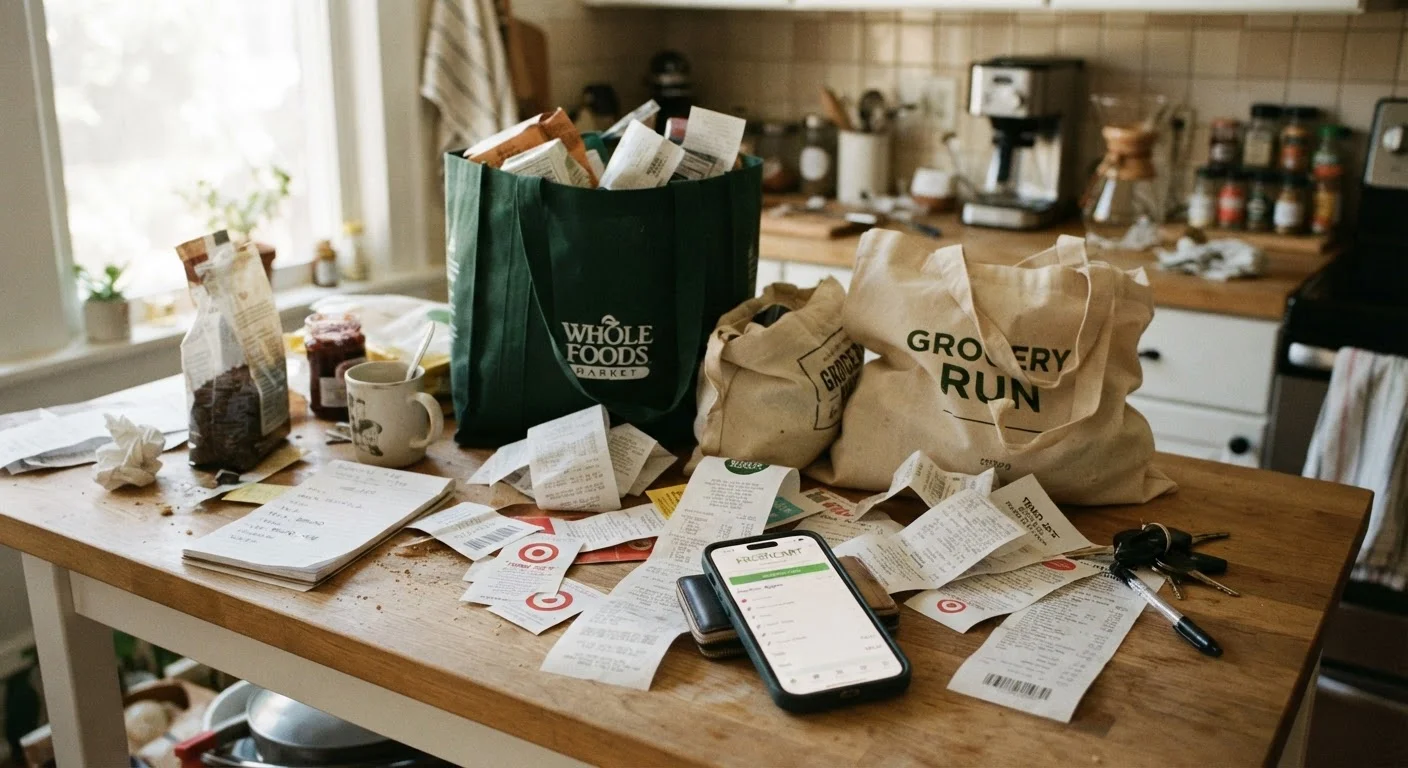
Why Budget Drains Are So Easy to Miss
Most overspending doesn't happen in obvious ways. It rarely starts with a single large, regrettable purchase. Instead, it accumulates through dozens of small decisions that each feel entirely reasonable in the moment — the quick convenience upgrade at the grocery store, the streaming service you meant to cancel, the bulk purchase that sounded like savings but ended up in the trash.
These patterns are persistent because they don't feel like mistakes. They feel like normal shopping. That's precisely what makes them worth examining. Understanding the habits behind intentional spending starts with recognizing where money quietly leaves without triggering any alarm.
These Habits Compound Over Time
No single small purchase breaks a budget — the damage is cumulative. A $4 convenience upcharge three times a week amounts to roughly $600 a year. Identifying even two or three of these patterns in your own routine can meaningfully shift your financial picture over 12 months.
The Most Common Patterns That Cost More Than They Appear
The mistakes below are among the most widespread and least obvious. They span grocery trips, digital services, and everyday retail — and they often cluster together, compounding the effect on monthly budgets. None requires dramatic willpower to fix; they require awareness first.
Paying convenience markups without recognizing them as a premium.
Why it happens: Pre-cut produce, single-serve packaging, and ready-to-heat meals feel like reasonable time-savers rather than premium products, so shoppers rarely compare their per-unit cost to alternatives.
Letting unused subscriptions silently charge month after month.
Why it happens: Subscriptions are designed to be easy to start and easy to forget. Small recurring charges rarely trigger the mental alarm that a single large purchase would.
Buying in bulk when the math doesn't actually work in your favor.
Why it happens: Large-format packaging signals savings, and warehouse stores cultivate an atmosphere of thrift. Shoppers often assume bigger quantities always mean lower effective cost, without verifying the per-unit price.
Falling for retail pricing tactics that make higher-cost items feel like the logical choice.
Why it happens: Anchoring, decoy pricing, and bundle framing are engineered into product displays and pricing menus. Shoppers compare options against each other rather than against actual need or value.
Shopping without a list and treating small impulse adds as inconsequential.
Why it happens: Without a list, shoppers rely on in-store visual cues and habit — both of which retailers deliberately optimize to increase basket size.
Ignoring spending categories that don't feel like 'real' expenses.
Why it happens: Annual fees, irregular personal care costs, and small recurring app charges rarely appear in a household's mental budget model because they don't happen every month.
Carrying a Balance Costs More Than You Think
Putting everyday purchases on a credit card feels harmless until you carry a balance. Interest charges on revolving debt can quietly double the effective cost of items purchased months earlier. If you regularly shop on credit without paying the full balance, review how interest compounds — see how minimum payments extend debt for a clear breakdown.
These habits are also worth reviewing alongside the broader question of what your budget actually tracks. Many shoppers manage routine weekly spending carefully but leave irregular categories entirely unaccounted for, which is where the real gaps tend to emerge. A fuller picture of where money goes is the foundation of any meaningful change. For a structured approach to tracking and planning, the Budgeting Basics hub offers practical starting points suited to everyday households.
The content on this site is for informational purposes only and is not a substitute for professional advice. Always consult a qualified professional for guidance specific to your situation.