

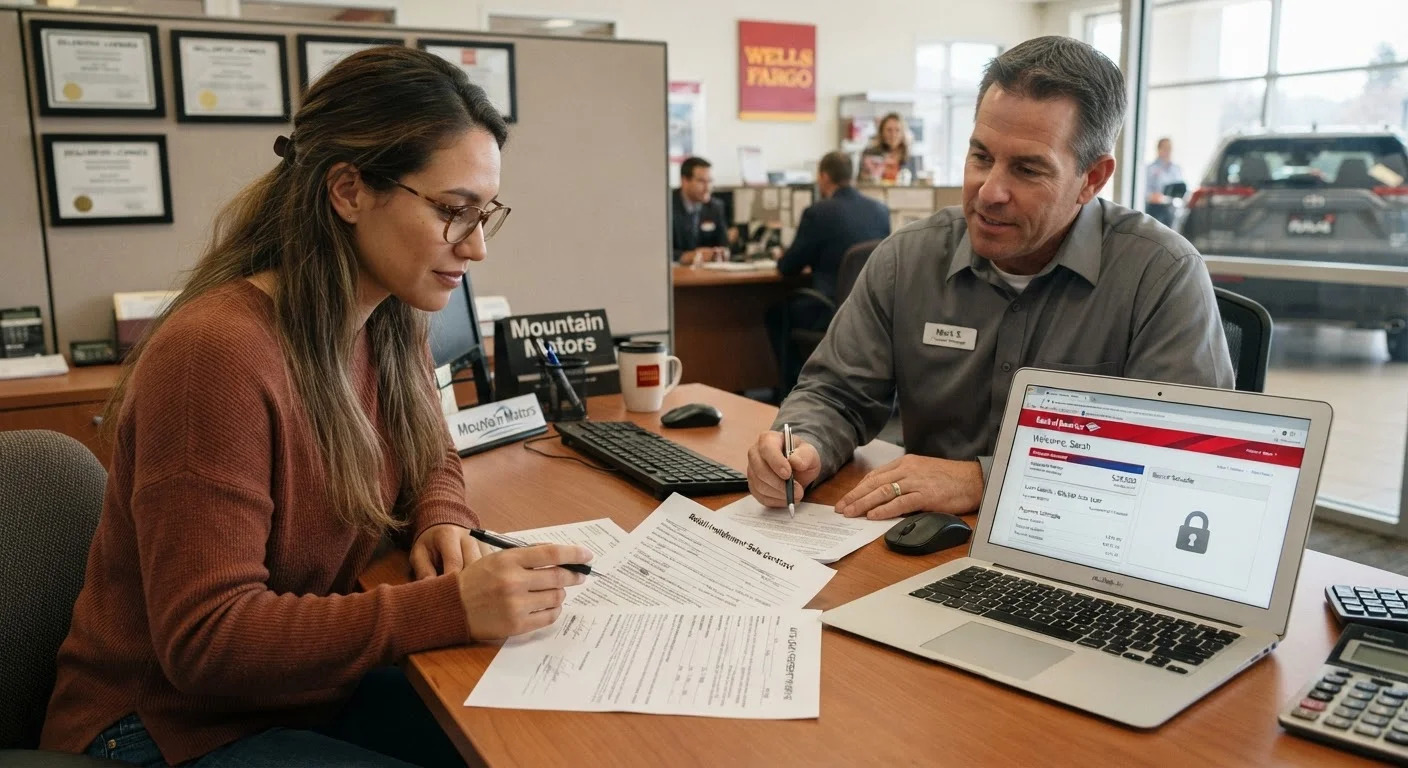
Our Verdict
Neither dealer financing nor a pre-arranged loan is universally better - the stronger outcome depends on preparation. Shoppers who arrive with a pre-approved rate tend to negotiate from a clearer position, while dealer financing can occasionally beat outside offers through manufacturer incentive programs. The most informed buyers obtain both and compare at the point of sale.
| Best for | Recommended |
|---|---|
| Buyers who want maximum negotiating clarity and rate certainty | Pre-arranged loan from a bank or credit union |
| Buyers purchasing a new vehicle eligible for manufacturer promotional rates | Dealer financing through the captive lender |
| Buyers with limited time who have strong credit | Dealer financing as a fallback with a pre-approval in hand |
How Dealer Financing Works
When you finance through a dealership, the dealer acts as an intermediary. They submit your credit application to one or more lenders - often a manufacturer's captive finance arm (such as a brand's own financial services division) or third-party banks - and present you with terms based on the offers they receive.
The dealer typically earns a fee by marking up the interest rate above what the lender actually quoted. This spread, sometimes called a dealer reserve, is legal and common, but it means the rate you're offered may not reflect the lowest rate you qualify for. Federal regulations and some state laws place caps on how large that markup can be, but the practice remains widespread.
The convenience factor is real: you can complete the entire transaction - vehicle selection, trade-in, and financing - in one visit. Manufacturers also periodically offer promotional rates (such as 0% APR for qualified buyers on new models), which are only accessible through dealer financing and can represent genuine savings. For context on how financing compares to other transaction structures, see the full lifecycle of a car transaction.
Get Pre-Approved Even If You Plan to Use Dealer Financing
Arriving at the dealership with a pre-approval in hand costs nothing but time and gives you a concrete rate to benchmark against. If the dealer can beat your pre-approved rate, you win. If they can't, you already have your financing locked. This single step shifts the dynamic of the conversation in your favor.
How Pre-Arranging Your Own Loan Works
Getting pre-approved through a bank, credit union, or online lender before you visit a dealership means you arrive knowing your approved loan amount, interest rate, and term. The lender issues a check or a commitment letter you can use to purchase a vehicle up to the approved amount within a set window - typically 30 to 45 days.
The primary advantage is transparency. You know your rate floor going in, which lets you evaluate any dealer financing offer as a direct comparison rather than an unknown. Credit unions in particular often offer competitive rates for auto loans and are worth checking before shopping. For a broader grounding in how loan mechanics work, auto loan basics every buyer should understand covers the key terms and structures in detail.
One practical note: obtaining a pre-approval typically involves a hard credit inquiry. Multiple inquiries from auto lenders within a short window (often 14-45 days, depending on the scoring model) are generally treated as a single inquiry, so shopping around does not necessarily compound the credit impact.
| Dealer Financing | Pre-Arranged Loan | |
|---|---|---|
| Convenience | One-stop, completed at dealership | Requires a separate application step beforehand |
| Rate transparency | Rate may include dealer markup | Rate is fixed and known before shopping |
| Access to promotional rates | Yes - manufacturer 0% APR deals available | No access to captive-lender promotions |
| Negotiating leverage | Limited - rate is presented, not benchmarked | Strong - you have a known rate to compare |
| Best vehicle type | New vehicles with manufacturer incentives | Used or new without promotional offers |
| Credit inquiry timing | Occurs at point of sale | Occurs before shopping; can rate-shop early |
Key Factors That Affect Which Path Serves You Better
The right financing path isn't fixed - it depends on several variables specific to your situation.
- Credit profile: Strong credit opens doors with both dealers and outside lenders. If your credit is limited or has past issues, dealer networks may have relationships with lenders who specialize in non-prime borrowers, though rates will generally be higher either way.
- New vs. used vehicle: Manufacturer promotional rates are only available on new vehicles through dealer financing. On used vehicles, outside lenders are often more competitive.
- Loan term: Longer terms lower monthly payments but increase total interest paid. Evaluate the full cost, not just the monthly figure. This is a point explored further in what the monthly payment doesn't show you.
- Down payment: A larger down payment reduces the amount financed, which affects both your rate and your monthly obligation regardless of lender source.
~80%
New car buyers who use dealer financing
According to the Consumer Financial Protection Bureau, the majority of financed vehicle purchases are arranged through dealership finance offices.
1-2.5%
Typical dealer interest rate markup range
Industry analyses have documented that dealer reserve markups commonly fall in this range above the lender's buy rate, though the actual spread varies by deal and market.
This article is for general informational purposes only and does not constitute personalized financial or lending advice. Consult a licensed financial professional for guidance tailored to your situation.
The content on this site is for informational purposes only and is not a substitute for professional advice. Always consult a qualified professional for guidance specific to your situation.