

Why Understanding the Full Process Matters
Buying or selling a car is one of the larger financial transactions most Americans will handle - yet the process is rarely explained end to end. Dealership visits can feel rushed, private-party sales can feel uncertain, and paperwork often arrives in a stack at the last minute. Understanding each stage in advance puts you in a far stronger position.
Unlike buying a home, which typically involves agents and escrow, a car transaction can happen in a single afternoon - which is exactly what makes preparation so important. Speed is not a substitute for diligence.
~$48,000
Average new vehicle transaction price in the U.S.
According to Kelley Blue Book industry data, average new car transaction prices have risen substantially in recent years, underscoring the importance of preparation.
54%
Used-car buyers who skip a pre-purchase inspection
Industry surveys consistently show that a majority of used-car buyers forgo an independent mechanical inspection, a step that can uncover costly hidden problems.
Stage 1: Research and Budget Setting
Effective car buying begins before you ever visit a lot or click a listing. The first task is establishing a realistic budget that accounts for more than just the sticker price. Factor in sales tax, registration fees, insurance costs, and ongoing maintenance. For financed purchases, your monthly payment is a product of loan amount, interest rate, and term - not just the vehicle price.
Understanding how auto loans work before you step into a finance office is a genuine advantage. Dealers have flexibility on interest rates when they arrange financing - and knowing that means you can compare dealer offers against pre-approval from a bank or credit union.
Research should also include depreciation. A vehicle that loses significant value in its first two years may be a poor financial choice as new but a solid one as a two-year-old used car. See how depreciation affects timing for a fuller picture.
Get pre-approved for an auto loan from your own bank or credit union before visiting any dealership. This gives you a concrete rate to compare against dealer financing and removes a key point of leverage from the sales process.
Dealer-arranged financing often carries a markup above the lender's base rate, a portion of which is retained as dealer profit. A competing offer limits how much that markup can be applied.
When test-driving a used vehicle, include at least one stretch of highway driving. Many drivetrain issues - transmission shudder, vibration, pull - only manifest at speeds above 50 mph.
Lot-speed test drives are insufficient for evaluating a vehicle's full mechanical condition. Highway conditions reveal problems that low-speed urban routes simply don't surface.
Stage 2: Finding the Right Vehicle
Once you have a budget and a target vehicle type, the search begins. Private-party listings, dealer inventory, and certified pre-owned programs each carry different trade-offs in price, warranty coverage, and transaction complexity. There is no universally superior channel - the right one depends on your priorities.
When reviewing listings, details matter as much as photos. Mileage, service history, number of prior owners, accident disclosures, and listing age are all meaningful signals. Our guide on reading a used car listing explains which details to scrutinize and which patterns suggest a vehicle worth pursuing.
Cross-Reference Multiple Listing Sources
The same vehicle may be listed on multiple platforms at different prices. Searching across private listings, dealer inventory, and auction-style sites gives you a fuller picture of true market value. Prices vary meaningfully by region, so focus on local comps when evaluating whether an asking price is reasonable.
Stage 3: Inspecting and Evaluating
Never skip a physical inspection. For used vehicles, a pre-purchase inspection (PPI) by an independent mechanic - not the seller's recommended shop - can reveal hidden problems that photos and descriptions won't. Common issues include deferred maintenance, frame damage not reflected in a vehicle history report, and worn components approaching failure.
During a test drive, evaluate more than comfort. Listen for unusual sounds at various speeds. Test the brakes, the transmission behavior during shifting, and how the steering tracks. A vehicle history report (via the VIN) is a useful supplement but not a replacement for a hands-on inspection - reports reflect only what was officially documented.
A Vehicle History Report Is Not a Clean Bill of Health
Reports from VIN-based services only include incidents that were officially reported - accidents settled privately, maintenance done outside of dealerships, and odometer discrepancies may not appear. Always pair a history report with an independent mechanical inspection for any used vehicle purchase. No document substitutes for a qualified mechanic's eyes on the car.
Stage 4: Negotiation and Financing
Price negotiation and financing are two separate conversations, and keeping them separate is to your advantage. Establish an agreed purchase price before discussing how you'll pay. When these are bundled, it becomes harder to evaluate each on its own terms - monthly payment can be stretched to obscure a high interest rate or inflated price.
Understand that the out-the-door price - the total you'll actually pay including taxes, title, and dealer fees - is the only number that matters for comparison. Dealer add-ons (extended warranties, paint protection, gap insurance) are presented at signing and carry significant margin. Consider each on its own merits, not as a default.
Several common buyer oversights concentrate at this stage - from accepting the first financing offer to not accounting for the total loan cost over time.
Don't Negotiate Around Monthly Payments
Focusing solely on a monthly payment figure allows the total cost of the transaction to expand invisibly through longer loan terms or higher rates. Always negotiate the out-the-door price first, then evaluate financing on its own terms. A low monthly payment on a 72-month loan can cost significantly more in interest than a higher payment over 48 months.
Stage 5: Paperwork, Title, and Handoff
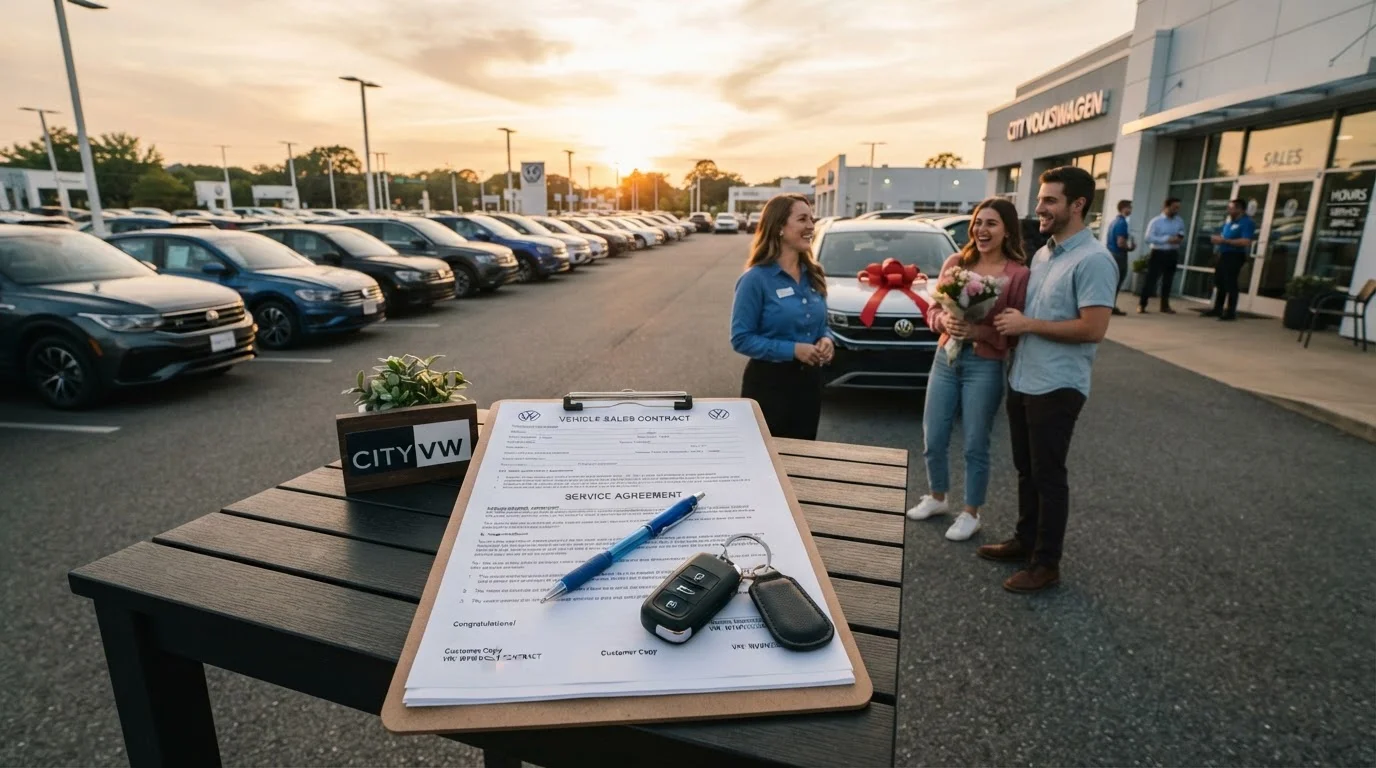
The final stage is administrative - but errors here have real legal and financial consequences. At a dealership, you'll sign a purchase agreement, financing contract (if applicable), and odometer disclosure. Read each document before signing; discrepancies between verbal agreements and written terms are not uncommon and must be caught before the deal closes.
Title transfer is a separate but critical step. The seller signs the title over to the buyer, and the buyer is responsible for registering the vehicle with their state DMV within the required timeframe - typically 10 to 30 days depending on the state. Failure to complete this creates liability exposure for both parties. Our full guide on how title transfer works walks through the details for both buyers and sellers.
If you're on the selling side of the transaction, selling privately involves its own checklist - from pricing and listing to completing a bill of sale and removing your plates. Don't release a vehicle until payment clears and all documentation is exchanged.
Insurance Must Be Active Before You Drive Away
In most states, you are required to have at least minimum liability insurance in force before operating a vehicle on public roads. If you're replacing an existing vehicle, your current policy may extend temporary coverage - but confirm this with your insurer before completing the purchase. Do not assume a dealer's temporary permit removes this obligation.
This article is for general informational purposes only and does not constitute financial, legal, or professional advice. Consult a licensed professional for guidance specific to your situation.
The content on this site is for informational purposes only and is not a substitute for professional advice. Always consult a qualified professional for guidance specific to your situation.