

Why Depreciation Matters Beyond Resale
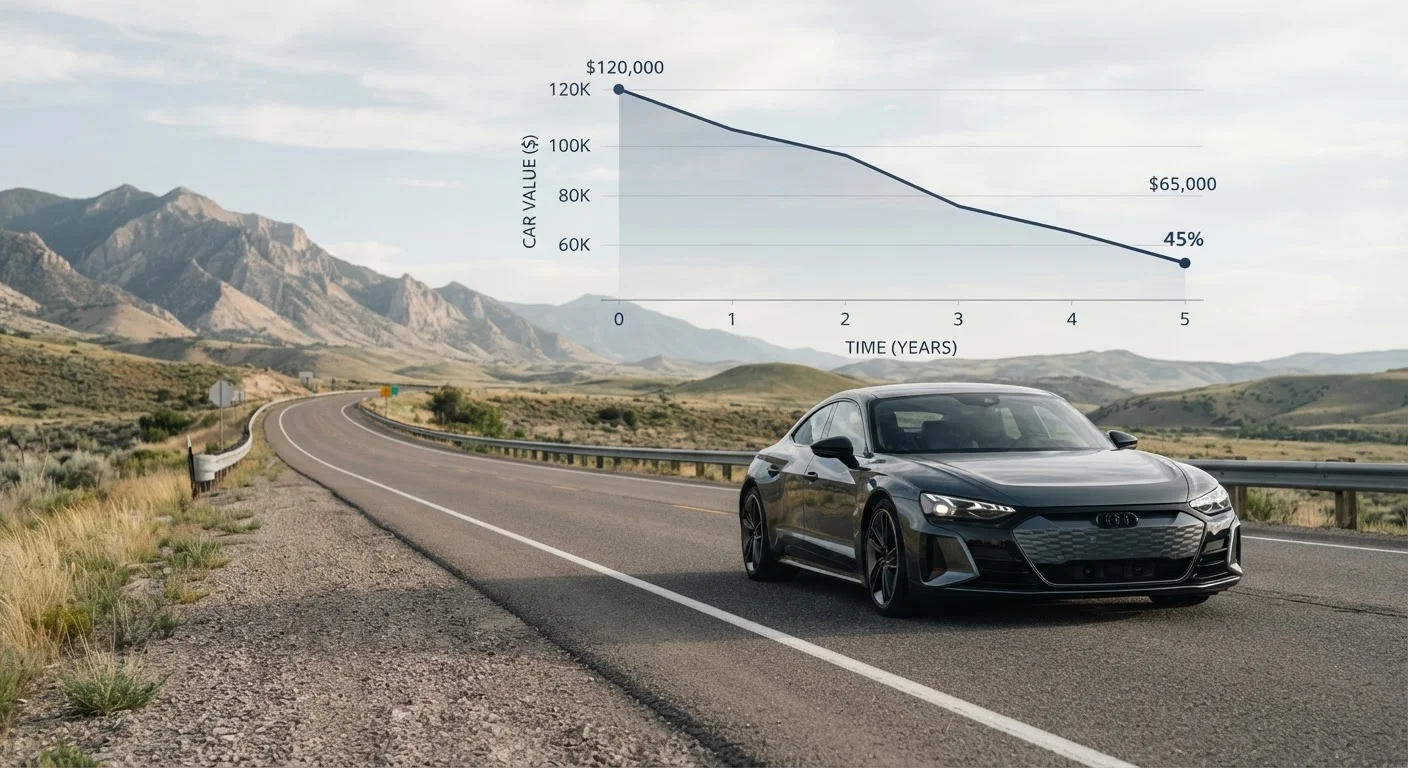
Most car owners think about depreciation only when it is time to sell. In reality, it is a continuous cost built into every year of ownership. Whether you drive a car for two years or twelve, the value it sheds along the way represents real money - money that does not come back when you hand over the keys.
Depreciation is typically the single largest component of annual vehicle ownership cost, often exceeding fuel, insurance, or maintenance in the early years. Understanding it gives you a clearer picture of what a car actually costs you - not just at the point of sale, but across its entire time in your driveway. For the full picture of what ownership involves financially, see the true annual cost of owning a car.
~20%
Average value lost in year one
Industry data consistently shows new vehicles lose roughly 15-25% of their purchase price within the first 12 months of ownership.
~50%
Cumulative loss by year five
By the five-year mark, many vehicles have lost approximately half their original value, according to widely cited automotive valuation research.
#1
Depreciation rank among ownership costs
For most new-vehicle owners in the early years, depreciation exceeds fuel, insurance, and maintenance as the largest single annual cost of ownership.
How the Depreciation Curve Works
Depreciation does not happen at a flat rate. The decline follows a curve that is steep early and flattens over time. A new vehicle can lose 15-25% of its value in year one. By years two and three, cumulative loss commonly reaches 40-50% of the original purchase price. After that, the rate of decline moderates - a five-year-old car loses a smaller percentage each year than it did in year one.
This curve has a practical implication: the first owner absorbs the most significant financial hit. Someone who purchases a vehicle at two or three years old is stepping into a much gentler slope of value loss going forward.
Factors That Accelerate or Slow the Drop
Not all vehicles depreciate at the same rate. Several variables determine how quickly - or slowly - a specific car loses value:
- Mileage: High annual mileage is one of the most consistent value reducers. Buyers and dealers price lower-mileage vehicles at a premium.
- Condition: Accidents, body damage, and interior wear all suppress resale value, even after repairs. A clean vehicle history report matters to buyers.
- Reliability reputation: Models with strong long-term reliability records tend to hold value better because demand for them remains strong in the used market.
- Fuel type and market trends: Consumer preference shifts - driven by fuel prices, emissions regulations, or technology - can rapidly alter which vehicles retain value and which do not.
- Supply and demand: Periods of low new-vehicle inventory have historically propped up used-car values; the inverse is also true when supply is abundant.
These factors interact. A high-mileage vehicle with a spotless service history may hold value better than a low-mileage vehicle with a history of accidents. For sellers, understanding these levers is central to pricing a used car accurately.
Check Depreciation Before You Buy
Before committing to a vehicle, look up its projected three- and five-year residual value using publicly available automotive valuation tools. A model with a strong residual value will cost you less in depreciation over the time you own it, even if the sticker price is similar to a model with a weaker outlook. This step is especially useful when comparing vehicles in the same segment or price range.
Using Depreciation to Inform Buying and Selling Decisions
Buyers who understand depreciation can use it strategically. A vehicle that is two to three years old has already shed the steepest portion of its value, yet often still carries remaining factory warranty coverage and relatively low maintenance demands. That combination can represent strong value - provided the vehicle's condition and history check out.
For sellers, timing matters. Waiting too long to sell extends the period of value loss and may push the vehicle into an age or mileage range where maintenance costs begin to offset savings. Selling before a vehicle crosses common high-mileage thresholds - often around 60,000 or 100,000 miles - can meaningfully affect what buyers are willing to pay.
Depreciation also connects directly to financing. A buyer who finances a depreciating asset may find themselves temporarily "underwater" - owing more on the loan than the vehicle is currently worth. This is worth factoring in when deciding on down payment size and loan term. These are the kinds of considerations that buyers routinely overlook until they face them at trade-in time.
Understanding depreciation is one piece of a larger decision-making framework. For a broader view of what a car transaction involves from start to finish, see the full lifecycle of a car transaction.
“The moment you drive off the lot, you are no longer buying a car - you are selling one. Every decision about how long to hold it and when to sell is essentially a financial decision about how much depreciation you are willing to absorb.”
— Autos & Insurance Editorial Team, Consumer automotive guidance publication
This article is for general informational purposes only and does not constitute financial or legal advice. Depreciation rates and vehicle values vary widely by model, market, and condition. Consult a qualified professional for guidance specific to your situation.
Frequently Asked Questions
A new car typically loses between 15% and 25% of its value within the first year. A significant portion of that decline happens as soon as the vehicle is titled as used. The exact amount varies by make, model, and market conditions.
Depreciation rates vary considerably by vehicle segment. Trucks, SUVs, and certain models with strong reliability reputations tend to hold value better than average. However, rates shift with fuel prices, consumer trends, and supply conditions - no category is guaranteed to retain value.
Yes. Higher mileage is one of the strongest predictors of lower resale value. Lenders, dealers, and private buyers all factor annual mileage into valuation. Vehicles with mileage significantly above average for their age typically sell for meaningfully less.
Not necessarily. Buying used does let you avoid the steepest early depreciation, but it may come with higher maintenance costs, fewer warranty protections, and less financing flexibility. The right choice depends on your budget, driving needs, and risk tolerance.
Most financial guidance suggests selling or trading between years three and five, after the sharpest depreciation has occurred but before vehicles typically enter higher-maintenance phases. Market conditions and mileage matter as much as age, however.
Yes. Depreciation directly affects the actual cash value (ACV) that insurers use to calculate payouts for total-loss claims. If your car is totaled, the insurer generally pays ACV - what the car was worth at the time of the loss - not what you originally paid.
The content on this site is for informational purposes only and is not a substitute for professional advice. Always consult a qualified professional for guidance specific to your situation.