

How a VIN Is Structured
A VIN is always exactly 17 characters long and is divided into three logical sections. Understanding what each section does makes the code far less intimidating.
World Manufacturer Identifier (positions 1-3)
The first three characters identify who built the vehicle and where. Position 1 is the country of manufacture - for example, 1, 4, or 5 indicates the United States; J indicates Japan; W indicates Germany. Position 2 narrows down the manufacturer, and position 3 specifies the vehicle type or division.
Vehicle Descriptor Section (positions 4-8)
These five characters describe the specific vehicle. Depending on the manufacturer, they encode body style, engine type, restraint systems, model, and series. This is why two trims of the same model year can have different VINs - a base engine and an available larger engine will produce different descriptor sections.
Vehicle Identifier Section (positions 9-17)
Position 9 is the check digit - a mathematically derived character used to catch errors or forgeries. Position 10 encodes the model year, using letters and numbers in a defined sequence (skipping I, O, Q, U, and Z to avoid confusion). Position 11 identifies the assembly plant. Positions 12-17 form the vehicle's unique serial number within that plant's production run.
17
Characters in every standardized VIN
The 17-character VIN format has been mandatory for US-market vehicles since the 1981 model year, per federal regulation.
1 in 8
Vehicles with an open safety recall
NHTSA data has indicated that a significant share of registered vehicles in the US carry at least one unaddressed open recall at any given time.
Where to Find Your VIN
Manufacturers are required to stamp or affix VINs in several places, which helps verify authenticity and assists in theft recovery.
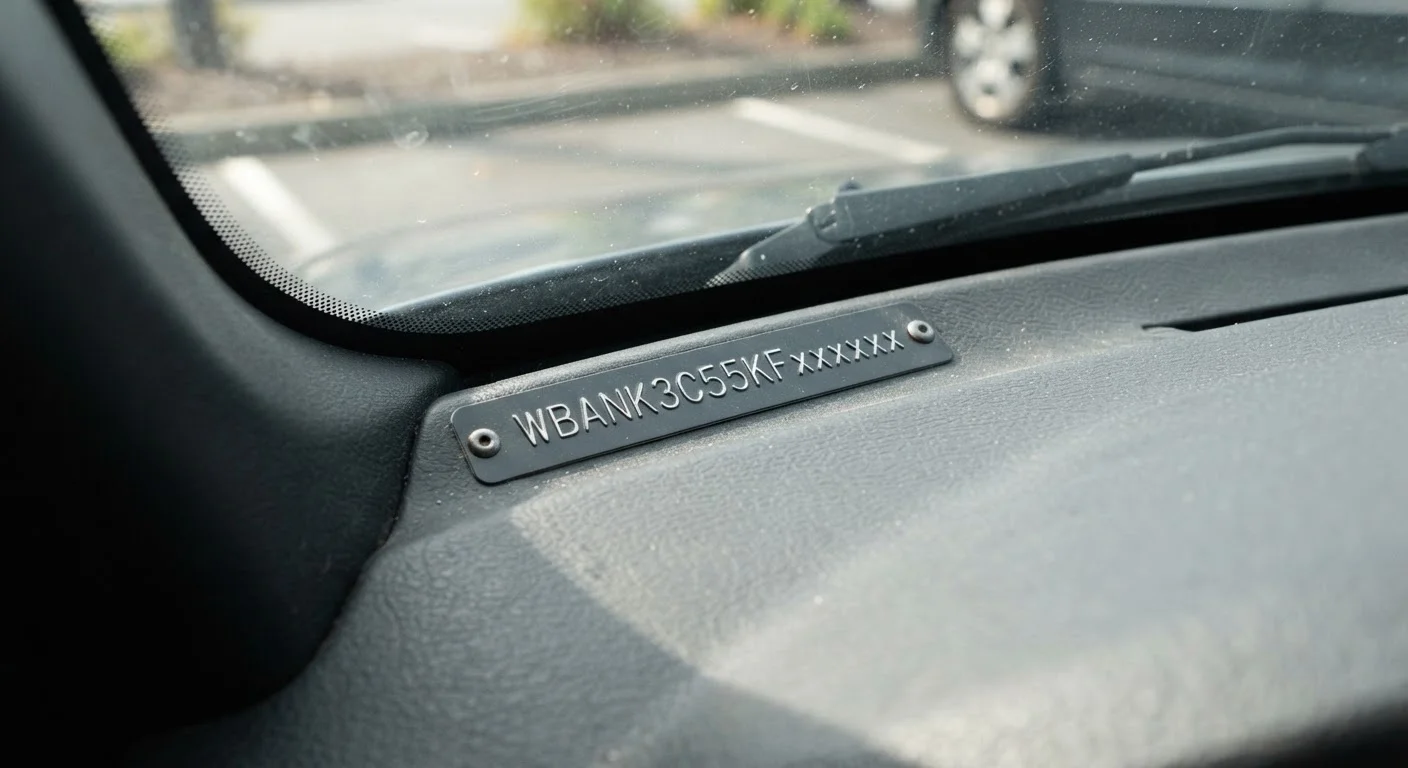
- Dashboard plate: Visible through the driver's side windshield, at the base of the windshield frame - the standard location for quick reference.
- Driver's door jamb: A sticker here often includes the VIN alongside tire pressure and load information.
- Engine block: Stamped directly into the metal - useful if body panels have been replaced or tampered with.
- Documents: Your vehicle title, registration, and insurance card all carry the VIN.
If you're evaluating a used vehicle, it's worth comparing the VIN across these locations. Mismatches can signal that panels have been swapped from another vehicle - a concern worth investigating before any purchase. For more on reading used car listings critically, see our guide on reading a used car listing.
Save Your VIN Before You Need It
Store your VIN in a note on your phone or in a secure digital document alongside your insurance card and registration. When you need it for a recall check, insurance quote, or parts order, having it instantly accessible saves time and reduces the risk of transcription errors.
What You Can Do With Your VIN
Your VIN is a practical tool for several common ownership tasks - not just a number to copy onto forms.
Recall Checks
The NHTSA maintains a free public database at nhtsa.gov where you can enter your VIN and see any open safety recalls. Manufacturers are required to remedy open recalls at no charge, so checking regularly is worthwhile.
Vehicle History Reports
Services that aggregate accident reports, title records, and odometer readings use the VIN to pull everything associated with a specific vehicle. These reports are especially valuable before a used-car purchase. Our article on vehicle history reports covers what these reports can and cannot tell you.
Insurance and Registration
Insurers use your VIN to confirm exact vehicle specifications - engine size, safety features, and trim level - all of which affect premium calculations. Providing an incorrect VIN on an application can create complications at claim time.
Maintenance Records
When you keep a maintenance log - tracking service dates, parts replaced, and mileage - noting the VIN ties those records unambiguously to the correct vehicle. This matters if you own multiple cars or sell the vehicle later. See our guide to keeping a car maintenance log for a practical approach.
Frequently Asked Questions
The most accessible location is the dashboard on the driver's side - visible through the windshield at the base of the windshield frame. It also appears on your insurance card, vehicle title, registration documents, and often on a sticker inside the driver's door jamb.
Legitimate vehicles cannot share a VIN within the same 30-year production window. If you encounter a vehicle with a VIN that matches another car on record, it's a serious red flag - potentially indicating fraud, cloning, or a salvage title situation.
You can check for open safety recalls through the NHTSA website at no cost. VINs are also used to pull vehicle history reports, which can surface accidents, title issues, and odometer discrepancies. Insurers use VINs to confirm the exact vehicle being covered.
No - a VIN encodes vehicle data, not owner data. Ownership records tied to a VIN are held by state DMVs and are not publicly accessible through standard VIN lookup tools.
The ninth character of every US-market VIN is a calculated check digit. It's derived from a mathematical formula applied to the other 16 characters, allowing systems to detect transposed numbers, typos, or deliberate falsification of VINs.
The content on this site is for informational purposes only and is not a substitute for professional advice. Always consult a qualified professional for guidance specific to your situation.