

Why the Scalp Deserves Its Own Attention
Most hair care conversations focus on the strand - shine, frizz, breakage. But every strand emerges from a follicle embedded in the scalp, and the health of that follicle environment directly influences what grows from it. A scalp burdened by excess oil, product buildup, inflammation, or dryness creates conditions that can slow growth cycles and weaken hair at its root.
Think of the scalp the way you think of the soil in a garden. Even the strongest seed struggles in compromised ground. The good news is that scalp care doesn't require a complicated or expensive routine - it requires consistency and a few well-chosen habits.
If you're just starting to think about this, our guide to building a simple hair care routine offers a practical starting point before adding scalp-specific steps.
Evidence-Informed Habits for a Healthier Scalp
The following practices are grounded in general dermatological guidance and publicly available research. They apply broadly, though individual scalp types - oily, dry, sensitive, or combination - may call for slight adjustments.
Cleanse your scalp at a frequency matched to your oil production
Sebum (the scalp's natural oil) is essential for protecting both scalp skin and hair fiber, but excess buildup can clog follicles and create an environment hospitable to microbes associated with dandruff. Washing too infrequently allows buildup; washing too often strips the barrier and triggers compensatory oil production. Neither extreme serves scalp health.
Use your fingertips - not fingernails - when shampooing
Scrubbing with nails can micro-abrade the scalp skin, introducing irritation and potential for infection. The pads of the fingers provide adequate friction to lift buildup without damaging the epidermal layer.
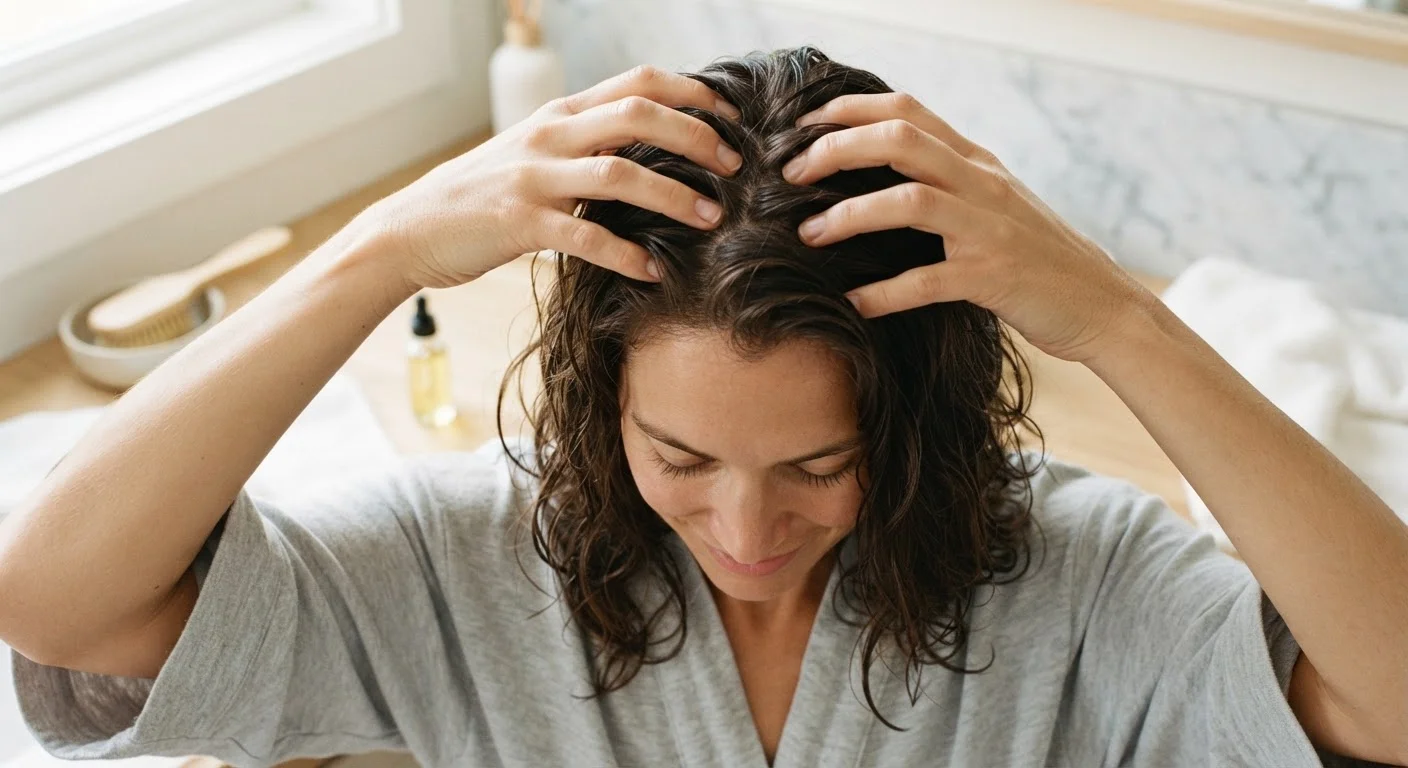
Incorporate regular scalp massage into your routine
Scalp massage is thought to increase blood flow to the follicle area and may help loosen product buildup and dead skin. Some small studies suggest consistent massage could influence hair thickness, though current evidence is preliminary and it is not a standalone treatment for hair loss.
Rinse shampoo and conditioner thoroughly
Residue from cleansing and conditioning products left on the scalp can accumulate over time, contributing to irritation, flaking, and follicle congestion. Thorough rinsing is a basic but frequently underestimated step.
Limit direct, sustained heat application to the scalp
Blow dryers and hot styling tools held close to the scalp can dry out scalp skin, degrade the lipid barrier, and in cases of repeated overexposure, cause contact burns. Keeping a safe distance and using lower heat settings reduces cumulative stress on scalp tissue.
Be selective about the ingredients in scalp-contact products
The scalp is more permeable than other body skin, and certain ingredients - such as high concentrations of fragrances, alcohol, or preservatives - can be irritating for sensitive scalp types. Reading ingredient lists and patch-testing new products reduces the likelihood of contact dermatitis or chronic irritation.
Quick Wins You Can Start Today
You don't need to overhaul your routine overnight. A few targeted changes can make a measurable difference within weeks.
Protect Your Scalp from Sun Exposure
The scalp, particularly along the part line, is vulnerable to UV damage - an often-overlooked source of skin stress. Wearing a hat or using a UV-protective hair product when spending extended time outdoors is a simple preventive step. Sunburned scalp skin can disrupt the skin barrier and cause peeling that mimics dandruff.
If you color your hair, note that chemical treatments change how both the strand and scalp behave. See how color treatment affects your care routine for adjustments worth making.
When to Consult a Dermatologist
Scalp care habits can support a healthy environment, but they are not treatments for clinical conditions. Persistent or worsening symptoms - including significant flaking (which may indicate seborrheic dermatitis or psoriasis), intense itching, tenderness, unusual hair shedding, or visible patches - deserve professional evaluation rather than home experimentation.
Scalp Habits Are Not a Medical Treatment
The practices described in this article support a healthy scalp environment under typical conditions. They are not clinically validated treatments for hair loss conditions such as alopecia areata, androgenetic alopecia, or scalp infections. If you notice sudden or significant changes in hair density, unusual scalp texture, or persistent discomfort, a dermatologist is the appropriate first step - not an adjusted home routine.
Shampooing frequency is one variable many people overlook. The right cadence depends on your hair type, activity level, and scalp oil production. Research on shampooing frequency can help you find a rhythm that works for your scalp specifically.
This article is for general informational and educational purposes only and is not a substitute for professional medical advice. If you have concerns about scalp health or hair loss, consult a licensed dermatologist or qualified healthcare provider.
The content on this site is for informational purposes only and is not a substitute for professional advice. Always consult a qualified professional for guidance specific to your situation.