

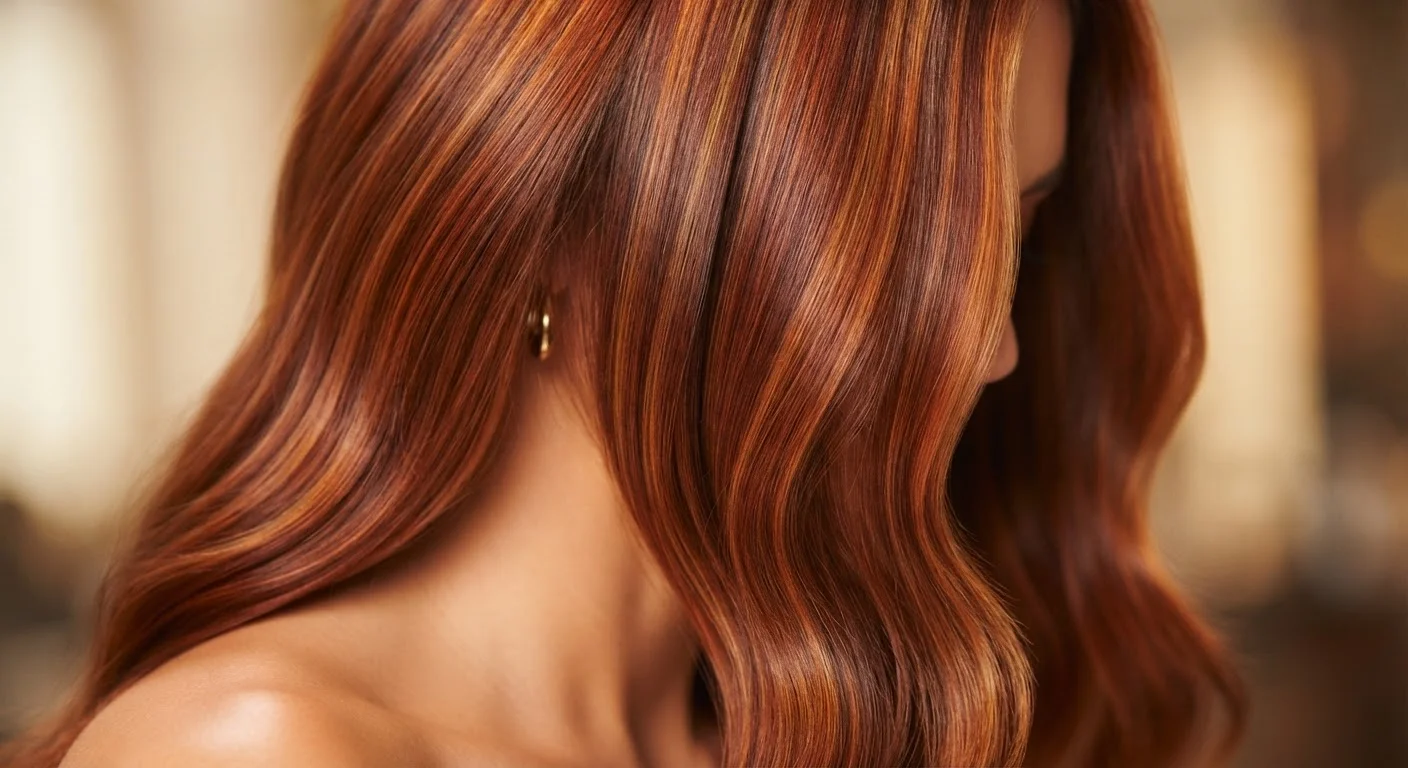
What Chemical Coloring Actually Does to Hair
To understand why color-treated hair needs different care, it helps to know what coloring actually does at a structural level. Each strand of hair has three layers: the outer cuticle (a protective, scale-like layer), the cortex (where color pigment and structural proteins live), and the medulla at the center. Permanent and semi-permanent dyes work by penetrating past the cuticle to reach the cortex.
Permanent hair color typically uses an alkaline agent - most commonly ammonia - to swell and lift the cuticle open. An oxidizing developer (usually hydrogen peroxide) then breaks down existing pigment molecules and deposits new color in the cortex. This is an effective process, but it isn't structurally neutral. The cuticle, once lifted and then laid back down, does not always return to its original tightly sealed position. Repeated chemical processing compounds this effect over time.
The result is hair that is more structurally open than before: more susceptible to moisture loss, more vulnerable to environmental stressors, and often with reduced elasticity. Recognizing this as a structural change - not just a cosmetic one - is the foundation for understanding every care adjustment that follows.
Color Processing Is a Cumulative Chemical Change
Each color application adds to the structural history of your hair. One session of permanent color causes measurable changes; repeated sessions over months or years compound those changes significantly. Understanding this helps set realistic expectations: color-treated hair requires ongoing care adjustments, not a one-time fix. If your hair shows significant breakage or elasticity loss, a consultation with a licensed stylist or dermatologist is worthwhile before continuing further chemical services.
How Color Affects Hair Porosity
Porosity describes how readily your hair absorbs and retains moisture, and it is closely tied to cuticle condition. Chemical coloring tends to increase porosity because the lifting process roughens and gaps the cuticle layer. High-porosity hair absorbs water quickly but also releases it quickly - which is why color-treated hair can feel dry even shortly after washing.
Understanding your current porosity is genuinely useful for making product decisions. Our guide on hair porosity and why it affects how you moisturize walks through how to identify your porosity level and what it means in practice.
For high-porosity color-treated hair specifically, the care goal shifts toward sealing moisture in rather than simply adding it. Lightweight oils, leave-in conditioners, and ingredients like shea butter or glycerin applied to damp hair can help slow moisture loss between washes.
~20%
Reduction in tensile strength after coloring
Research on chemically processed hair generally shows measurable reductions in tensile strength and elasticity compared to untreated hair.
2-4x
Faster moisture loss in high-porosity hair
High-porosity hair - common after chemical processing - releases moisture significantly faster than low-porosity hair under the same conditions.
Up to 50%
Color fade reduction with sulfate-free cleansing
Studies comparing sulfate-free and traditional surfactants have found meaningful differences in color retention over repeated wash cycles.
Cleansing: Why Less Is Often More
Shampoo is a necessary part of scalp hygiene, but standard sulfate-based formulas are designed to remove oil efficiently - and they do not discriminate between scalp sebum and color molecules. Sulfates can accelerate color fading by stripping the dye from the cortex more aggressively with each wash.
Switching to a sulfate-free or low-sulfate cleanser is one of the most commonly recommended adjustments for color-treated hair, and the reasoning is straightforward: gentler surfactants clean the scalp adequately while being less disruptive to the cuticle and color deposit. Washing frequency matters too. Reducing wash days where your scalp can tolerate it - or using dry shampoo at the roots in between - limits cumulative exposure to water and cleansing agents, both of which contribute to fading.
Wait Before the First Wash
After a fresh color service, waiting at least 48-72 hours before shampooing gives color molecules time to fully settle into the cortex. The cuticle needs time to close back down after being lifted by the coloring process. Washing too soon can flush out color before it has had a chance to stabilize, leading to faster fading from the very start.
Washing with cooler water is a small habit change with a real rationale: hot water opens the cuticle further, accelerating color loss. Finishing with a cool rinse encourages the cuticle to lie flatter and helps seal in moisture.
Moisture and Conditioning: What Changes and Why
Because color-treated hair tends toward higher porosity and reduced structural integrity, consistent conditioning becomes more important - not as a luxury step but as structural maintenance. A rinse-out conditioner after every wash is a baseline. But many people with color-treated hair benefit from incorporating deeper conditioning treatments on a regular basis.
Our overview of the differences between conditioner, deep conditioner, and hair masks explains how each product works differently and when each fits into a routine. For color-treated hair, a deep conditioner or mask used weekly or biweekly can help restore softness and reduce breakage by temporarily reinforcing the hair shaft.
Protein-containing treatments deserve a mention here too. Color processing can degrade the keratin proteins that give hair its strength. Occasional protein treatments can help address this, though balance matters - too much protein on already dry hair can cause brittleness. If you are building or rebuilding a hair care routine, starting with a simple moisture-first approach and adding protein treatments based on how your hair responds is a sensible path.
When assessing whether your color-treated hair needs protein or moisture, do a simple strand stretch test on a wet hair: if it stretches significantly before snapping, prioritize protein; if it snaps immediately with little stretch, prioritize moisture.
Color processing disrupts both the protein structure and moisture balance of the hair, but overloading on either causes different problems - knowing which your hair needs prevents overcorrection.
Apply your deep conditioner to hair that is damp but not soaking wet. Oversaturated hair is less able to absorb conditioning ingredients effectively.
Conditioner absorption depends on the hair shaft having some capacity to take in product; excess water occupying the cortex reduces how much conditioner can penetrate.
Heat Styling and UV Exposure: Added Risks
Heat tools - flat irons, curling wands, blow dryers - add thermal stress to hair that is already structurally compromised by chemical processing. The combination accelerates cuticle damage and protein degradation more than either factor alone. This does not mean avoiding heat entirely, but it does make temperature management and protective products more important.
A heat protectant applied before styling creates a barrier that reduces direct heat transfer to the strand. Using the lowest effective temperature setting, rather than defaulting to the highest, makes a meaningful difference in cumulative damage over time. Our detailed look at heat styling without causing long-term damage covers these practices in depth.
UV exposure is a less-discussed but real factor. Sunlight can oxidize color pigments, causing warm tones to shift and vibrant shades to fade faster. Hair-specific UV protection products exist and may be worth considering for people who spend significant time outdoors - though this is a personal decision based on lifestyle and how much color longevity matters to you.
Do Not Layer Heat on Freshly Colored Hair
In the days immediately following a color service, hair is at its most structurally vulnerable - the cuticle has been chemically opened and is still settling. Applying high heat during this window is more likely to cause breakage or uneven texture. Giving your hair a few days of low-manipulation care after coloring before returning to heat tools is a straightforward way to protect your investment and your hair's condition.
Scalp Care After Coloring
It is easy to focus all post-color attention on the hair shaft and overlook the scalp, but the scalp is a living skin environment that coloring chemicals directly contact. Some people experience temporary sensitivity, dryness, or minor irritation after coloring - this is worth monitoring. If irritation is persistent, severe, or accompanied by significant flaking or discomfort, consulting a dermatologist is advisable rather than self-treating.
In terms of routine scalp care, the same principles that apply generally - avoiding harsh cleansers, not over-washing, gentle mechanical exfoliation if buildup is an issue - remain relevant. Our guide on scalp care habits that support healthy hair growth covers evidence-informed approaches to keeping the scalp balanced, which supports the conditions for healthy new growth coming in after color treatments.
New growth is uncolored hair with an intact cuticle - structurally different from the treated lengths. Over time, this contrast in porosity and condition between roots and ends is normal and is one reason why touch-up timing and conditioning approaches may need periodic reassessment as your hair grows out.
This article is for general informational and educational purposes only. It is not a substitute for professional advice from a licensed cosmetologist, dermatologist, or healthcare provider. If you experience scalp reactions, significant hair loss, or persistent hair damage, consult a qualified professional.
The content on this site is for informational purposes only and is not a substitute for professional advice. Always consult a qualified professional for guidance specific to your situation.