

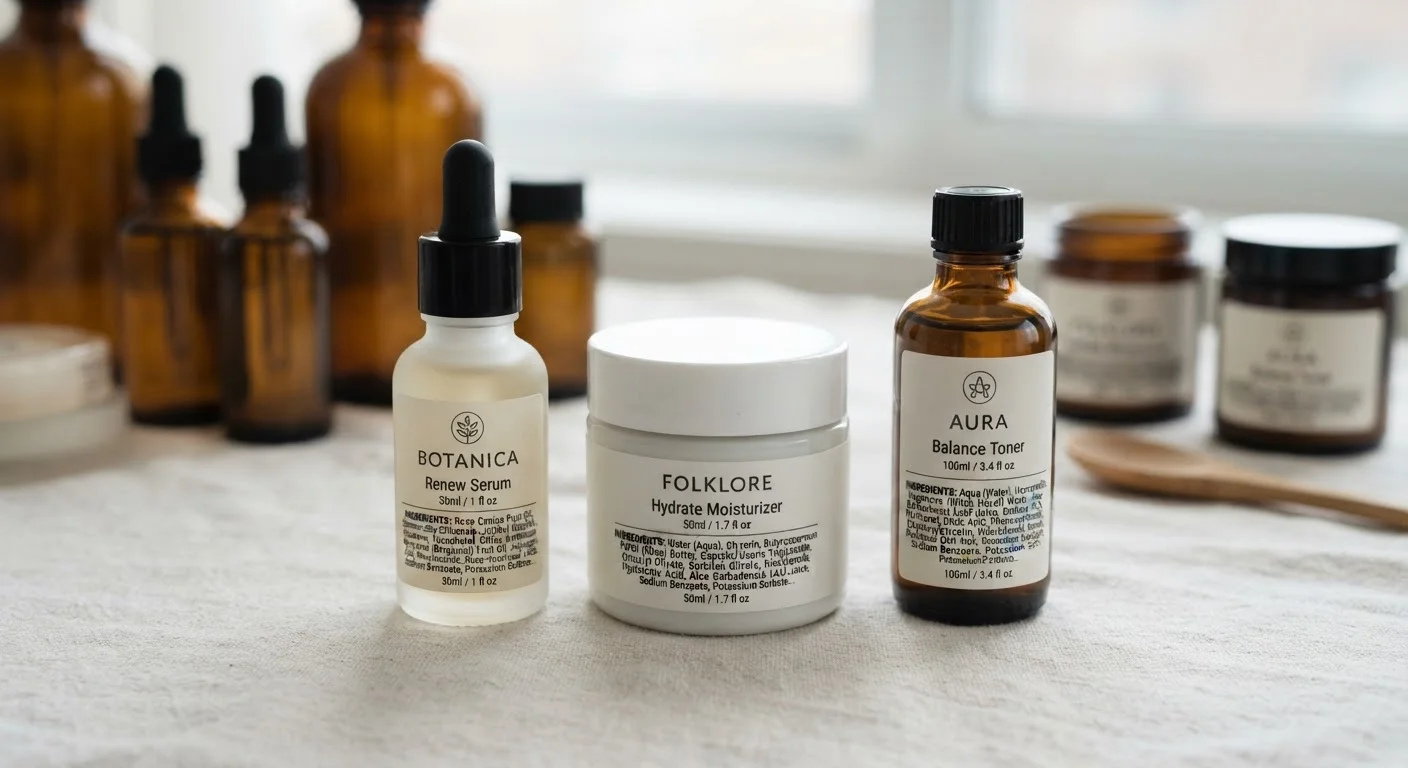
Why Ingredient Terminology Matters
Every skincare product is required by the FDA to list its ingredients in descending order by concentration - meaning the first few ingredients make up the bulk of what you're applying. Yet for most people, that list reads like a chemistry exam. Terms like "niacinamide," "ceramide," and "humectant" appear constantly across labels, and misunderstanding them can lead to choosing products that don't match your skin's actual needs.
This reference guide covers the most common functional and descriptive terms you'll encounter. It focuses on what each term means and how it relates to your skin - not on ranking or recommending specific products. For a deeper look at how these categories work together in moisturizers, see our guide to humectants, emollients, and occlusives.
| Ingredient list order | Descending by concentration (highest first) (U.S. FDA cosmetic labeling regulations) |
| Active vs. inactive split | Applies to OTC drug products only (e.g., sunscreens, acne treatments) (U.S. FDA OTC drug labeling rules) |
| "Fragrance" on a label | Can represent dozens of undisclosed compounds under one term (U.S. FDA fragrance disclosure rules) |
| "Non-comedogenic" definition | Not standardized or regulated; no universal pass/fail test exists (General dermatology consensus) |
| Common moisturizer mechanisms | Humectant, emollient, and occlusive - often combined in one product |
| Retinoids (OTC) | Retinol is the most widely available over-the-counter retinoid form |
Core Functional Categories Explained
Skincare ingredients are often grouped by the job they perform rather than their chemical origin. These functional categories appear across product types - serums, moisturizers, cleansers, and treatments alike.
Humectants
Humectants draw water into the skin from the environment or from deeper skin layers. Glycerin, hyaluronic acid, and urea are the most frequently cited examples. They are typically water-soluble and are found early in lightweight formulas.
Emollients
Emollients fill in the microscopic gaps between skin cells, smoothing texture and reducing the feeling of dryness. Ingredients like squalane, fatty acids (such as linoleic or oleic acid), and certain plant oils function this way. They improve softness without necessarily sealing the surface.
Occlusives
Occlusives form a physical barrier on the skin's surface to slow moisture loss. Petrolatum, beeswax, and dimethicone are common examples. They are generally heavier and are best applied as the final step in a layered routine.
Emulsifiers
Emulsifiers allow oil and water - which would otherwise separate - to combine into a stable cream or lotion. They are functional ingredients, not active ones, meaning they do not treat the skin but make the product usable. Look for ingredients ending in "-eth" or names like "cetearyl alcohol" or "polysorbate 20."
Humectant
An ingredient that attracts and binds water molecules to the skin. Common examples include glycerin, hyaluronic acid, and aloe vera. Humectants help maintain surface hydration.
Emollient
An ingredient that softens and smooths the skin by filling gaps between skin cells. Plant oils, fatty acids, and squalane are typical emollients. They improve texture without heavily occluding the surface.
Occlusive
An ingredient that forms a physical barrier on the skin to prevent transepidermal water loss (TEWL). Petrolatum and beeswax are classic examples. Occlusives are most effective when applied over hydrated skin.
Transepidermal Water Loss (TEWL)
The natural process by which water passively evaporates through the outermost layer of skin (the epidermis). Elevated TEWL is associated with compromised skin barrier function and increased dryness.
Ceramide
A type of lipid (fat molecule) naturally found in the skin's barrier. Ceramides in skincare products help reinforce and restore the lipid structure of the outer skin layer, supporting moisture retention.
Niacinamide
A water-soluble form of vitamin B3 used in skincare for its ability to support the skin barrier, even skin tone, and reduce the appearance of enlarged pores. It is generally considered well-tolerated across skin types.
Exfoliant
An ingredient that accelerates the shedding of dead skin cells. Chemical exfoliants include alpha hydroxy acids (AHAs) like glycolic acid and beta hydroxy acids (BHAs) like salicylic acid. Physical exfoliants rely on abrasive particles.
Surfactant
Short for surface-active agent, a surfactant reduces the surface tension between oil and water, enabling cleansers to lift and rinse away dirt and sebum. Surfactants vary widely in gentleness and lathering properties.
Antioxidant
A compound that neutralizes free radicals - unstable molecules generated by UV exposure, pollution, and other environmental stressors. Common skincare antioxidants include vitamin C (ascorbic acid), vitamin E (tocopherol), and resveratrol.
Retinoid
A class of compounds derived from vitamin A. Retinoids influence skin cell turnover and collagen production. Over-the-counter forms include retinol; prescription-strength versions require a clinician's authorization.
pH
A measure of acidity or alkalinity on a scale of 0-14. Healthy skin surface tends toward the mildly acidic range. Cleansers and actives formulated near this range are generally considered less likely to disrupt the skin barrier.
Non-comedogenic
A label claim indicating that an ingredient or formula is not expected to clog pores. It is important to note that there is no standardized regulatory definition or test for this term, and individual responses vary.
Active vs. Inactive Ingredients
The FDA distinguishes between active ingredients - those with a recognized drug effect, such as sunscreen filters like zinc oxide or avobenzone, or acne treatments like salicylic acid - and inactive ingredients, which form the base or delivery system of the product. Actives are always listed separately at the top of OTC drug labels. In cosmetic products (which make no drug claims), this separation does not apply, so all ingredients appear together in one list.
Descriptors like "fragrance" or "parfum" are umbrella terms under FDA rules, meaning a manufacturer can list dozens of scent compounds under a single word. This is worth knowing if you have a known fragrance sensitivity. For a broader look at how ingredient myths can mislead shoppers, our article on common skincare ingredient myths is a useful companion read.
"Natural" and "Clean" Are Not Regulated Terms
Neither "natural" nor "clean" has a legally defined meaning under U.S. cosmetic regulations. These terms are used at the discretion of manufacturers and do not guarantee safety, purity, or efficacy. An ingredient's origin - plant-derived or synthetic - does not by itself determine how it affects the skin. For a fuller discussion of this topic, see our companion piece on skincare ingredient myths.
If you're working to match ingredients to your skin type, understanding how your skin behaves is the necessary first step. Our guide to identifying your skin type accurately can help you build from the right foundation.
This article is for general informational and educational purposes only. It is not medical advice. If you have a skin condition, allergy, or sensitivity, consult a qualified dermatologist or healthcare provider before changing your skincare routine.
The content on this site is for informational purposes only and is not a substitute for professional advice. Always consult a qualified professional for guidance specific to your situation.