

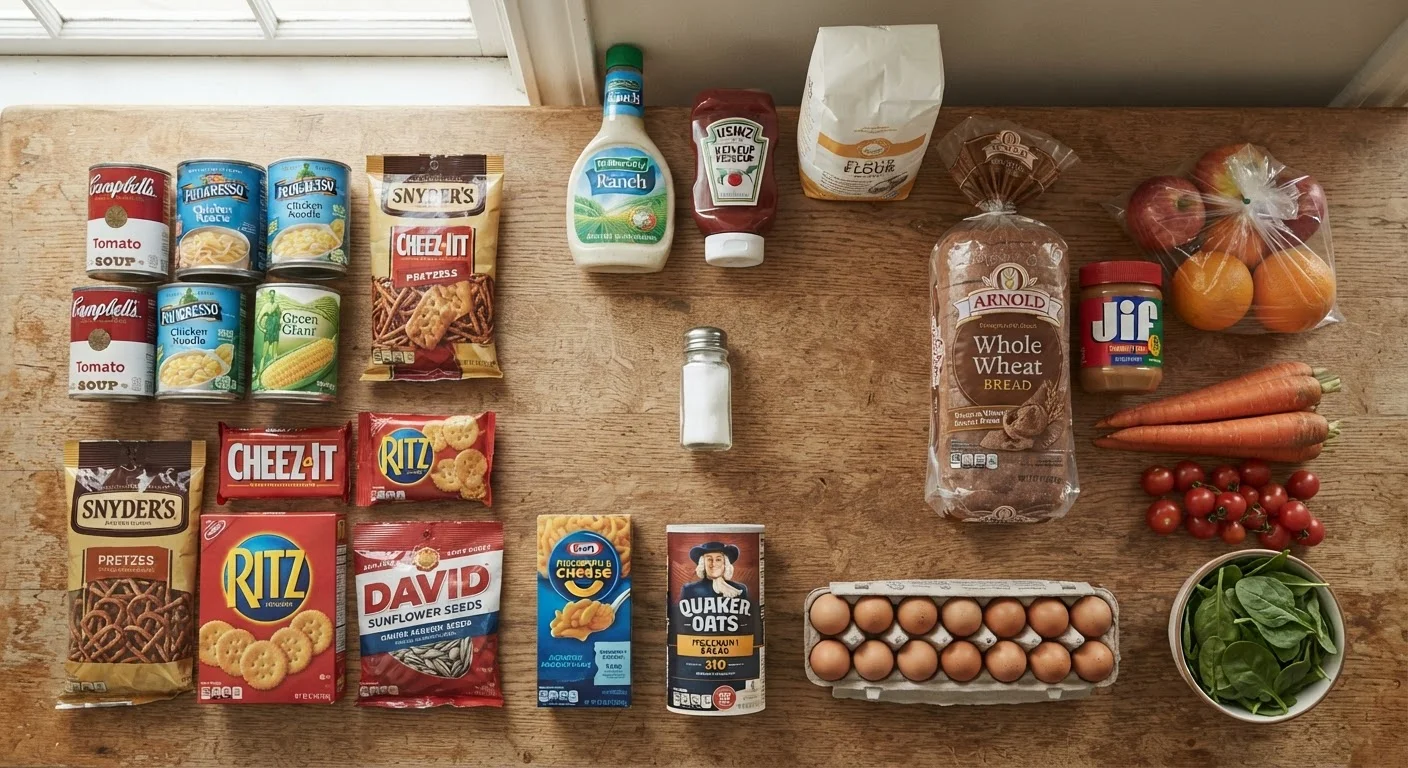
Where All That Sodium Actually Comes From
A common assumption is that sodium intake is largely a matter of how much salt you shake onto your food. In reality, the salt shaker contributes a relatively small share. According to the Centers for Disease Control and Prevention (CDC), approximately 70% of the sodium Americans consume comes from processed, packaged, and restaurant foods - before anyone reaches for the shaker.
The biggest contributors tend to be foods that don't taste obviously salty. Bread and rolls are consistently among the top sources of sodium in the American diet, as are cold cuts, canned soups, pizza, and savory snacks. Sodium is used not just to add flavor but as a preservative and texture agent, which is why it appears in surprising quantities in foods like cottage cheese, breakfast cereals, and condiments.
3,400 mg
Average daily sodium intake for Americans
According to the CDC, this significantly exceeds the Dietary Guidelines for Americans' recommendation of less than 2,300 mg per day.
~70%
Sodium from processed and restaurant foods
The CDC estimates that roughly 70% of dietary sodium in the U.S. comes from packaged, processed, and restaurant foods - not home cooking or the salt shaker.
1 in 2
U.S. adults with high blood pressure or prehypertension
The American Heart Association notes that nearly half of American adults have high blood pressure, a condition closely linked to chronically elevated sodium intake.
Understanding where sodium hides is the first step toward making more informed choices. Nutrition labels are required to list sodium content per serving - a useful benchmark once you know what you're looking for. As a general reference point, the FDA considers a food "high in sodium" if it contains 20% or more of the Daily Value (460 mg or more per serving).
What Sodium Does in the Body - and What Happens With Too Much
Sodium plays several critical roles in normal physiology. It helps maintain fluid balance inside and outside cells, facilitates the electrical signals that nerves use to communicate, and enables muscle contractions - including the heartbeat. The body regulates sodium levels carefully through the kidneys, which filter excess sodium into urine.
When sodium intake consistently exceeds what the kidneys can efficiently excrete, fluid retention can occur, which may raise blood volume and, in turn, blood pressure. Elevated blood pressure (hypertension) is a significant risk factor for heart disease and stroke - two leading causes of death in the United States. Research suggests that not everyone responds to sodium the same way; some individuals are more "salt-sensitive" than others, meaning their blood pressure rises more in response to dietary sodium.
Sodium Sensitivity Varies By Person
Not everyone's blood pressure responds to dietary sodium in the same way. Factors such as genetics, kidney function, age, and baseline blood pressure all influence sodium sensitivity. This is why population-level guidelines are starting points, not prescriptions. Anyone managing hypertension, kidney disease, or heart conditions should work directly with a healthcare provider to determine an appropriate sodium target.
It's also worth noting that sodium balance interacts with other dietary factors. Potassium, found in foods like bananas, potatoes, and leafy greens, helps counteract some of sodium's blood-pressure-raising effects. This is one reason dietary patterns - rather than single nutrients in isolation - are emphasized in public health guidelines. For a broader look at balanced eating principles, see principles nutrition scientists generally agree on.
Practical Ways to Moderate Sodium Without Overhauling Everything
Cutting sodium doesn't require eliminating flavor or adopting a restrictive diet. Small, consistent changes tend to be both more sustainable and more effective than dramatic overhauls. A few evidence-informed approaches:
- Compare labels: When choosing between similar packaged products, the sodium content per serving can vary significantly. Choosing a lower-sodium version of canned tomatoes or broth, for example, adds up over time.
- Cook more at home: Home-cooked meals generally contain less sodium than restaurant meals, even when seasoned well, simply because you control what goes in.
- Gradually reduce added salt: Taste preferences for saltiness are adaptable. Gradually reducing the salt used in cooking can shift your palate over weeks, making less-salty food feel normal rather than bland.
- Use herbs, spices, and acid: Lemon juice, vinegar, garlic, and fresh herbs can enhance perceived flavor and reduce the need for salt.
Start With One Swap, Not a Full Reset
Rather than trying to overhaul your entire diet at once, identify one high-sodium item you consume regularly - such as canned soup or a favorite condiment - and find a lower-sodium alternative. Stacking small changes like this over time is more sustainable than attempting a complete dietary overhaul. Taste preferences for salt genuinely adapt with gradual exposure, so the transition tends to get easier.
Sodium is just one piece of the nutritional puzzle. It's worth examining the broader picture - including nutritional blind spots that sneak into even careful diets and how sodium fits alongside nutrients like dietary fiber, which most Americans also fall short on.
This article is for general informational and educational purposes only and is not a substitute for professional medical advice. Consult a qualified healthcare provider for guidance specific to your health circumstances.
Frequently Asked Questions
The Dietary Guidelines for Americans recommend consuming less than 2,300 mg of sodium per day for most adults. The average American takes in closer to 3,400 mg daily. Some individuals, particularly those with high blood pressure or certain kidney conditions, may be advised to aim even lower - a conversation best had with a healthcare provider.
From a sodium standpoint, sea salt, kosher salt, and table salt are essentially equivalent - all are primarily sodium chloride. Some specialty salts may contain trace minerals, but not in quantities that meaningfully affect nutrition. The sodium content per teaspoon can vary slightly due to grain size, but the difference is minor.
Processed and packaged foods tend to be the biggest contributors: canned soups, deli meats, bread, pizza, cheese, and fast food. Restaurant meals are often particularly high. Fresh fruits, vegetables, and unprocessed whole grains are naturally very low in sodium.
Research generally supports that reducing sodium intake can lower blood pressure, especially in people who are "salt-sensitive" or who already have elevated blood pressure. The effect varies from person to person. Talk to a healthcare provider before making significant dietary changes, particularly if you manage a chronic condition.
Yes. Sodium is an essential nutrient, and very low intake can be harmful. Hyponatremia - abnormally low blood sodium - can occur in certain medical contexts. For most generally healthy adults following typical diets, inadequate sodium intake is rarely a concern.
The content on this site is for informational purposes only and is not a substitute for professional advice. Always consult a qualified professional for guidance specific to your situation.