

Summary
18 items · 15-25 minutes
Why a Weekly Audit Works Better Than Daily Tracking
Daily food logging can feel exhausting, and research suggests that obsessive tracking sometimes increases food-related anxiety rather than improving diet quality. A weekly self-audit sidesteps that trap. Instead of cataloguing every gram, you step back once a week and ask honest, pattern-level questions about what you actually ate - not what you planned to eat.
Think of it like a budget review for your household: the goal isn't punishment for every small deviation, but rather noticing trends before they calcify into habits. Seven days of data gives you enough signal to spot genuine gaps without the noise of a single off day.
The questions below are organized into four categories. Work through them in order, and jot brief notes as you go. You're looking for patterns, not perfection.
Weekly Meal Recall Journal
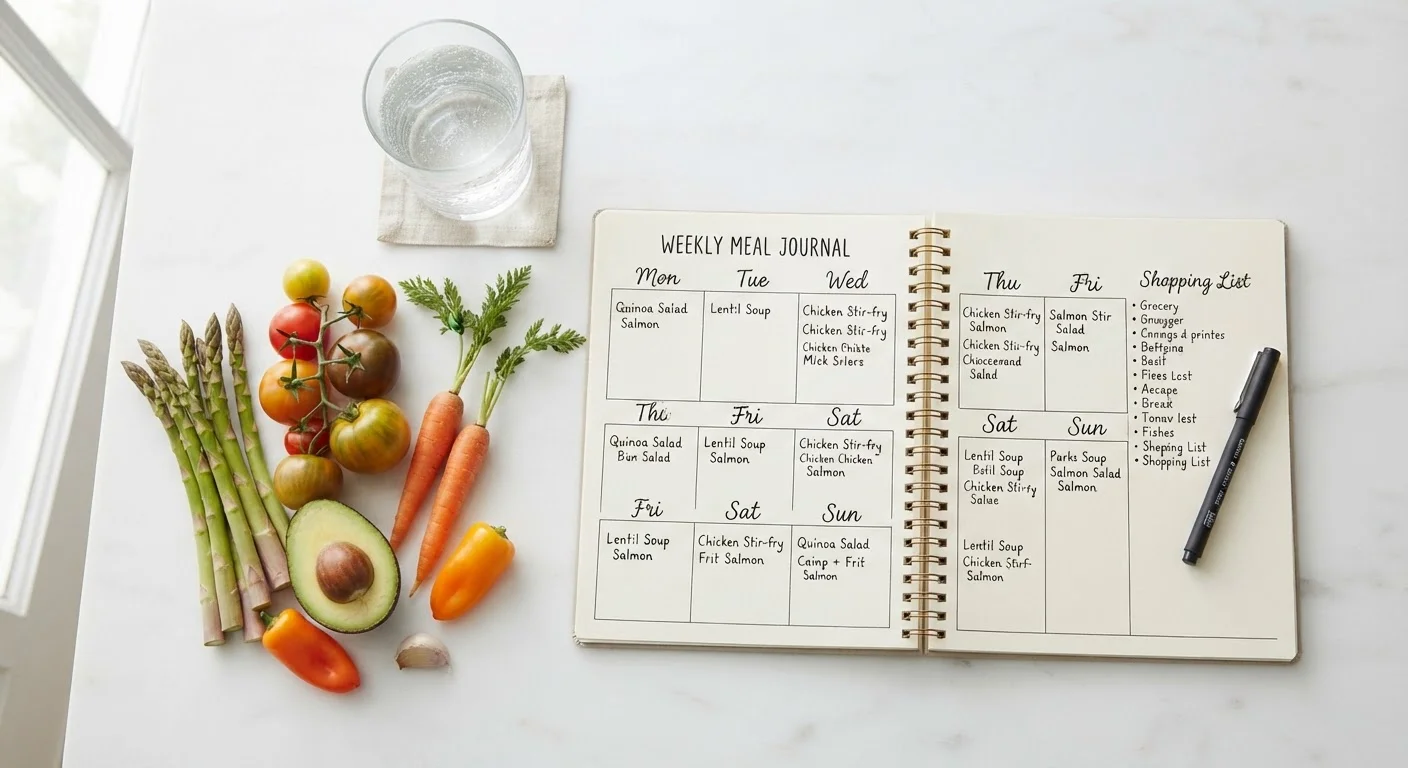
A simple notebook or notes app where you jot down meals each day makes the weekly audit faster and more accurate.
MyPlate Food Groups Reference
The USDA MyPlate resource offers a free, straightforward guide to recommended food group proportions for adults.
Registered Dietitian Nutritionist (RDN)
A licensed RDN can interpret your audit results in the context of your individual health history and goals.
How to Use This Checklist
Set aside 15-25 minutes at the end of each week - Sunday evening works well for most people. You don't need a food diary, though one helps. If you haven't tracked anything, simply recall your meals mentally or check any photos or notes you made. Answer each question honestly with a quick yes, no, or rough estimate. When you find a gap, note one small, specific change you could make the following week - not a full diet overhaul.
This Is Education, Not Medical Advice
The questions in this checklist are designed for general self-reflection by generally healthy adults. They are not a diagnostic tool and cannot account for your individual health conditions, medications, or nutritional needs. If you have a chronic condition, are pregnant, or have concerns about your diet's impact on your health, please consult a registered dietitian or your primary care provider before making changes.
If any question surfaces a concern about a medical condition, an eating pattern that feels out of control, or symptoms like persistent fatigue or digestive distress, treat that as a prompt to speak with a registered dietitian or your primary care provider - not a reason to self-diagnose or self-prescribe. This checklist is general health education, not personalized medical guidance.
Food Group Coverage
Hydration
Meal Structure and Patterns
Nutritional Quality and Gaps
Reading Your Results and Taking Action
After working through the checklist, look at where most of your "no" or "rarely" answers landed. If they cluster around vegetables and fiber, that's a different priority than if they cluster around protein or hydration. Focus on one group at a time rather than trying to fix everything simultaneously.
Common patterns to watch for include skipping breakfast most days, relying heavily on the same four or five foods all week (limiting micronutrient variety), and drinking most of your fluids as caloric beverages. The relationship between hydration and nutrient absorption is often underappreciated - water affects digestion, energy, and how your body uses the nutrients you do consume.
For a deeper look at where even careful eaters tend to fall short, see nutrition pitfalls that sneak into careful diets. And if you want to understand which specific vitamins and minerals deserve your attention, micronutrients every adult should know offers a practical reference.
Avoid Turning This Into a Rigid Scorecard
The purpose of this audit is reflection and incremental improvement, not grading yourself or triggering guilt. If you notice you're using the checklist in ways that increase anxiety around food or lead to overly restrictive thinking, step back and consider speaking with a healthcare professional. Sustainable nutrition habits are built on consistency and flexibility, not perfection.
Finally, consider pairing this nutrition check-in with a weekly mental health check-in. Mood, stress, and sleep are tightly intertwined with eating behavior - addressing them together often produces better results than focusing on food alone.
This article is for general informational and educational purposes only and is not a substitute for professional medical or dietary advice. Always consult a qualified healthcare provider or registered dietitian for guidance tailored to your individual health needs.
The content on this site is for informational purposes only and is not a substitute for professional advice. Always consult a qualified professional for guidance specific to your situation.