

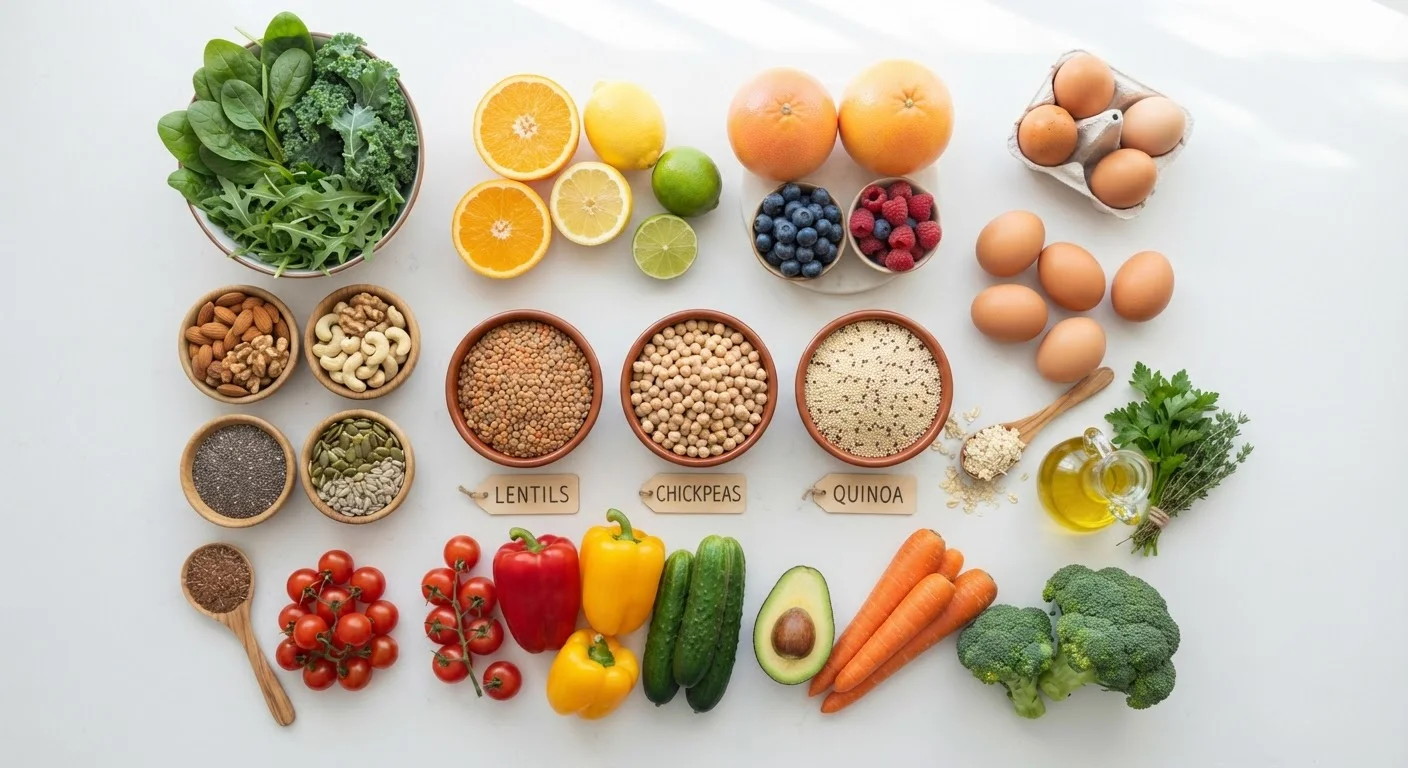
Why Micronutrients Matter
Macronutrients - carbohydrates, protein, and fat - often get the spotlight, but vitamins and minerals do the quiet, essential work of keeping your body running. These micronutrients regulate hundreds of biological processes: nerve signaling, bone maintenance, immune defense, and energy metabolism, to name a few. Unlike macronutrients, they are needed in small amounts, yet deficiencies can have significant health consequences.
For a broader picture of how all nutrients work together, see our guide to macronutrients. This reference focuses specifically on the vitamins and minerals most relevant to everyday adult health, with practical food sources for each.
| Total essential vitamins | 13 (4 fat-soluble, 9 water-soluble) (National Institutes of Health, Office of Dietary Supplements) |
| Essential minerals for adults | At least 16 identified as essential (Dietary Reference Intakes, National Academies of Sciences) |
| Most common US deficiency | Vitamin D (widespread insufficiency documented) (NHANES data, CDC) |
| Iron deficiency prevalence | Affects roughly 10 million Americans (Centers for Disease Control and Prevention) |
| Key folate group | Especially important for adults of childbearing age (U.S. Preventive Services Task Force guidelines) |
Key Vitamins: Functions and Food Sources
Vitamins are organic compounds your body cannot synthesize in sufficient quantities on its own. They fall into two categories: fat-soluble (A, D, E, K) and water-soluble (C and the B vitamins). Fat-soluble vitamins are stored in fatty tissue, while water-soluble vitamins are not stored as readily and require more consistent dietary intake.
Micronutrient
A vitamin or mineral required by the body in relatively small amounts to support normal physiological functions. Despite the small quantities needed, deficiencies can cause significant health problems.
Fat-soluble vitamin
Vitamins A, D, E, and K, which dissolve in fat and are stored in the body's fatty tissue and liver. Because they accumulate, excessive intake from supplements can potentially reach harmful levels.
Water-soluble vitamin
Vitamins C and the B-complex vitamins, which dissolve in water and are not stored in the body to the same extent as fat-soluble vitamins. They must be replenished more regularly through diet.
Trace mineral
A mineral needed by the body in very small - but essential - amounts. Iron, zinc, selenium, and iodine are common examples. Even at low required amounts, a deficiency can significantly impair health.
Bioavailability
The proportion of a nutrient that the body actually absorbs and uses after consuming it. Bioavailability can vary based on the food source, preparation method, and what else is eaten alongside it.
| Vitamin | Primary Role | Common Food Sources |
|---|---|---|
| Vitamin A | Vision, immune function, skin integrity | Liver, sweet potato, carrots, leafy greens |
| Vitamin C | Antioxidant, collagen synthesis, immune support | Citrus fruits, bell peppers, broccoli, strawberries |
| Vitamin D | Calcium absorption, bone health, immune regulation | Fatty fish, fortified dairy, egg yolks, sunlight exposure |
| Vitamin E | Antioxidant protection, immune function | Nuts, seeds, vegetable oils, spinach |
| Vitamin K | Blood clotting, bone metabolism | Leafy greens (kale, spinach), fermented foods |
| B vitamins (B6, B12, folate) | Energy metabolism, red blood cell formation, neurological function | Whole grains, legumes, meat, eggs, dairy, fortified cereals |
Vitamin D deserves particular attention: many adults in the United States have insufficient levels, partly because few foods contain it naturally in meaningful amounts and sun exposure varies widely by geography and season. If you are concerned about your levels, a healthcare provider can order a simple blood test.
Essential Minerals: What They Do and Where to Find Them
Minerals are inorganic elements absorbed from soil and water through the foods we eat. Macrominerals - such as calcium, magnesium, and potassium - are needed in larger amounts; trace minerals - including iron, zinc, and selenium - are required in smaller quantities but are no less important.
| Mineral | Primary Role | Common Food Sources |
|---|---|---|
| Calcium | Bone and tooth structure, muscle contraction, nerve signaling | Dairy products, fortified plant milks, tofu, leafy greens |
| Magnesium | Over 300 enzymatic reactions, muscle and nerve function, blood sugar regulation | Nuts, seeds, whole grains, dark chocolate, legumes |
| Potassium | Blood pressure regulation, fluid balance, muscle function | Bananas, potatoes, beans, spinach, avocado |
| Iron | Oxygen transport in red blood cells, energy production | Red meat, lentils, tofu, fortified cereals, spinach |
| Zinc | Immune defense, wound healing, protein synthesis | Shellfish, beef, pumpkin seeds, chickpeas |
| Selenium | Antioxidant enzyme activity, thyroid hormone metabolism | Brazil nuts, seafood, whole grains, eggs |
Supplements Don't Always Fill the Gap
While supplements can be appropriate in certain clinical situations - such as B12 for adults following a vegan diet, or folate during pregnancy - they are not a substitute for a varied diet. The U.S. Preventive Services Task Force and other bodies caution that high-dose supplements of some vitamins may carry risks. Always discuss supplementation with a healthcare provider before starting a new regimen.
Understanding how to read food labels makes it easier to track your micronutrient intake. Our guide to reading a Nutrition Facts label walks through every section in plain language.
Building Micronutrient-Rich Eating Habits
Obtaining micronutrients from whole foods - rather than relying primarily on supplements - is generally considered the preferred approach by major nutrition and public health bodies. Whole foods deliver nutrients in combinations and forms the body recognizes, often alongside fiber and beneficial plant compounds that work synergistically.
A few evidence-aligned strategies to help:
- Eat a variety of colors. Different pigments in fruits and vegetables signal different nutrient profiles. Rotating your selections broadens coverage.
- Include both animal and plant sources where your diet allows. Some nutrients - like B12 and heme iron - are found primarily in animal foods, while others, like folate and magnesium, are abundant in plant foods.
- Limit ultra-processed foods. Heavy processing can strip naturally occurring micronutrients, and fortification does not always replace what is lost.
- Be mindful of absorption. Pairing vitamin C-rich foods with plant-based iron sources can enhance iron absorption. Fat-soluble vitamins are better absorbed when eaten with a source of dietary fat.
For a structured way to identify gaps in your current diet, consider using a weekly nutrition self-audit. If you suspect a deficiency or have a health condition that affects nutrient absorption, consult a qualified healthcare provider or registered dietitian before making significant dietary changes or starting supplements.
This reference is also part of a broader series: Building a Balanced Plate covers the foundational dietary principles that underpin these micronutrient recommendations.
This article is for general informational and educational purposes only and is not a substitute for professional medical or nutritional advice. Please consult a qualified healthcare professional for guidance specific to your health needs.
The content on this site is for informational purposes only and is not a substitute for professional advice. Always consult a qualified professional for guidance specific to your situation.