

Why Cooking Changes Nutritional Content
Food is not a static package of nutrients. The moment heat, water, or even air contacts your ingredients, chemical reactions begin that alter their nutritional makeup. These changes aren't inherently good or bad - they're simply the chemistry of cooking, and knowing how they work helps you adapt your habits practically.
Nutrients fall into two broad categories that behave very differently under heat. Water-soluble vitamins - primarily vitamin C and the B vitamins - are fragile. They dissolve easily into cooking liquids and degrade rapidly at high temperatures. Fat-soluble vitamins - A, D, E, and K - are more heat-stable but can be lost if cooking fats are discarded. Minerals are generally resilient to heat itself but can leach into cooking water.
It's also worth noting that cooking isn't always a nutritional loss. For some plant foods, heat disrupts tough cell walls and inactivates compounds that block nutrient absorption, making key nutrients more available to the body - not less. This is why the raw-food-is-always-better assumption doesn't hold up to scrutiny. For a broader look at how food processing interacts with nutrition, see our guide to whole foods vs. processed foods.
How Different Cooking Methods Compare
The cooking method you choose has a measurable impact on how much nutrition ends up on your plate.
50%+
Vitamin C lost during boiling
Research consistently shows boiling vegetables can reduce vitamin C content by more than half, depending on duration and volume of water.
~25%
Fewer nutrients lost when steaming vs. boiling
Studies comparing steaming to boiling find steaming preserves significantly more water-soluble vitamins due to reduced water contact.
2-3x
Increase in lycopene bioavailability after cooking tomatoes
Research published in nutrition journals has found that cooking tomatoes, especially with oil, substantially raises the body's absorption of lycopene.
- Boiling: The most nutrient-depleting method for vegetables. Water-soluble vitamins leach directly into the cooking liquid. Studies show that boiling can reduce vitamin C content in vegetables by 50% or more, depending on duration.
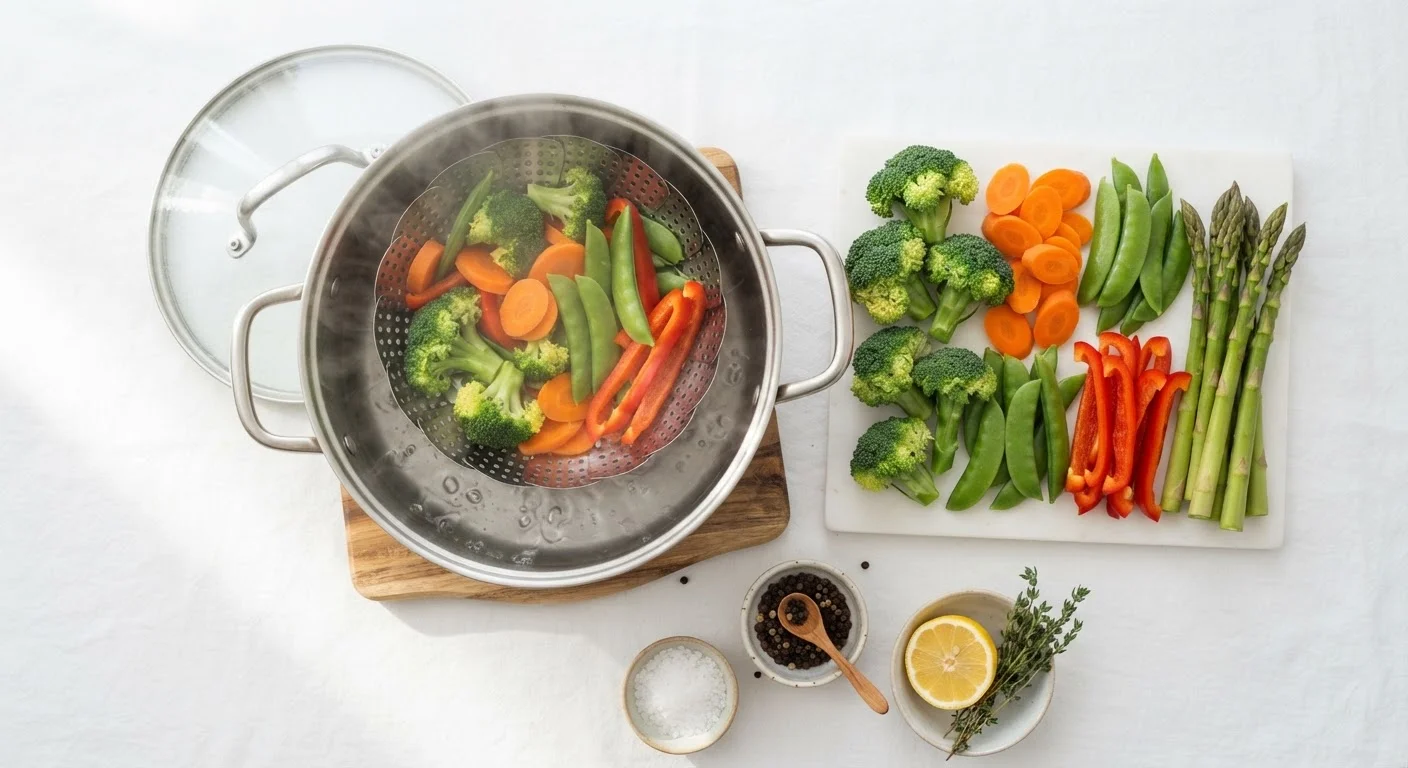
- Steaming: Because food doesn't contact water directly, far fewer vitamins are lost. Steaming is widely regarded as one of the better methods for preserving heat-sensitive nutrients.
- Microwaving: Despite its reputation, microwaving is actually one of the gentler methods. The short cooking time limits heat exposure, and little to no water is needed.
- Roasting and baking: Dry heat preserves most minerals and fat-soluble vitamins well. However, prolonged high heat can degrade some B vitamins.
- Sautéing: Quick, high-heat cooking with minimal liquid preserves nutrients reasonably well. The small amount of fat used can also improve absorption of fat-soluble vitamins.
One practical tip: if you do boil vegetables, save the cooking water to use in soups or broths. Many of the leached vitamins and minerals remain dissolved in that liquid.
Save Your Cooking Water
The liquid left after boiling vegetables contains leached B vitamins, vitamin C, and minerals. Instead of pouring it away, let it cool and use it as a base for soups, sauces, or grain cooking. It's a simple, zero-waste habit that recovers nutrients that would otherwise be lost.
Nutrients That Benefit From Cooking
It's easy to focus only on what cooking takes away, but certain nutrients genuinely become more accessible after heat exposure.
Lycopene, the antioxidant found in tomatoes, is a well-studied example. Cooking tomatoes in a small amount of oil significantly increases the body's ability to absorb lycopene compared to eating raw tomatoes. Similarly, beta-carotene in carrots and sweet potatoes becomes more bioavailable when those foods are cooked and consumed with a little fat.
Cooking also neutralizes naturally occurring compounds like oxalic acid in spinach and phytic acid in legumes, which can otherwise bind to minerals and reduce their absorption. Lightly cooking spinach, for instance, can make its iron and calcium more accessible - not less. These nuances are part of why common nutrition myths about raw food being universally superior deserve scrutiny.
Practical Habits for Preserving Nutrients at Home
You don't need to overhaul your kitchen routine to cook more nutritiously. Small, consistent adjustments make a meaningful difference over time.
No Single Method Is Perfect for Everything
Different foods respond differently to heat, water, and fat. What preserves nutrients in leafy greens may not be the ideal method for root vegetables or legumes. Rather than seeking one 'best' technique, varying your cooking methods across the week naturally balances out gains and losses across different nutrient types.
- Cut vegetables larger: Smaller pieces have more surface area exposed to heat and water, which accelerates nutrient loss.
- Cook for less time: Shorter cooking windows mean less vitamin degradation. Crisp-tender vegetables generally retain more than fully softened ones.
- Use less water: Steaming, stir-frying, and roasting minimize water contact and the leaching that comes with it.
- Don't discard cooking liquid: The liquid from boiled vegetables retains leached water-soluble vitamins - repurpose it.
- Mix raw and cooked: Eating some vegetables raw and others cooked throughout the day naturally balances nutrient profiles without requiring precise planning.
Hydration also plays an often-overlooked role in how nutrients are transported and absorbed in the body. Our article on hydration and nutrition explores this connection in more detail.
This article is for general informational purposes only and is not a substitute for professional medical or dietary advice. Consult a registered dietitian or qualified healthcare provider for guidance tailored to your individual health needs.
Frequently Asked Questions
Boiling causes significant losses of water-soluble vitamins like vitamin C and B vitamins, which leach into the cooking water. However, it doesn't eliminate all nutrients - minerals and fiber remain largely intact. Using less water and shorter cooking times helps reduce losses.
Not always. While raw foods retain heat-sensitive vitamins, cooking can break down cell walls and increase the bioavailability of certain nutrients. Lycopene in tomatoes and beta-carotene in carrots, for example, are better absorbed after cooking.
Steaming, microwaving, and sautéing with minimal water and fat tend to preserve the most nutrients. These methods limit both heat exposure time and water contact, which are the two main drivers of nutrient loss.
Frozen vegetables are typically blanched and frozen shortly after harvest, which preserves most nutrients effectively. In some cases, frozen produce may contain more nutrients than fresh produce that has been stored for several days.
Yes - water used to boil vegetables absorbs water-soluble vitamins and minerals. Reusing it in soups, sauces, or broths is a simple way to recover some of those leached nutrients.
The content on this site is for informational purposes only and is not a substitute for professional advice. Always consult a qualified professional for guidance specific to your situation.