

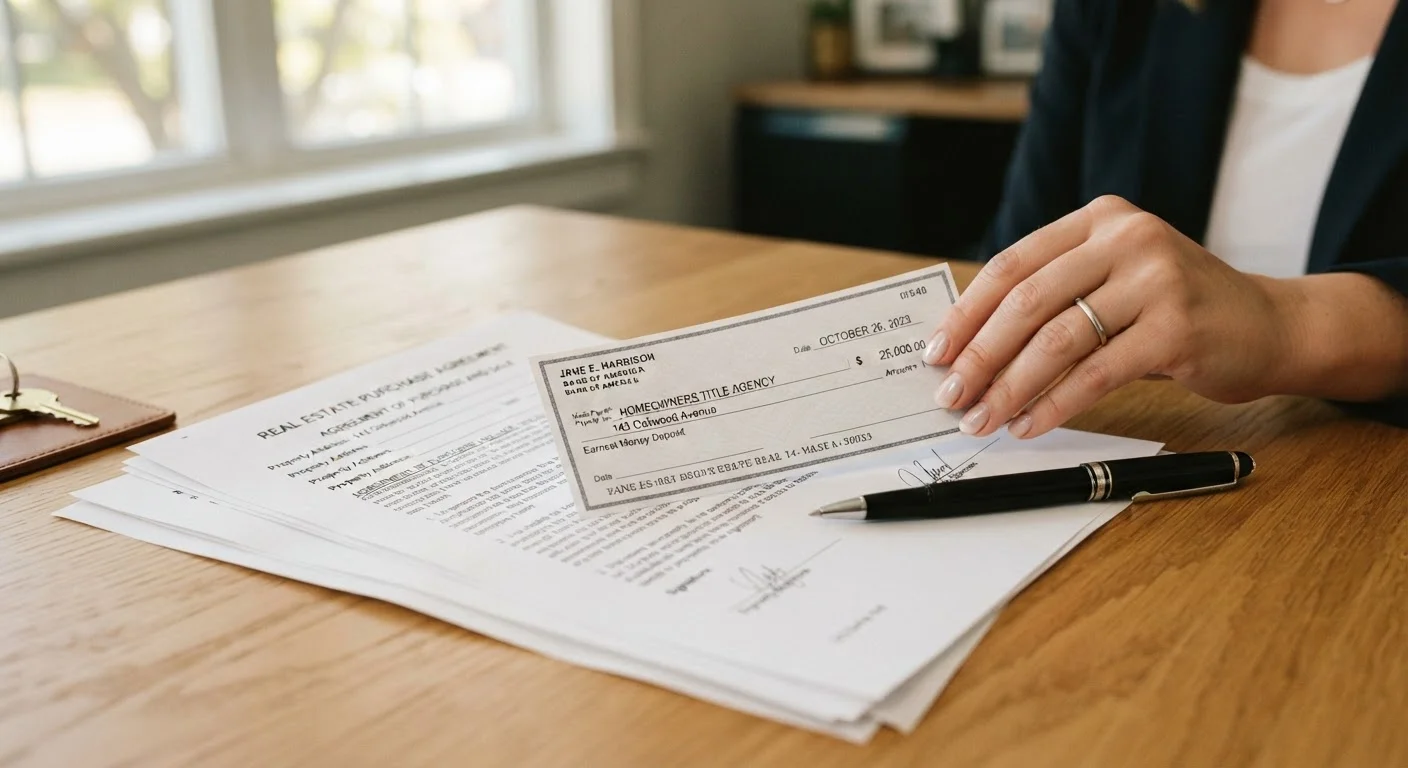
What Earnest Money Actually Does in a Transaction
When a seller receives multiple offers, earnest money communicates something a number can't fully capture: the buyer is serious. A deposit of $5,000 to $15,000 sitting in escrow makes it costly for a buyer to walk away frivolously — and sellers know it.
The deposit is not a fee or a cost of doing business. If the deal closes, it's applied directly to what you already owe — typically toward your down payment or closing costs. You're essentially pre-paying a portion of your purchase. The financial hit only occurs if the transaction falls apart under circumstances not protected by your contract.
Before you're ever writing that check, it's worth getting your finances in order so the deposit amount doesn't strain your liquidity at a critical moment in the deal.
1%–3%
Typical earnest money range by purchase price
Industry norms across most U.S. markets place earnest money deposits between 1% and 3%, though local customs and competitive conditions vary significantly.
3–5 days
Typical window to submit the deposit after offer acceptance
Most purchase contracts require earnest money to be delivered within a few business days of acceptance — buyers should have funds readily accessible before making an offer.
~5%
Higher deposit seen in competitive bidding situations
In hot housing markets, some buyers voluntarily offer deposits at or above 5% to signal strong commitment and differentiate their offer from competing bids.
How Much Is Typical — and When More Is Expected
In most U.S. markets, earnest money falls between 1% and 3% of the purchase price. On a $400,000 home, that's $4,000 to $12,000. In highly competitive markets — particularly in major metro areas — offers with 3%–5% deposits, or even higher, can be a deliberate competitive signal.
The amount is negotiable, but it's not arbitrary. Going too low risks looking unserious; going higher than you're comfortable with puts more of your cash at risk if something goes wrong. Your real estate agent is your best resource for calibrating what's appropriate for the specific property, neighborhood, and competitive landscape you're operating in.
One common misconception: buyers sometimes confuse earnest money with the down payment, assuming they need both as separate large sums simultaneously. In practice, earnest money is credited at closing, so it's part of the funds you've already been planning to bring. See common down payment misconceptions for more clarity on how these pieces fit together.
When You Can — and Cannot — Get Your Money Back
This is where most buyers underestimate the stakes. Whether your earnest money is refundable depends almost entirely on the contingencies written into your purchase agreement.
The three most common protective contingencies are:
- Financing contingency: If your mortgage falls through despite good-faith effort, you can exit and recover your deposit.
- Inspection contingency: If a home inspection reveals significant problems and you can't reach a resolution with the seller, you can typically walk away.
- Appraisal contingency: If the home appraises below the agreed purchase price and you don't want to make up the gap, you can exit the deal.
Without these protections in place, backing out means the seller has a strong legal claim to your deposit. In competitive markets, buyers sometimes waive contingencies to make their offer more attractive — a move that can win a bidding war but leaves your deposit exposed. Understand exactly what you're giving up before making that call. Our guide on contingencies that protect homebuyers covers these tradeoffs in full detail.
Read Your Contract Before You Sign
Every earnest money scenario — refund conditions, forfeiture rules, deadlines — is governed by the specific language in your purchase agreement. Don't assume anything; ask your agent or attorney to walk you through exactly when and how your deposit is protected before you sign.
How Disputes Get Resolved
When a deal falls apart and both parties believe they're entitled to the earnest money, the escrow holder typically cannot release it without mutual written agreement or a court order. In practice, most disputes are resolved through negotiation — one reason having a clear, well-drafted purchase agreement matters so much from the start.
Some states have specific statutory rules governing how and when earnest money can be released, and real estate attorneys or agents familiar with local law can be essential in contested situations. If you find yourself in a dispute, do not expect a quick resolution — these can take weeks or longer to settle.
Understanding earnest money is part of grasping the full financial picture of homeownership. From the deposit stage through closing and beyond, costs accumulate in ways many buyers don't anticipate. The real cost of owning a home extends well past your mortgage payment, and planning ahead makes all the difference.
This article is for general informational purposes only and does not constitute legal, financial, or real estate advice. Earnest money rules and practices vary by state, market, and individual contract. Consult a licensed real estate professional or attorney for guidance specific to your situation.
Frequently Asked Questions
No. Earnest money is a good-faith deposit submitted at the offer stage, while a down payment is paid at closing. If your transaction closes successfully, the earnest money is typically credited toward your down payment or closing costs — but they are separate amounts with different timing.
The typical range is 1%–3% of the purchase price, though norms vary by local market. In highly competitive areas, some buyers offer more to strengthen their offer. Your real estate agent can advise on what is customary in your specific market.
Yes, if you back out for a reason not covered by a contingency in the contract, the seller can typically keep your deposit. Proper contingencies — financing, inspection, and appraisal — are what create a legitimate exit path that protects your money.
It is held in a neutral escrow account, often managed by a title company, escrow company, or real estate brokerage. Neither the buyer nor seller has direct access to those funds until the deal closes or officially falls apart.
If you have an appraisal contingency in your contract and the home appraises below the purchase price, you can typically exit the deal and recover your deposit. Without that contingency, you may not have a contractual right to do so.
Earnest money is typically due within one to three business days after the seller accepts your offer, though the exact deadline is specified in the purchase agreement. Missing this deadline can jeopardize your offer, so buyers should be ready to act quickly.
The content on this site is for informational purposes only and is not a substitute for professional advice. Always consult a qualified professional for guidance specific to your situation.