

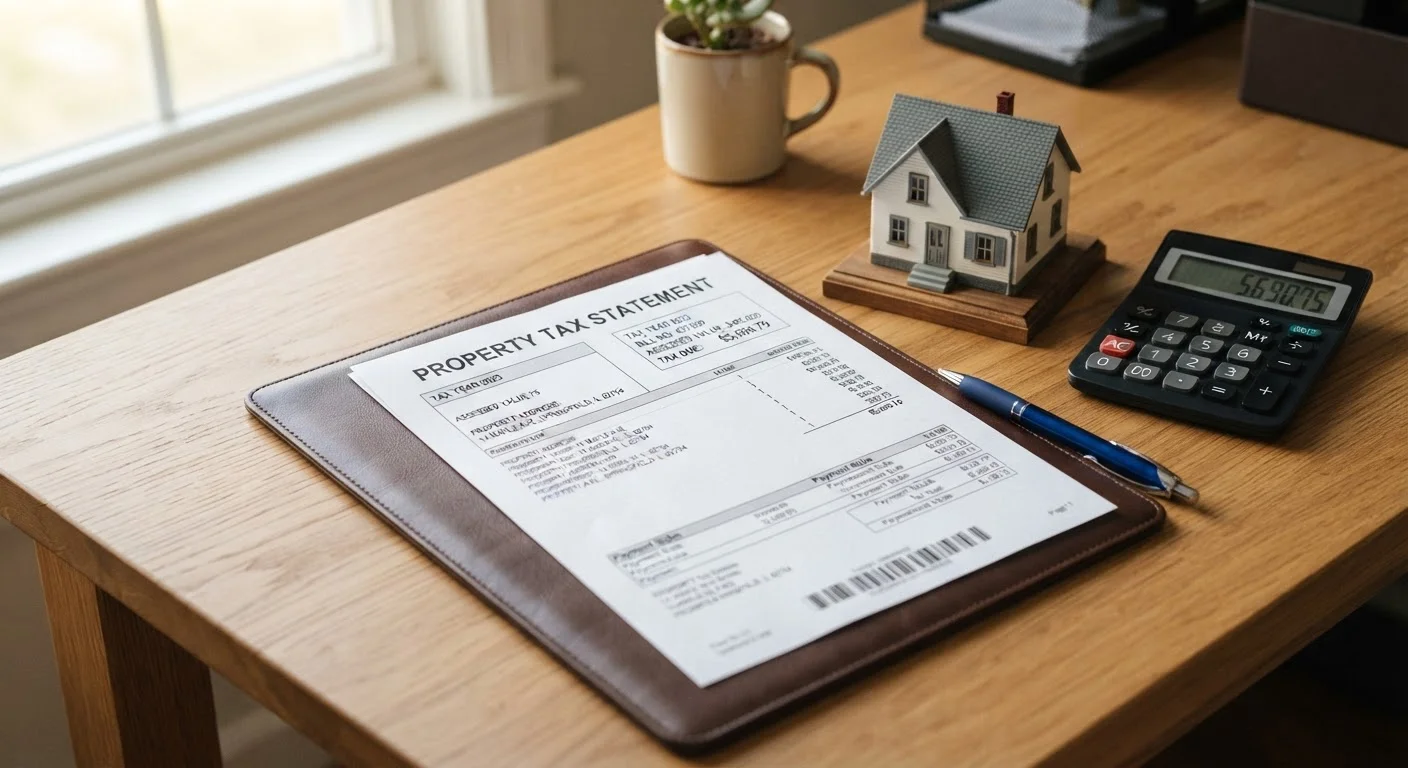
How Assessed Value and Mill Rates Combine to Create Your Bill
Your annual property tax bill comes down to a straightforward formula: Assessed Value × Tax Rate = Tax Owed. Understanding each component helps you predict changes and spot errors.
Assessed value is the dollar figure your local assessor assigns to your property for tax purposes. It is not always the same as market value — many jurisdictions assess at a fixed percentage of market value, called an assessment ratio. For example, if your home has a market value of $400,000 and your county uses an 80% assessment ratio, your assessed value would be $320,000.
The tax rate — often expressed as a mill rate — is set annually by local governing bodies based on their budget needs. One mill equals $1 of tax per $1,000 of assessed value. A mill rate of 20 on a $320,000 assessed value produces a tax bill of $6,400 per year.
$3,901
Median annual property tax paid by U.S. homeowners
According to U.S. Census Bureau American Community Survey data, the median real estate tax paid by owner-occupied households in the United States reflects significant regional variation.
Varies by state
Effective property tax rates across the U.S.
Effective rates range from well under 0.5% in some states to over 2% in others, according to data compiled by the Lincoln Institute of Land Policy, making location one of the strongest predictors of tax burden.
~60%
Share of local government revenue from property taxes
The Urban Institute estimates that property taxes represent roughly 60% of total own-source local government revenue, explaining why local budget pressures translate directly into tax rate changes for homeowners.
Because multiple taxing bodies — your county, municipality, school district, and sometimes special districts — each levy their own millage, your total bill is the sum of all those rates. This is why identical homes in neighboring towns can carry very different tax obligations.
When and Why Your Assessment Changes
Property assessments are not permanently fixed. Several events can trigger a reassessment that shifts your bill substantially.
- Home sale: In many states, a sale prompts a reassessment at or close to the purchase price. New buyers frequently discover their tax bill is significantly higher than what the previous owner paid — a common hidden cost documented in our guide to the real price of owning a home.
- Permitted improvements: Adding a bedroom, finishing a basement, or building a garage typically increases assessed value once the local assessor updates records after permit closure.
- Countywide reassessment cycles: Many jurisdictions reassess all properties on a fixed schedule — every one, three, or four years — adjusting values to reflect broader market changes.
- Rising local property markets: In active markets, assessed values tend to rise during scheduled reassessments, pushing bills higher even for owners who made no changes to their homes.
Check Your Assessment Notice Every Year
Don't assume your assessment is accurate simply because it arrives in the mail. Compare the assessed value against recent sales of similar homes in your neighborhood. If the figure seems high, the appeal window — typically 30 to 90 days — moves quickly. Acting promptly is the only way to challenge an incorrect assessment in the current tax year.
Mill rate changes are an equally common — and often overlooked — driver of higher bills. A local school bond or infrastructure project can raise the mill rate, increasing your tax even when your assessed value is unchanged.
Exemptions That Can Lower What You Owe
Most states offer exemption programs that reduce the taxable portion of your assessed value. These are not automatic — you typically must apply — and missing the deadline means waiting another year.
Common exemptions to investigate:
- Homestead Exemption
- Reduces assessed value for your primary residence. Available in most states and sometimes substantial — Florida's, for instance, exempts up to $50,000 of assessed value for qualifying primary homes.
- Senior Citizen Exemption
- Many counties offer age- or income-based reductions for older homeowners on fixed incomes.
- Veterans and Disabled Veterans Exemption
- Partial or full exemptions are available in many states for qualifying veterans or those with service-related disabilities.
- Agricultural or Conservation Exemption
- Land actively farmed or placed under conservation easement may qualify for preferential assessment.
Including an annual review of your exemption status in a broader financial check-in — like the one outlined in this annual home financial review — ensures you never miss a renewal or newly available program.
Exemption Rules Vary Widely by Jurisdiction
Eligibility criteria, application deadlines, and benefit amounts differ significantly from one county or state to the next. Some exemptions require annual renewal; others are granted once and remain in place as long as you qualify. Contact your local assessor's office or visit your county's official website to confirm what programs are available and when applications must be submitted.
How to Read Your Bill and What to Do If It Looks Wrong
Your property tax bill or assessment notice will typically show your property's assessed value, the exemptions applied, the applicable mill rates from each taxing body, and the total amount due. Review each line carefully when your annual notice arrives.
If you believe your assessed value is too high relative to what comparable homes in your area are actually worth, you have the right to appeal. The process generally involves filing a formal objection with your county's board of review within a strict deadline — often 30 to 90 days from the assessment notice date. Supporting your appeal with a recent independent appraisal or documented sales prices of comparable nearby homes strengthens your case considerably.
Property taxes are one layer of the broader financial picture of homeownership. Other recurring costs — HOA fees, utilities, insurance — compound over time in ways first-time buyers rarely anticipate. For a fuller picture of ongoing obligations beyond your mortgage, see our coverage of HOA fees and how they grow and utility costs homeowners underestimate.
“Property taxes are the most stable and predictable revenue source available to local governments, which is precisely why they tend to rise over time as public service costs grow.”
— Lincoln Institute of Land Policy, Nonpartisan research organization focused on land and tax policy
This article is for general informational purposes only and does not constitute tax, legal, or financial advice. Tax rules, rates, and exemption programs vary by jurisdiction. Consult a qualified tax professional or your local assessor's office for guidance specific to your situation.
Frequently Asked Questions
When a home sells, many jurisdictions reassess it at or near the sale price, which is often higher than the previous owner's assessed value. This reassessment can cause a significant jump in the tax bill for new owners. It is a common surprise cost that buyers should anticipate before closing.
A mill rate (or millage rate) is the amount of tax charged per $1,000 of assessed value. For example, a mill rate of 15 means you pay $15 per $1,000 in assessed value. Local governments set mill rates annually based on their budget needs, so your bill can change even when your assessed value stays the same.
Homestead exemptions are administered by your local assessor's office or county government. You typically apply once after purchasing a primary residence, and many counties require proof that the home is your main dwelling. Deadlines vary, so check with your local tax authority promptly after purchase.
Yes. Most jurisdictions have a formal appeals process through a local board of review or assessment appeals board. You must typically file within a specific window — often 30 to 90 days after receiving your assessment notice. Evidence such as a recent appraisal or comparable sales data strengthens your case.
Often, yes. When you have a mortgage, your lender may require an escrow account that collects a portion of your estimated annual property tax with each monthly payment. The lender then pays the tax authority on your behalf. If taxes rise, your monthly escrow payment typically adjusts at the next annual review.
Common exemptions include the homestead exemption for primary residences, senior citizen exemptions based on age or income, veterans or disabled veterans exemptions, and agricultural land exemptions. Availability and eligibility requirements differ by state and county, so consult your local assessor's office for programs in your area.
The content on this site is for informational purposes only and is not a substitute for professional advice. Always consult a qualified professional for guidance specific to your situation.