

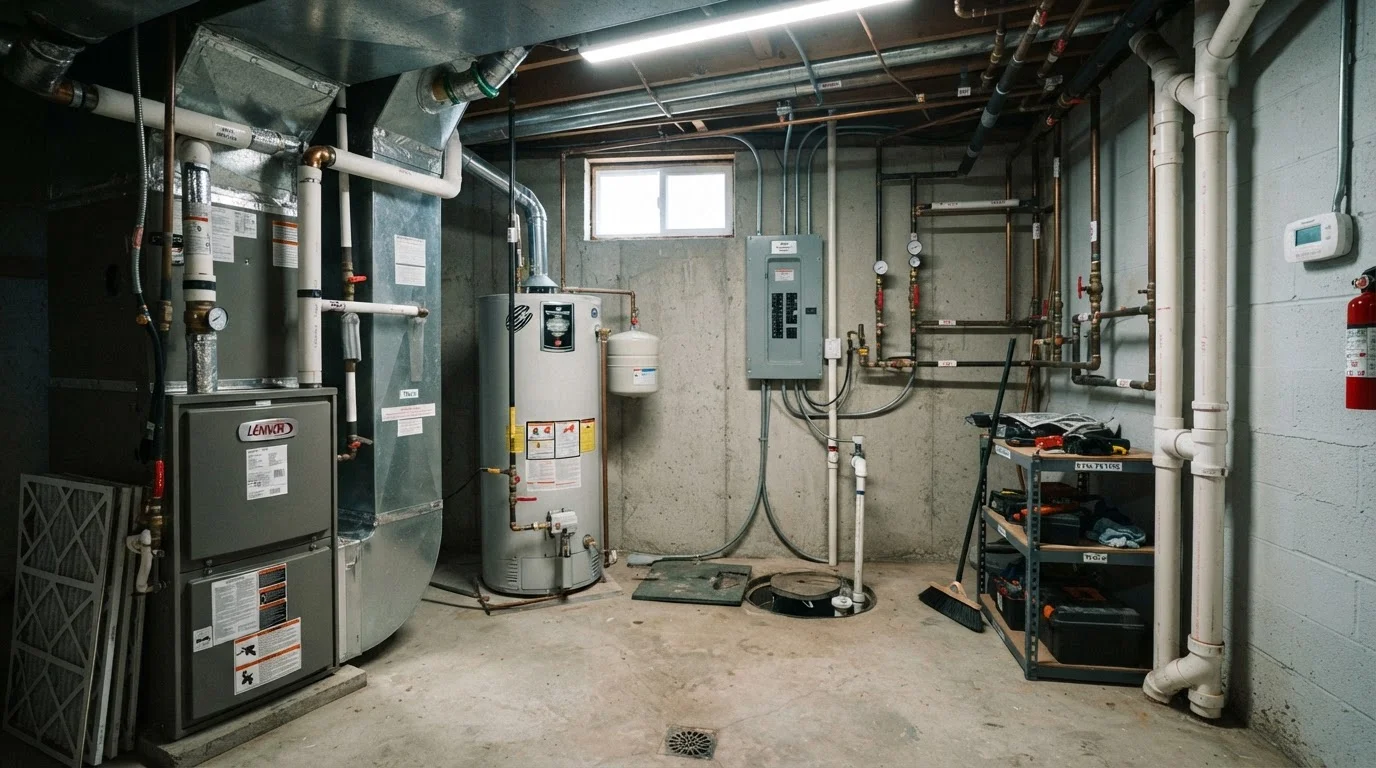
Why Major System Failures Hit So Hard
A leaking faucet is an inconvenience. A failed HVAC system in August or a burst pipe in January is a financial emergency. Major home systems — HVAC, roofing, plumbing, and electrical — account for the bulk of serious repair costs homeowners face. Unlike cosmetic upgrades, these aren't optional. When they fail, you pay.
The challenge is that most of these failures don't come out of nowhere. They follow predictable timelines tied to material quality, installation, climate, and maintenance history. Knowing where each system stands in its expected lifespan lets you plan instead of scramble. For a broader look at what ownership truly costs, see the real price of owning a home.
System-by-System: Lifespans, Failure Patterns, and Cost Ranges
HVAC (Heating, Ventilation, and Air Conditioning)
Central HVAC systems — including furnaces, air handlers, and condensers — typically last 15 to 25 years, depending on equipment quality and how consistently filters and coils are serviced. Compressor failure is the most expensive single repair, often running $1,500 to $2,500 or more. Full system replacement can range from $5,000 to $12,000+ depending on home size, unit type, and local labor rates. Warning signs include rising utility bills, uneven temperatures, and frequent short cycling.
Roofing
Asphalt shingle roofs — the most common type in the U.S. — carry a functional lifespan of 20 to 30 years, though dimensional shingles may last toward the higher end. Climate is a significant factor: repeated freeze-thaw cycles, hail, and intense UV exposure all accelerate aging. Spot repairs run $400 to $1,500; full replacement for an average home is typically $8,000 to $20,000 or more. Granule loss in gutters, curling shingles, and daylight visible in the attic are common pre-failure indicators.
Plumbing
Supply pipes made from copper last 50 to 70 years; galvanized steel pipes common in homes built before 1970 may corrode after just 20 to 50 years. Water heaters — a distinct but related concern — typically fail between 8 and 12 years, with replacement costs of $800 to $1,800 for standard tank units. Major pipe failures or full repiping of a home can run $4,000 to $15,000. Rust-colored water, low pressure, and slow-draining fixtures are early signals worth investigating.
Electrical
Electrical panels in homes built before 1990 may still carry original equipment. Panels typically function for 25 to 40 years, but older fuse-box panels or certain recalled breaker brands present safety risks that warrant earlier evaluation. Panel upgrades cost $1,500 to $4,000; full rewiring of an older home can exceed $10,000. Frequently tripped breakers, flickering lights, and burning smells near outlets are warning signs that require licensed electrician evaluation — never treat electrical issues as a DIY project.
Note: Cost figures cited reflect general industry ranges reported by home improvement research organizations and may vary significantly by region, home size, and contractor. Always obtain multiple licensed contractor estimates for your specific situation.
Planning Ahead Instead of Reacting
The age of your home's systems is one of the most important pieces of information a homeowner can know. Request maintenance and installation records at closing, and keep a home system log updated with service dates. This directly informs how much you should be setting aside each year. Our home maintenance reserve framework breaks this into a practical budgeting structure.
Proactive servicing — annual HVAC tune-ups, periodic roof inspections, and water heater flushing — meaningfully extends equipment life and catches deterioration before it becomes catastrophic. Understanding the distinction between a capital replacement and a routine repair also matters financially; see how capital improvements and routine repairs differ for how these are treated differently over time.
This article provides general educational information about typical home system lifespans and repair costs. It is not a substitute for a professional home inspection or contractor assessment. Costs vary by region, home condition, and contractor. Always consult licensed professionals for work involving electrical, plumbing, structural, or HVAC systems, and verify whether permits are required in your area.
The content on this site is for informational purposes only and is not a substitute for professional advice. Always consult a qualified professional for guidance specific to your situation.