

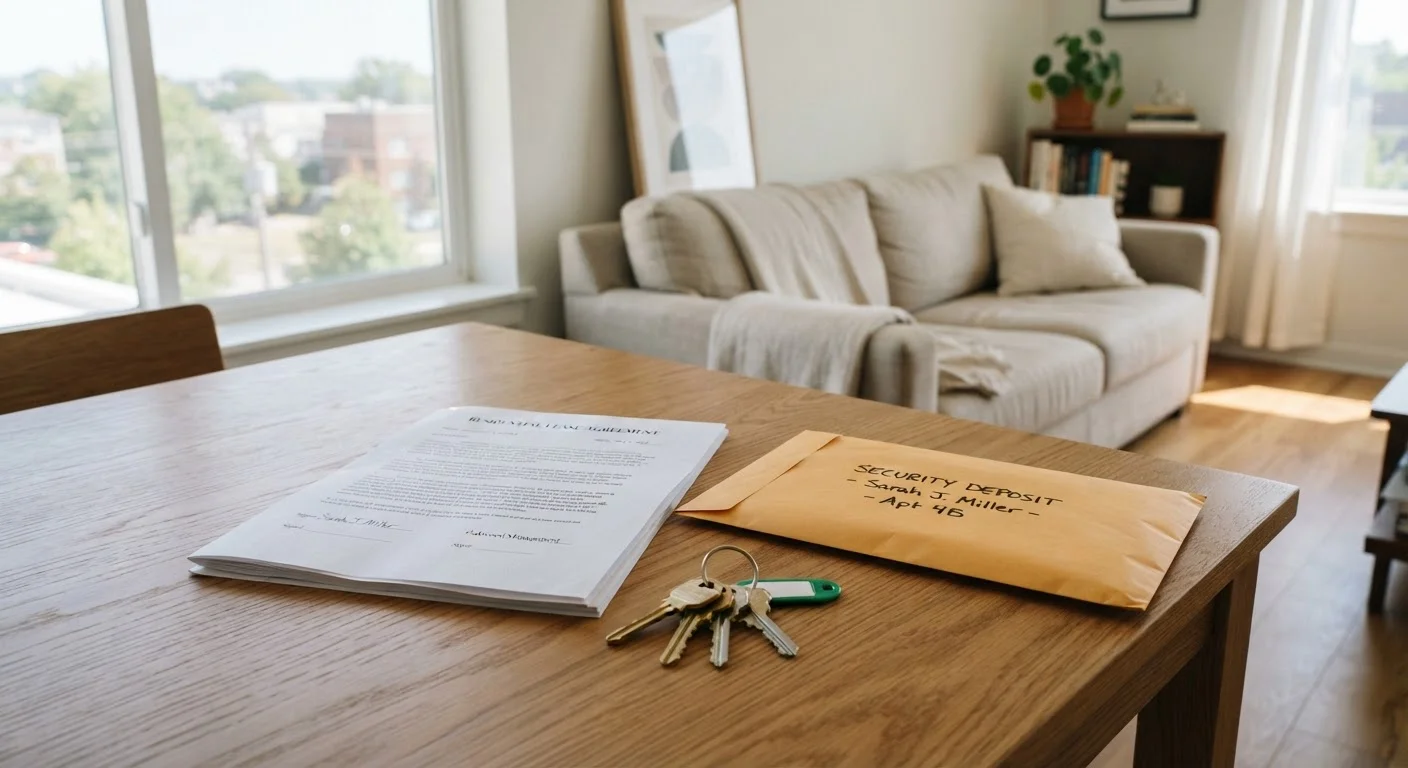
What Landlords Are Legally Allowed to Deduct
Security deposit law draws a clear line between legitimate deductions and improper withholding. Generally, landlords in every U.S. state may deduct for:
- Unpaid rent — any balance owed at move-out, including final months not covered by last month's rent payments.
- Damage beyond normal wear and tear — holes punched in walls, broken fixtures, stained carpets from spills, or pet damage not disclosed in the lease.
- Cleaning costs — only when the unit is left in a significantly dirtier condition than it was received.
- Unreturned keys or access devices — the actual replacement cost of keys, fobs, or garage openers.
What landlords cannot deduct is equally important. Normal wear and tear — light scuffs, minor nail holes from hanging pictures, carpet worn from foot traffic, or paint faded over years — are considered ordinary costs of renting out a property and fall on the landlord to remedy. Deducting for these items is unlawful in every state.
Document Everything on Move-In Day
Take timestamped photos and video of every room before you unpack a single box. Note pre-existing scuffs, stains, and damage in writing and ask your landlord to acknowledge them. This record is your most powerful tool if deductions are disputed at move-out.
Before you sign anything, walk through a thorough move-in inspection and photograph every corner of the unit. This documentation is your primary evidence if you later dispute a deduction.
Return Timelines and the Itemized Statement Requirement
State law — not landlord preference — sets the deadline for returning a deposit. Most states require the landlord to act within 14 to 30 days of move-out; a handful extend that to 45 days. Critically, the landlord must provide a written, itemized list of any deductions alongside the remaining balance. Vague charges like "repairs" without a cost breakdown are generally insufficient under state law.
14–45
Days for deposit return (range by state)
State landlord-tenant statutes set mandatory return windows; most fall between 14 and 30 days, with a few states allowing up to 45.
2–3×
Penalty multiplier for wrongful withholding
Many states permit tenants to recover two to three times the improperly withheld deposit amount when landlords violate return rules.
1–2 months
Typical security deposit cap
Most U.S. states cap security deposits at one to two months' rent, though some states impose no statutory maximum.
If a landlord misses the deadline or fails to provide proper documentation, the consequences can be severe. Many states allow tenants to recover two or three times the wrongfully withheld amount as a penalty, plus attorney's fees. In these cases, landlords often forfeit the right to keep any portion of the deposit, regardless of actual damages.
Keep records of your move-out date, the date you returned keys, and any written communications. These timestamps matter if you need to demonstrate a landlord missed the statutory window. For a broader look at how misconceptions about renting can cost tenants money, see common renting myths that can work against you.
How to Protect Your Deposit and Dispute Unfair Withholding
Proactive documentation is the most reliable protection a renter has. On move-in day, photograph every room systematically — walls, floors, appliances, and fixtures — and timestamp the images. Some tenants also complete a written move-in inspection checklist and ask the landlord to co-sign it. A room-by-room inspection before signing your lease can surface pre-existing damage so it cannot be attributed to you later.
State Laws Vary Significantly
Security deposit rules — including caps, return deadlines, and penalty structures — differ from state to state and sometimes by city or county. Always look up the specific landlord-tenant statute for the jurisdiction where you rent. General guidance in this article reflects common U.S. practices and is not legal advice; consult a local tenant rights organization or attorney for guidance on your situation.
If a dispute arises, your first step should be a written demand letter sent via certified mail. Clearly cite your state's security deposit statute, the amount owed, and the deadline for the landlord to respond. Many landlords return deposits promptly when they realize the tenant knows their legal rights.
If a written demand does not resolve the issue, small claims court is a practical next step. Filing fees are typically low, no attorney is required, and judges routinely handle these cases. Bring your move-in and move-out photos, the lease, and all written communications. Tenants who have documented their case thoroughly tend to fare well in these proceedings.
Security deposits represent real money — often one to two months' rent — and their return directly affects your ability to fund the next chapter of your housing journey. Understanding these rules is part of being a well-informed renter, just as understanding what happens when you break a lease early protects you in other high-stakes situations.
Frequently Asked Questions
No. Normal wear and tear — such as minor scuffs on walls, carpet worn from foot traffic, or faded paint — cannot legally be deducted from your deposit in any U.S. state. Only damage that goes beyond ordinary use qualifies as a deductible expense.
Deadlines vary by state but typically range from 14 to 45 days after move-out. Some states start the clock from the date the tenant returns the keys; others use the lease end date. Check your specific state's landlord-tenant statute for the exact window.
Start by sending a written demand letter citing your state's security deposit law. If the landlord does not respond, small claims court is generally the most accessible next step and handles disputes up to several thousand dollars without requiring an attorney.
Only if the unit requires cleaning beyond what is reasonably expected after normal use. If you left the apartment in the same clean condition you received it, cleaning charges are typically not permissible. Always document the unit's condition at move-out.
Usually not, since the original deposit typically carries over through renewals. However, if your rent increases significantly, some landlords request a supplemental deposit up to the new allowable cap — check your state's rules and your lease terms.
The content on this site is for informational purposes only and is not a substitute for professional advice. Always consult a qualified professional for guidance specific to your situation.