

Our Verdict
Envelope budgeting remains a genuinely effective tool for building spending discipline, especially for anyone whose discretionary spending regularly runs away from them. Its core logic — spend only what you physically allocate — is sound regardless of era. However, its cash-only design clashes with how most Americans get paid and spend money today, which means adaptation is necessary rather than optional.
Best suited to individuals or households actively trying to curb overspending in specific categories like groceries, dining, or entertainment — particularly those who find digital tracking too abstract to change their behavior.
What the Envelope Method Actually Is
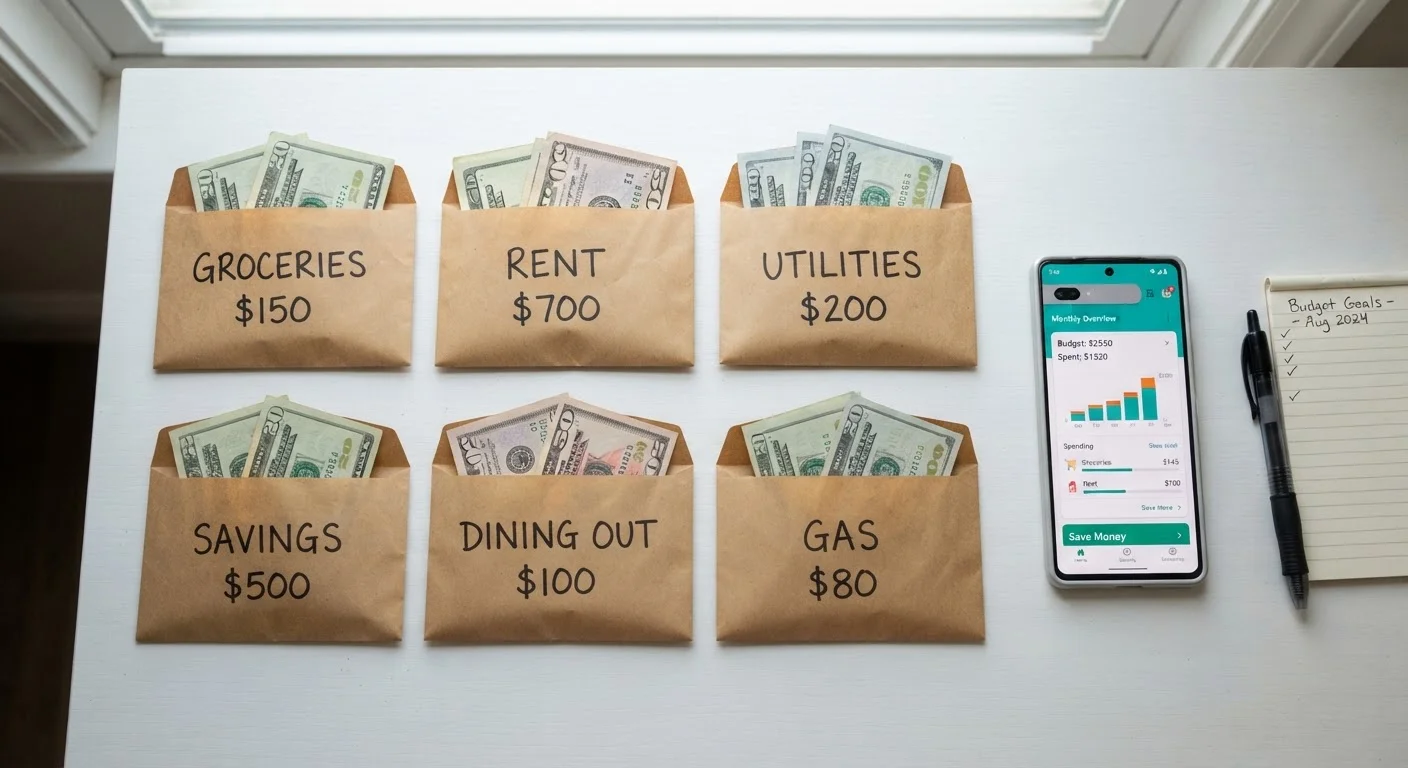
Envelope budgeting is straightforward: at the start of each pay period, you withdraw cash and divide it into labeled envelopes — one for groceries, one for dining out, one for gas, and so on. When an envelope is empty, spending in that category stops until the next pay period. No overdrafts, no mental accounting, no rounding errors.
The method has roots going back decades and was popularized in personal finance circles as a hands-on alternative to written budgets that people track inconsistently. It's fundamentally a zero-based approach — every dollar is assigned a job before it's spent. For a broader comparison of how it stacks up against other frameworks, see common budgeting frameworks compared.
The envelope system is most commonly applied to variable spending categories — the ones that tend to drift. Fixed costs like rent, utilities, and loan payments are typically handled separately via automatic transfers or bill pay, since those amounts don't fluctuate and don't benefit from the cash-in-hand constraint.
The Real Advantages of Going Cash-Based
Eliminates overspending in targeted categories
Once a cash envelope is empty, spending in that category simply stops — there's no buffer, no overdraft, and no rationalization. This hard limit is uniquely effective for people who consistently overspend in predictable areas.
Cash payment creates real psychological friction
Behavioral research suggests people spend less when paying with physical cash than with cards. The tactile act of handing over bills makes spending feel more consequential, which tends to reduce impulse purchases.
Requires intentional budgeting before spending begins
Filling envelopes forces you to decide category allocations in advance, turning budgeting from a retroactive exercise into proactive planning. This front-loaded discipline often reveals misaligned priorities early.
No apps, logins, or technology required
The system works entirely offline and doesn't depend on syncing bank accounts, software subscriptions, or data connectivity — making it accessible and simple to start immediately.
Highly visible spending progress throughout the month
A thinning envelope provides an immediate, at-a-glance signal of how much is left in a category — no dashboard required. Many people find this visual feedback easier to act on than app notifications.
The psychological dimension is where envelope budgeting genuinely earns its reputation. Handing over physical cash creates a moment of friction that swiping a card does not. Research in behavioral economics consistently finds that paying with cash feels more "painful" than digital payment — and that mild discomfort tends to reduce impulse spending. When you can see your grocery envelope thinning out mid-month, it changes decisions at the store in a way that checking an app balance often doesn't.
The method also forces a budgeting conversation before the month begins. You can't stuff envelopes without first deciding how much each category deserves — which is a discipline many people skip when using looser systems. This front-loaded planning often surfaces spending categories most household budgets overlook.
Where the System Breaks Down
Incompatible with digital payments and subscriptions
Streaming services, online purchases, and automatic bill pay can't come out of a physical envelope. Managing cash alongside digital obligations adds complexity and often requires maintaining parallel tracking systems.
Requires regular ATM trips and cash management
Withdrawing, sorting, and redepositing cash each pay period takes time and may incur ATM fees. For people with busy schedules, the logistical overhead is a real barrier to consistency.
Cash carries loss and theft risk
Unlike debit or credit cards, lost or stolen cash has no fraud protection and is generally unrecoverable. Carrying several weeks of discretionary spending in envelopes is a meaningful security exposure.
Difficult to coordinate between two spenders
Couples sharing spending categories from a single envelope face coordination challenges — who has the envelope, who spent what, and what happens when one person runs out before month-end.
Ineffective for mostly fixed-expense budgets
If most of your monthly outflow is rent, loan payments, and utilities, envelope budgeting adds complexity without meaningful benefit — these amounts are predetermined and can't be constrained by cash-in-hand logic.
Forgoes credit card rewards and purchase protections
Consumers who responsibly pay off credit cards monthly may give up meaningful rewards, extended warranties, or purchase protection by shifting to cash-only spending.
The friction that makes cash powerful also makes the system genuinely inconvenient in a world built around digital money. Most employers pay via direct deposit. Most landlords, utilities, and subscription services expect electronic payment. Withdrawing cash every pay period, then redepositing unused amounts, adds real time cost and occasional ATM fees.
Security is another practical concern — carrying meaningful amounts of cash introduces loss and theft risk that a debit card doesn't. There's also no fraud protection on cash the way there is on bank cards.
~13%
Share of U.S. transactions made in cash
According to the Federal Reserve's 2023 Diary of Consumer Payment Choice, cash accounted for roughly 13% of all U.S. consumer payments by number of transactions, down from over 30% a decade earlier.
3 in 10
Americans who carry no cash on a typical day
A Pew Research Center survey found approximately 3 in 10 Americans say they make zero purchases using cash in a typical week, reflecting the broader shift toward digital-first spending habits.
Couples face a particular coordination challenge. If two people share grocery spending from one envelope, disagreements about who spent what — or one partner running out while the other still has cash — create friction. Budgeting as a couple requires systems both partners will actually use consistently, and a physical envelope isn't always practical for two people with separate schedules.
Digital Adaptations: Useful Compromise or Watered-Down Version?
Digital Envelope Apps: A Middle Ground
Apps designed around the envelope concept let you assign portions of your bank balance to spending categories without handling physical cash. You set category limits, log transactions manually or via bank sync, and receive alerts when a bucket runs low. The allocation discipline transfers well; what doesn't transfer is the physical friction of handing over bills. For people who already track spending consistently, these apps can be a practical upgrade — but for those who need a visceral spending cue, the digital version may feel too easy to override.
Several budgeting apps replicate the envelope concept digitally — you assign portions of your bank balance to virtual categories and track spending against each bucket. This preserves the allocation logic without requiring a trip to the ATM. The tradeoff is that you lose the physical friction that makes cash envelopes psychologically powerful for many people.
Whether the digital version works depends heavily on the individual. For someone who has already built strong spending habits and just needs a tracking structure, a virtual envelope system may be just as effective. For someone who genuinely struggles to feel the weight of spending, the abstract nature of on-screen numbers may undercut the method's biggest advantage.
If you're deciding between envelope-style budgeting and other structured approaches, zero-based budgeting vs. the 50/30/20 rule breaks down how the mechanics compare on flexibility and effort.
How to Know If It's Right for You
Envelope budgeting tends to work well for people in a specific situation: they know roughly what they earn, they have variable spending categories that routinely run over, and previous attempts at mental or app-based tracking haven't changed their behavior. The physical constraint is the point — not the aesthetics of the system.
It's a poor fit if most of your spending is automated or subscription-based, if you travel frequently and rely on card rewards or hotel points, or if the logistics of cash management add enough stress to undermine consistent use. A system you abandon in week two accomplishes nothing.
Running a month-end budget review alongside any method — envelope or otherwise — helps you catch patterns and adjust before small overruns compound into bigger problems.
This article is for general informational and educational purposes only and does not constitute personalized financial advice. Consult a qualified financial professional for guidance tailored to your specific circumstances.
The content on this site is for informational purposes only and is not a substitute for professional advice. Always consult a qualified professional for guidance specific to your situation.