

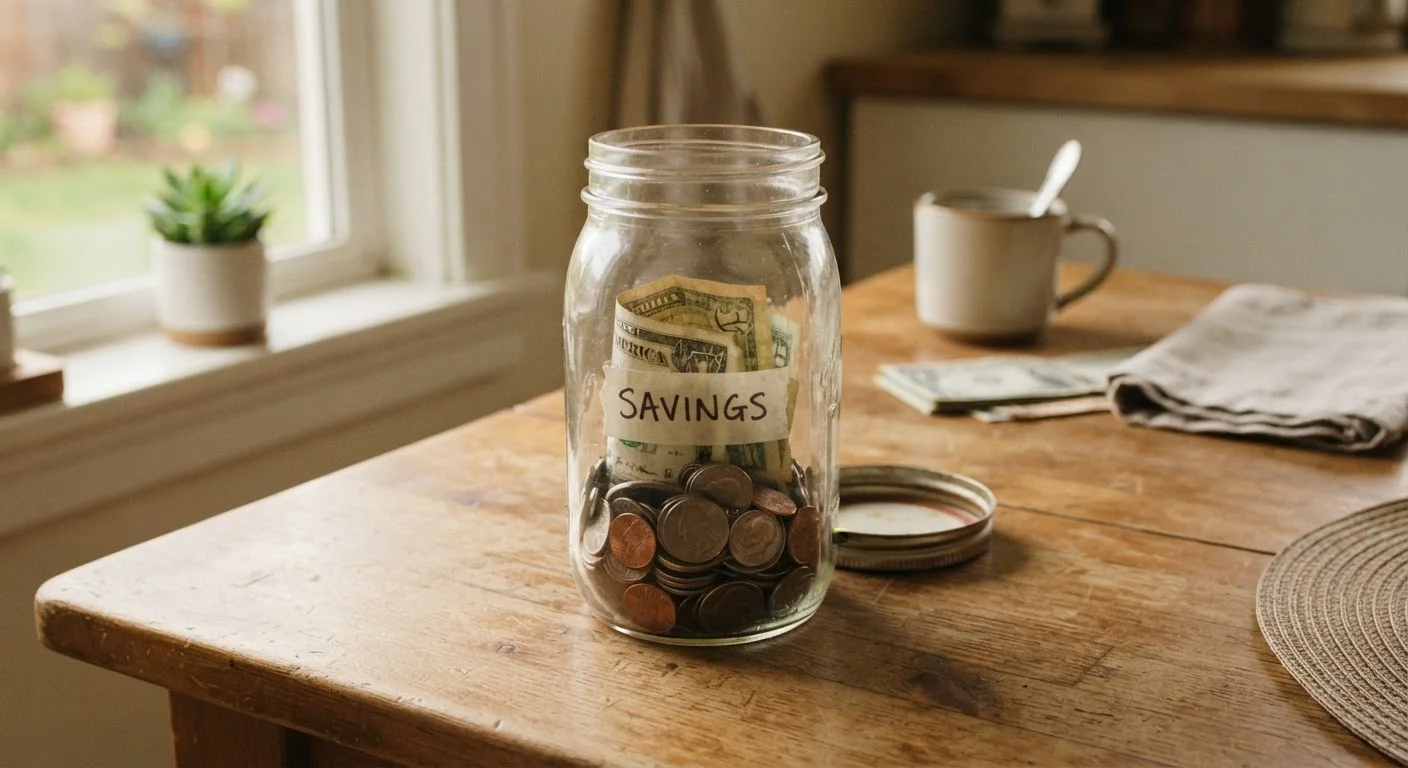
Why an Emergency Fund Matters Even When Money Is Tight
An unexpected car repair, a medical copay, or a missed paycheck can push a tight budget into debt fast. An emergency fund — even a small one — gives you a financial buffer so that one bad week doesn't become months of catching up.
If you're not sure how large your fund ultimately needs to be, our guide to understanding emergency funds breaks down realistic sizing for different life situations. For now, the goal is simply to start. Any amount saved is better than zero.
Many people on tight budgets assume saving is only possible once income improves. In reality, the habits you build now — even with tiny amounts — are the same ones that will serve you when your income does grow.
Small Amounts Compound Into Real Security
Saving $10 a week may feel insignificant, but after 12 months that's $520 — enough to cover many of the most common financial emergencies. The habit of saving consistently is more valuable than the dollar amount of any single contribution. Don't wait until you can afford to save more.
What You Need Before You Start
Before setting up your first emergency fund, gather a few basics. You don't need a spreadsheet or a financial planner — just a clear starting point.
What you will need
Once you have these in place, you're ready to move through the steps below. The whole setup process can take as little as 15 minutes.
Step-by-Step: Building Your Fund
Follow these steps in order. Each one is designed to be completed without a large upfront sum or financial expertise.
Set a small, specific first target
Forget the conventional advice of saving three to six months of expenses right away. When you're on a tight budget, that number can feel paralyzing. Instead, commit to a first milestone of $500. This single amount covers a large share of common financial emergencies — a minor car repair, a utility bill gap, or an urgent prescription.
Write the number down. Making it concrete increases the likelihood you'll follow through.
Open a separate savings account
Your emergency fund should not live in the same account as your everyday spending. When money is mixed together, it gets spent. Open a dedicated savings account — ideally one that is slightly inconvenient to access, such as an online savings account that takes one to two days to transfer from.
Look for accounts with no monthly fees and no minimum balance requirements. Many credit unions and online banks offer these at no cost.
Find your smallest viable weekly amount
Review your last two to four weeks of actual spending. Look for small, recurring purchases that are discretionary — streaming subscriptions you rarely use, impulse food delivery orders, or convenience fees you could avoid. You don't need to cut everything enjoyable. You need to find one to three dollars a day, or roughly $7 to $20 per week, that can be redirected.
Even $7 per week adds up to over $360 in a year. It's not glamorous, but it's real progress.
Automate the transfer on payday
Set up an automatic transfer from your checking account to your new emergency savings account on the same day you get paid — before you have a chance to spend it. Even if it's just $10 per paycheck, automation removes the decision entirely.
Most banks allow you to schedule recurring transfers through their app or website in a few minutes. If your employer allows direct deposit splitting, you can send a small fixed amount directly to savings each pay period.
Add windfalls directly to the fund
Tax refunds, birthday money, overtime pay, or any unexpected income should go — at least partially — straight into your emergency fund until you hit your first target. Committing to directing even 50% of any windfall to savings can dramatically accelerate your timeline without changing your day-to-day budget at all.
Track progress and adjust quarterly
Check your emergency fund balance every three months. If your income or expenses have changed, adjust your automatic transfer amount accordingly. The goal is consistent progress — not perfection. If you had to dip into the fund for a genuine emergency, that's exactly what it's there for. Simply restart your contributions as soon as possible.
As your fund grows, you can revisit your budgeting strategy to find additional room to save. Homeowners may also want to consider a separate maintenance reserve once their emergency fund is established — our home maintenance budgeting framework covers that next step.
Don't Raid the Fund for Non-Emergencies
A sale, a vacation, or a new gadget does not qualify as an emergency. Before withdrawing from your fund, ask: Is this unexpected? Is it necessary? Would skipping it create a serious hardship? If the answer is no, leave the money alone. Dipping in for non-emergencies resets your progress and undermines the habit you're building.
This article is for general informational purposes only and does not constitute personalized financial advice. Consult a licensed financial professional for guidance specific to your situation.
The content on this site is for informational purposes only and is not a substitute for professional advice. Always consult a qualified professional for guidance specific to your situation.