

What an Emergency Fund Actually Is
An emergency fund is not a general savings account or a vacation fund with a serious name. It is money reserved exclusively for events that are unexpected, unavoidable, and financially disruptive. The purpose is straightforward: when something goes wrong — and eventually something will — you pay for it in cash instead of going into debt.
What separates an emergency fund from regular savings is its strict purpose. Predictable expenses like annual car registration, holiday gifts, or a new appliance you know you'll need eventually are not emergencies — those belong in a budget or sinking fund. An emergency fund covers the things you genuinely did not see coming.
Emergency Funds vs. Other Savings Goals
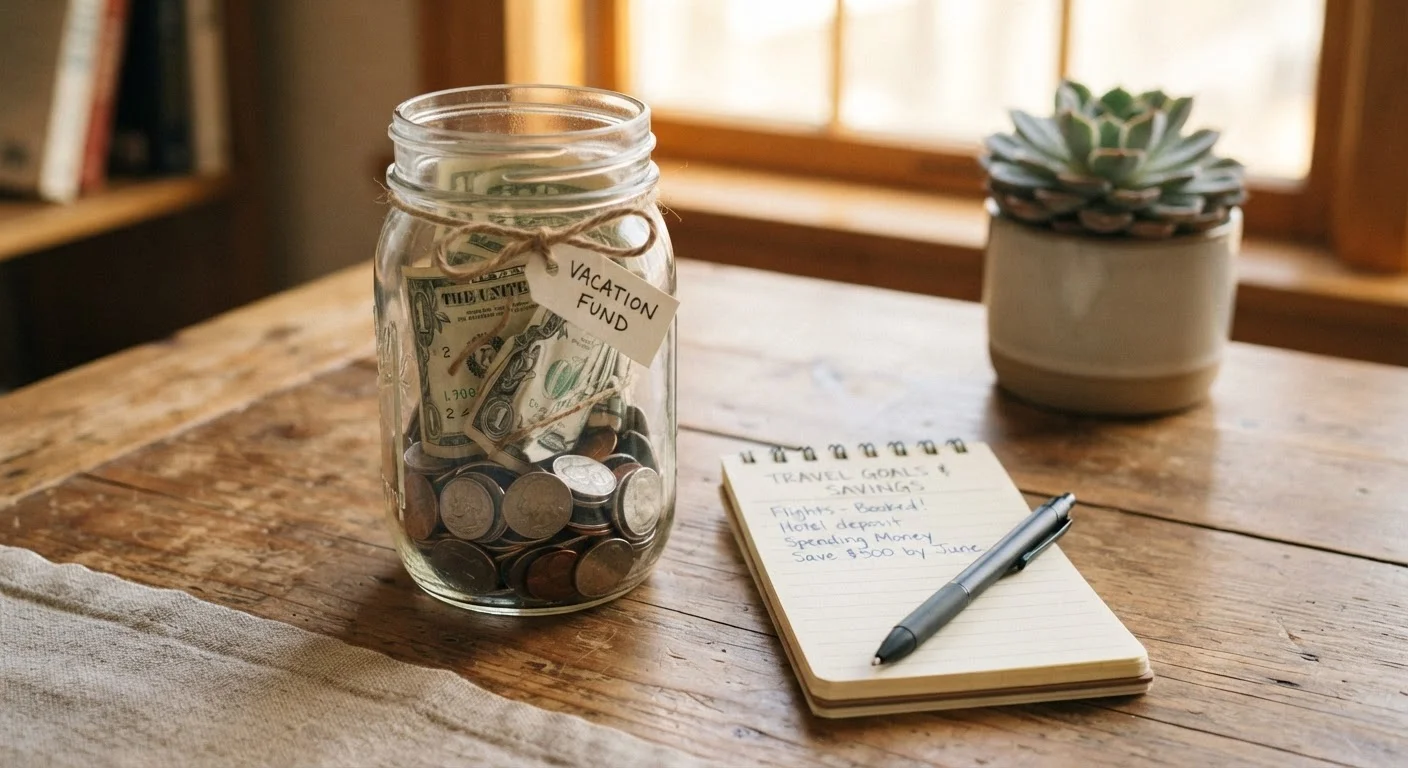
An emergency fund is not the same as saving for a vacation, a home down payment, or retirement. Those goals have their own timelines and accounts. Mixing them together makes it easy to raid emergency savings for non-emergency purposes. Keep your emergency reserve strictly separate and clearly labeled so its purpose stays clear.
If you don't yet have a household budget in place, that's a useful starting point. Our beginner's guide to building your first budget walks through the basics step by step.
How Much Do You Actually Need?
The widely cited benchmark is three to six months of essential living expenses. Essential expenses means only the costs required to keep your household running: rent or mortgage, utilities, groceries, transportation to work, insurance premiums, and minimum debt payments. It does not include dining out, subscriptions, or entertainment.
That range exists because everyone's risk profile differs. A few factors that typically push toward the higher end:
- Single income: If one paycheck covers the household, losing it is a full financial crisis, not a partial one.
- Variable or freelance income: Irregular earners face income gaps between contracts or clients, requiring a deeper cushion.
- Dependents: Children, elderly relatives, or pets with health needs add financial vulnerability.
- Industry volatility: Workers in sectors prone to layoffs benefit from more runway.
37%
Americans who could not cover a $400 emergency
According to the Federal Reserve's Report on the Economic Well-Being of U.S. Households, a significant share of American adults would struggle to cover an unexpected $400 expense without borrowing.
3–6 months
Recommended months of essential expenses
This range is cited broadly by consumer finance educators and organizations including the Consumer Financial Protection Bureau as a general savings target.
1 in 5
Workers who have experienced unexpected income loss
Federal Reserve survey data consistently shows that income volatility — from job loss, reduced hours, or irregular work — is a common financial reality for American households.
For a household spending $4,000 per month on essentials, three months of coverage means $12,000; six months means $24,000. Those numbers can feel paralyzing — which is why starting smaller and building over time is the practical approach for most people.
Where to Keep It — and What to Avoid
Your emergency fund needs to be liquid (quickly accessible) and safe (not subject to market losses). A federally insured savings account — such as a high-yield savings or money market account at an FDIC-insured bank — fits both criteria. It earns modest interest while staying available when you need it.
Two common mistakes to avoid:
- Keeping it in your main checking account. When emergency savings and daily spending share an account, the line blurs. A separate account creates a practical barrier.
- Investing it. Market-based accounts can lose value precisely when economic conditions are worst — the same conditions most likely to trigger a job loss or income disruption. Emergency funds are not investment vehicles.
Homeowners should also note that an emergency fund is distinct from a home maintenance reserve. Predictable repair costs — a roof that's aging, an HVAC system past its prime — are better handled through a separate home maintenance reserve framework.
Automate Your Emergency Savings
Set up an automatic transfer from your checking account to your emergency fund on the same day each payday. Treating it like a non-negotiable expense — rather than saving whatever is left over — is the single most reliable way to build the fund consistently. Even small automatic transfers add up meaningfully over time.
Building the Fund When Money Is Tight
Waiting until you have extra money to save is a trap — for most people, extra money never appears on its own. The more effective approach is to treat the emergency fund contribution like a fixed bill: a set amount moves to savings automatically each payday, before it can be spent.
Starting small is not a failure — it's a strategy. Even $25 or $50 per paycheck compounds into a meaningful cushion over months. A starter goal of $500 to $1,000 is enough to absorb a common minor emergency (a car repair, an urgent prescription, a broken appliance) without reaching for a credit card.
Once that initial goal is met, recalibrate. Look for one or two spending categories where a modest reduction frees up additional savings. Our guide on building your first emergency fund on a tight budget covers specific, realistic tactics for households where every dollar is already committed.
This article is for general informational purposes only and does not constitute personalized financial advice. Consult a qualified financial professional for guidance specific to your circumstances.
Frequently Asked Questions
Genuine emergencies are unexpected, necessary expenses you cannot cover with your regular income — such as a medical bill, car repair needed to get to work, or essential home repair. A sale on electronics or a vacation opportunity does not qualify. The test is: could you delay or skip this expense without serious consequences?
A common benchmark is three to six months of essential living expenses. Essential expenses include rent or mortgage, utilities, groceries, insurance, and minimum debt payments — not discretionary spending. If your income is irregular or your household has a single earner, leaning toward six months or more is generally wiser.
Keep it in a federally insured savings account that is separate from your everyday checking account. A high-yield savings or money market account works well — it earns modest interest while remaining liquid. Avoid locking it in a CD or investing it in the stock market, where it could lose value or become inaccessible quickly.
Credit cards can cover an emergency in a pinch, but they are not a substitute. Relying on credit means paying interest on top of the original expense, which worsens your financial position. An emergency fund lets you handle a crisis without adding debt.
Start with a smaller, immediate goal — even $500 to $1,000 provides a meaningful buffer against minor emergencies and reduces reliance on high-interest debt. Building gradually is far more effective than waiting for ideal conditions. See our guide on <a href="/money-finance/saving-and-debt/building-your-first-emergency-fund-on-a-tight-budget">building an emergency fund on a tight budget</a> for practical first steps.
Most financial educators suggest doing both in parallel rather than choosing one exclusively. A small starter fund — around $1,000 — prevents new emergencies from forcing you back into debt while you pay down existing balances. Once high-interest debt is cleared, shift more resources toward fully funding the emergency reserve.
The content on this site is for informational purposes only and is not a substitute for professional advice. Always consult a qualified professional for guidance specific to your situation.