

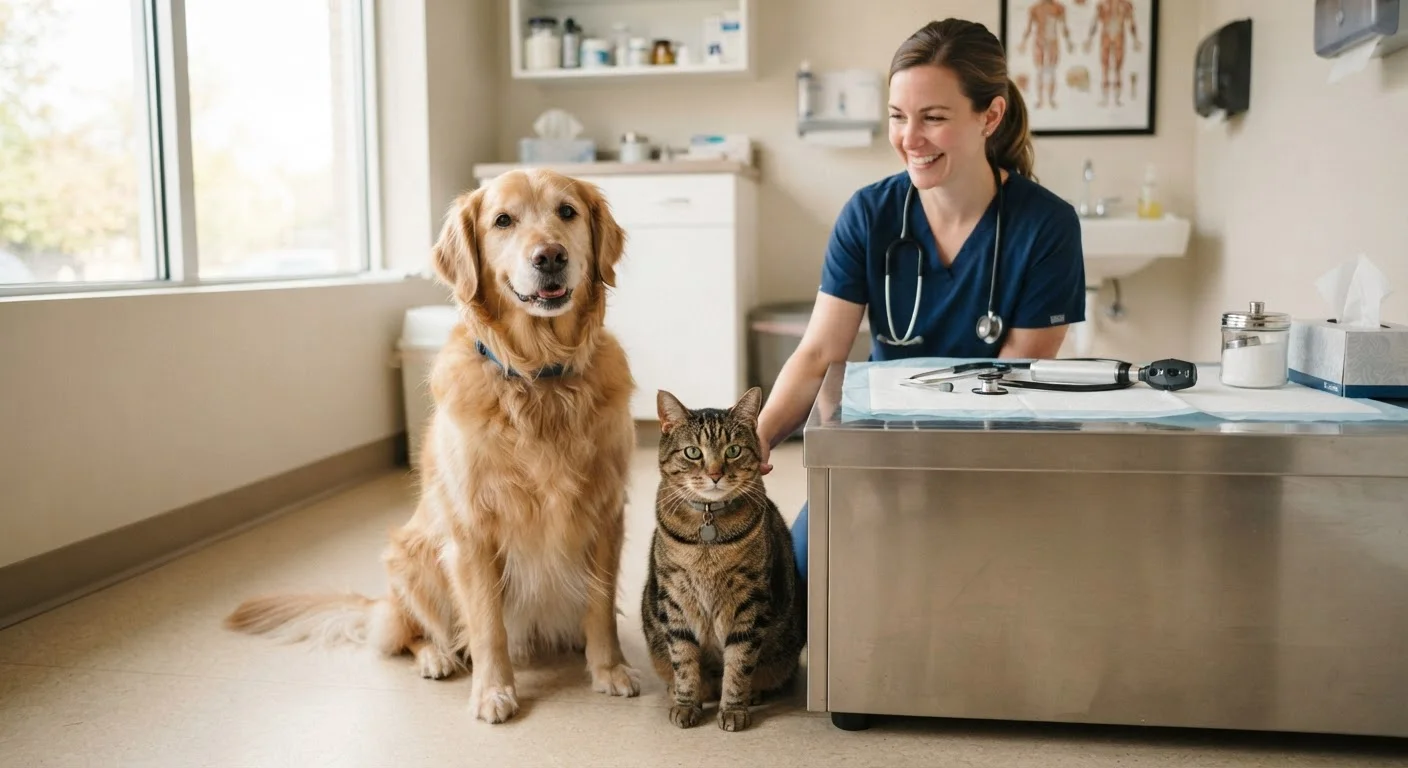
Why Pet Health Myths Are Hard to Shake
Pet ownership runs deep in American culture, and with it comes a long tradition of handed-down wisdom — tips from grandparents, advice overheard at the dog park, or habits that simply feel intuitive. The problem is that some of the most widely repeated beliefs about animal health are either incomplete or flat-out incorrect. Acting on them can delay necessary care or, in some cases, cause real harm.
This article walks through the misconceptions that veterinarians most often have to address during appointments — not to make pet owners feel judged, but to replace guesswork with knowledge. For a broader look at responsible daily care routines, see our complete overview of everyday pet care.
This article is for general informational purposes only and does not constitute veterinary or medical advice. Always consult a licensed veterinarian for guidance specific to your pet's health.
Myth
Dogs instinctively lick their wounds to heal them — it's natural, so it must help.
Fact
A dog's mouth harbors bacteria that can infect open wounds. Licking also physically disrupts healing tissue and can remove sutures.
The belief that saliva has healing properties has some biological nuance — certain compounds in saliva do have mild antimicrobial effects — but the risks far outweigh any benefit. Persistent licking causes wounds to stay moist and open, introduces pathogens, and often leads to a condition called a lick granuloma (a thickened skin lesion caused by repeated trauma). Veterinarians recommend Elizabethan collars or alternative wound covers to prevent licking while tissue heals properly.
Myth
A dog's nose tells you everything — warm and dry means sick, cold and wet means healthy.
Fact
Nose temperature and moisture vary throughout the day based on activity, sleep, and environment, and are not reliable health indicators.
A healthy dog's nose can be warm after a nap and cold an hour later. Illness is better assessed through behavioral changes: appetite, energy level, unusual discharge, vomiting, or changes in drinking and urination. Relying on nose feel alone can give false reassurance when something is genuinely wrong, or cause unnecessary worry when the animal is perfectly fine. When in doubt, a veterinarian's examination is the only reliable assessment.
Myth
Indoor cats don't need vaccines because they're never exposed to other animals.
Fact
Core vaccines are recommended for indoor cats because several serious diseases can be transmitted without direct animal contact.
Viruses like panleukopenia and certain respiratory pathogens can enter a home on clothing, shoes, or through windows with screens. Rabies vaccination is legally required in many U.S. states regardless of whether the cat goes outside. Additionally, circumstances change — an indoor cat may escape, require boarding, or visit a veterinary clinic — all situations involving exposure risk. Core vaccination schedules should be maintained based on veterinary guidance, not on indoor-only assumptions.
Myth
Cats always land on their feet, so falls from height aren't really dangerous.
Fact
Cats do have a righting reflex, but falls — especially from medium heights — cause significant injuries and are a leading cause of emergency vet visits.
The righting reflex allows cats to rotate their bodies mid-air, but this doesn't prevent impact injuries. Falls from two to six stories are particularly dangerous because the cat reaches terminal velocity and has little time to fully reorient. Common injuries include fractured jaws, broken limbs, and chest trauma. Veterinarians who treat urban cats refer to injuries from apartment falls so commonly that the phenomenon has a clinical name: high-rise syndrome. Securing windows and balconies is an important safety step for cat owners.
Myth
Grain-free pet food is healthier because dogs and cats evolved to eat meat, not grains.
Fact
Grain-free diets are not nutritionally superior for most pets, and some have been linked to a form of heart disease in dogs under ongoing investigation.
Domesticated dogs have lived alongside humans for thousands of years and have adapted to digest starch. Grains in commercial pet food are generally well-tolerated and provide energy and fiber. The U.S. Food and Drug Administration has investigated a potential association between certain grain-free diets — particularly those high in legumes — and dilated cardiomyopathy (DCM) in dogs, though research is ongoing. Unless a veterinarian identifies a specific grain sensitivity, there is no established reason to choose grain-free formulas. Food decisions should be guided by a veterinarian, not marketing.
Myth
If my pet is acting normally, there's no reason for a vet visit this year.
Fact
Many serious conditions — dental disease, early organ dysfunction, parasites, and tumors — are detectable before behavioral symptoms appear.
Animals instinctively mask signs of pain and illness, a behavior rooted in survival biology. By the time symptoms are noticeable to owners, conditions may already be advanced. Routine annual exams allow veterinarians to assess weight trends, examine teeth, palpate for abnormalities, and run baseline bloodwork — all of which catch problems at more treatable stages. Preventive care is consistently more effective and less costly than reactive treatment.
What These Corrections Mean for Daily Care
Correcting a misconception is only useful if it changes behavior. A few practical takeaways stand out from the myths above.
Schedule visits even when nothing seems wrong. Many conditions — dental disease, early kidney changes, heart murmurs — are detectable during a physical exam long before symptoms become obvious to owners. Annual exams give veterinarians a baseline and the best chance to catch problems early.
Question diet trends before committing to them. The pet food market is heavily influenced by marketing, and what sounds nutritionally compelling doesn't always reflect scientific consensus. When evaluating food options, understanding the real trade-offs between food formats is a better starting point than following trends. Similarly, our article on common misconceptions about what pets can safely eat addresses a lot of persistent food-related myths.
Watch for well-meaning habits that backfire. Overfeeding out of affection, skipping preventive care during winter, or assuming a calm pet is a healthy one are common patterns worth examining. Our piece on well-meaning habits that quietly harm pet health covers these in detail.
Don't Wait for Visible Symptoms
Pets are biologically wired to conceal discomfort, which means behavioral changes often appear late in the progression of illness. If your pet's appetite, energy level, water intake, or litter box habits shift — even subtly — contact your veterinarian rather than waiting to see if it resolves. Early evaluation almost always leads to better outcomes.
Understanding your pet's actual behavioral signals — rather than relying on folk indicators like nose temperature — also goes a long way. The Pet Behavior hub is a good resource for learning what normal versus concerning behavior actually looks like across species.
The content on this site is for informational purposes only and is not a substitute for professional advice. Always consult a qualified professional for guidance specific to your situation.