

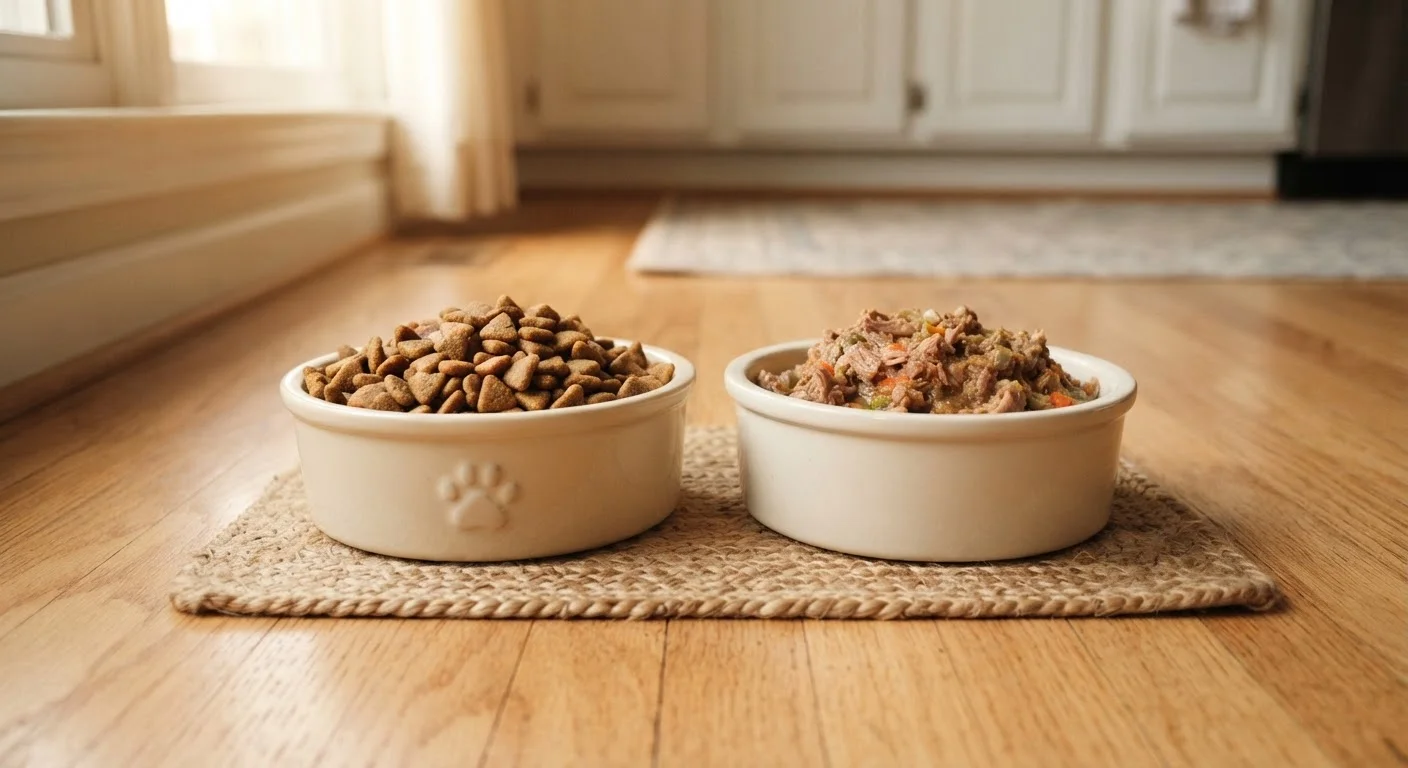
Option A
Dry Food (Kibble)
The convenient, shelf-stable standard.
Best for: Pet owners looking for an affordable, easy-to-store option that supports dental health in pets without specific hydration concerns.
Option B
Wet Food (Canned)
The moisture-rich, palatable alternative.
Best for: Pets that need extra hydration, have dental pain, or are picky eaters who benefit from stronger aromas and softer textures.
What's Actually in Each Format
Dry food and wet food differ most fundamentally in their moisture content. Kibble typically contains around 8–12% moisture, while canned wet food averages 70–80% moisture by weight. That gap has real downstream effects on everything from calorie density to how the food is processed and preserved.
Dry food is made by combining ingredients — proteins, grains or legumes, fats, vitamins, and minerals — then cooking them under high pressure and temperature in a process called extrusion. The result is a shelf-stable product that needs no refrigeration until opened. Wet food is typically blended, formed, and cooked inside the sealed can, which sterilizes the contents without added preservatives.
Because wet food is mostly water, you're effectively paying for that water content. On a dry-matter basis (stripping out moisture to compare apples to apples), the protein and fat profiles of high-quality products in both formats can be broadly similar. What changes is how those nutrients are delivered — and that matters for certain pets more than others. For a deeper look at how to read the nutrient breakdown on any label, see reading a pet food label.
| Criterion | Dry Food (Kibble) | Wet Food (Canned) |
|---|---|---|
| Moisture content | ~8–12% | ~70–80% |
| Calorie density | High — smaller portions needed | Lower — larger volume per calorie |
| Hydration support | Minimal | Significant |
| Dental benefit | Modest abrasive effect | None |
| Palatability | Moderate | Generally higher |
| Shelf life (opened) | Weeks (airtight container) | 2–3 days (refrigerated) |
| Cost per serving | Generally lower | Generally higher |
| Best for urinary health | Less ideal for cats | Preferred for cats |
How Each Format Affects Your Pet's Health
The most clinically significant difference between the two formats is hydration. Cats evolved as desert animals and have a naturally weak thirst drive — they were designed to get most of their water from prey. A cat eating only dry food may chronically consume less water than their kidneys and urinary tract require, which is linked to a higher risk of urinary crystals and chronic kidney disease over time.
For dogs, the hydration difference matters less acutely, though pets with kidney disease, diabetes, or constipation may still benefit from the added moisture in wet food. Our companion article on pet hydration covers daily water needs in detail and explains when intake levels warrant veterinary attention.
70–80%
Moisture in canned wet food
Compared to roughly 10% in dry kibble, wet food delivers dramatically more water per serving, supporting kidney and urinary tract function.
~6x
More water from wet vs. dry diet
Veterinary nutrition literature notes that cats on wet food diets consume significantly more total daily water than those eating dry food exclusively.
3 in 10
Cats affected by kidney disease over their lifetime
Chronic kidney disease is among the most common conditions in older cats; adequate hydration is considered a key preventive factor by veterinary professionals.
Dry food has one advantage that often gets overstated: dental health. The mechanical abrasion of crunching kibble does provide some plaque-reducing effect, but it's modest — and it's not a substitute for active dental care like brushing or veterinary cleanings. Wet food has no meaningful dental benefit, and pets eating wet food exclusively should have their teeth monitored more closely.
Weight management is another factor. Because dry food is calorie-dense, it's easier to overfeed if portions aren't measured carefully. Wet food's high water content adds volume and can increase satiety with fewer calories — which may help pets prone to overeating. Either way, portion discipline matters. For guidance on meal structure, feeding schedules versus free feeding is worth reading alongside this article.
A Note on Cats vs. Dogs
The dry-vs.-wet debate lands differently depending on species. For dogs, either format is generally acceptable for healthy adults, and the choice often comes down to individual health needs and owner preference. For cats, most veterinary nutritionists lean toward recommending at least some wet food in the diet, given feline physiology and the well-documented connection between low water intake and urinary and kidney problems. If your cat eats exclusively dry food, ensuring fresh water is always available — and considering a pet fountain to encourage drinking — is especially important.
Practical Considerations: Cost, Storage, and Mixing
Dry food wins on cost and convenience by a wide margin. A bag of kibble stores at room temperature for weeks once opened (ideally in an airtight container), while opened canned food must be refrigerated and used within a few days. For households with multiple pets or tight budgets, this is a meaningful practical difference.
Many owners use a combination approach — kibble as the daily base with wet food added a few times per week, or as a topper to increase palatability. This can work well, but it requires careful attention to total calorie intake across both formats to avoid inadvertent overfeeding.
Whatever format you choose, the most important step is confirming that the food carries an AAFCO (Association of American Feed Control Officials) nutritional adequacy statement for your pet's appropriate life stage — whether that's growth (puppies and kittens), adult maintenance, or all life stages. That statement is the baseline assurance that a food has been formulated to meet minimum nutritional standards. For more on evaluating labels, decoding pet food labels breaks down the fine print clearly.
This article is for general informational purposes only and does not constitute veterinary advice. Always consult a licensed veterinarian before making significant changes to your pet's diet, especially if your pet has a diagnosed health condition.
The content on this site is for informational purposes only and is not a substitute for professional advice. Always consult a qualified professional for guidance specific to your situation.