

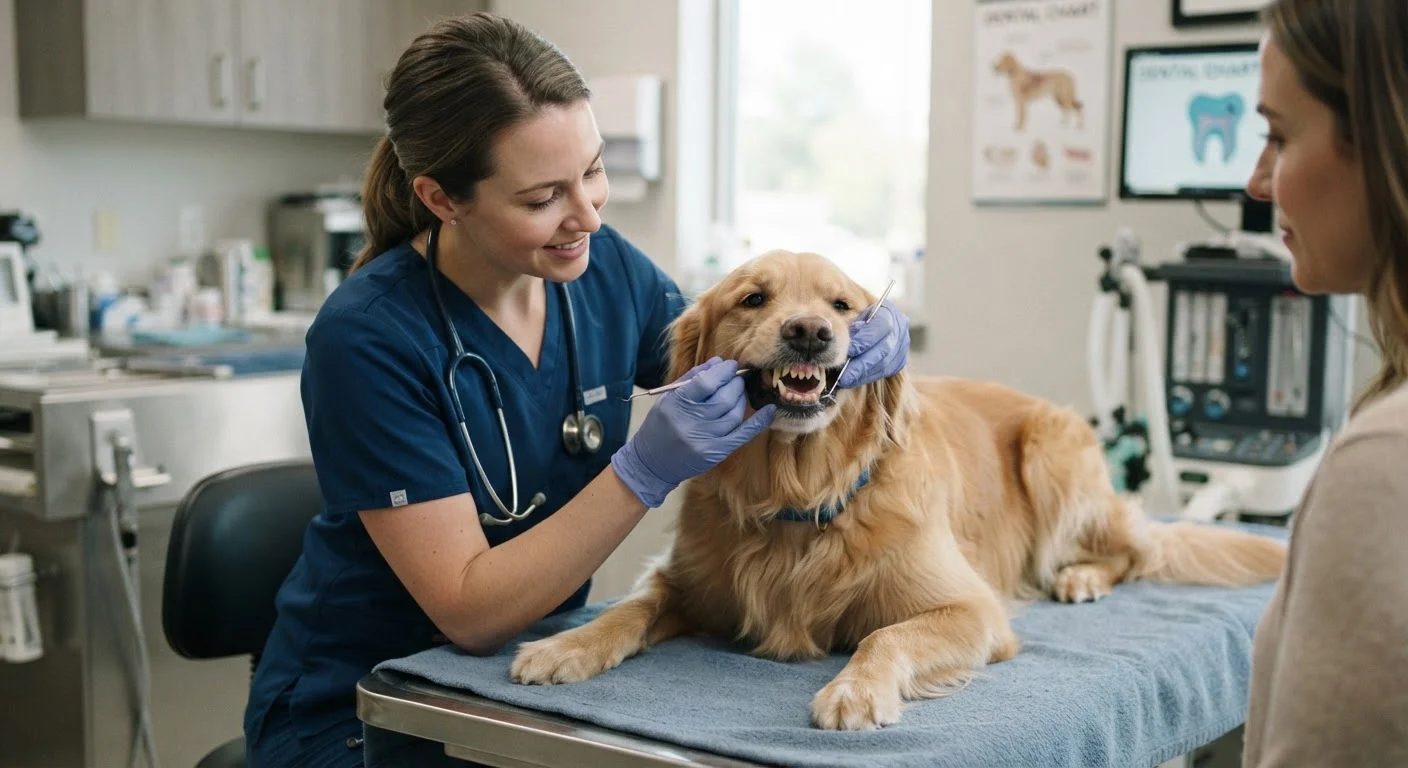
Why Dental Disease Is Consistently Underestimated
Most pet owners associate dental care with cosmetic concerns — bad breath, yellow teeth. The reality is considerably more serious. Periodontal disease is a bacterial infection that destroys the tissue and bone anchoring teeth in place, and it rarely stays confined to the mouth.
Because pets instinctively mask pain and discomfort, dental disease can progress through multiple stages before an owner notices anything. By the time bad breath is obvious, significant damage may already have occurred beneath the gumline where it cannot be seen without a veterinary exam. The signs of dental pain are easy to overlook — and most pets continue eating normally even with seriously diseased teeth.
~80%
Dogs showing dental disease signs by age 3
According to the American Veterinary Medical Association, the vast majority of dogs show evidence of periodontal disease by their third year of life.
~70%
Cats affected by periodontal disease by age 3
Veterinary dental specialists report that most adult cats have some degree of dental disease by age three, often progressing silently.
Stage 1–4
Severity scale used by veterinary dentists
The Veterinary Oral Health Council and veterinary dental organizations use a four-stage grading system to classify the extent of periodontal damage.
Understanding that this is a systemic disease, not just a tooth problem, is the first step toward taking it seriously.
How Dental Disease Develops — and Where It Goes
The process begins simply: bacteria in the mouth form a soft film called plaque on tooth surfaces. Without removal, plaque mineralizes into tartar (also called calculus) — a hard, rough deposit that gives bacteria more surface area to colonize. As bacteria accumulate along and below the gumline, the immune system mounts an inflammatory response that, over time, destroys the very structures it is trying to protect.
In advanced stages, pockets form between the gums and teeth, bone loss occurs, and teeth loosen. But the damage does not necessarily stop there. When gum tissue is severely inflamed and ulcerated, bacteria can enter the bloodstream repeatedly — a process called bacteremia. Research has linked chronic oral infection to structural changes in the kidneys, heart valves, and liver in both dogs and cats, though the science is still developing.
The Organ Connection: What Research Suggests
Studies in veterinary medicine have found associations between chronic periodontal disease and changes in the kidneys, liver, and heart muscle in dogs and cats. While researchers continue to investigate the precise mechanisms, the current working understanding is that repeated bacterial entry into the bloodstream stresses organs over time. Treating dental disease is widely regarded as beneficial for overall systemic health, not just oral comfort.
This systemic dimension is why skipping dental care carries real health consequences beyond aesthetics, and why veterinarians now treat oral health as a core component of general wellness — not a separate specialty concern.
What Prevention Actually Looks Like
Effective prevention operates on two levels: what happens at home every day, and what happens at the veterinary clinic periodically.
Home Care
Daily tooth brushing remains the most evidence-supported home intervention. It disrupts plaque before it hardens into tartar, directly addressing the disease's starting point. Pet-specific toothpaste — never human toothpaste, which can be toxic to animals — comes in flavors designed to make the experience more tolerable. Introducing brushing gradually, starting with handling the muzzle and lips, helps pets accept it over time.
Products carrying the Veterinary Oral Health Council (VOHC) seal have demonstrated measurable plaque or tartar reduction in controlled trials. These include certain dental chews, water additives, and prescription dental diets. They are useful supplements to brushing but generally not replacements for it.
Starting a Brushing Routine With a Reluctant Pet
Introduce brushing in small steps over one to two weeks. Begin by letting your pet sniff and lick the toothpaste, then progress to rubbing a finger along the gum line, and finally introduce a soft-bristled pet toothbrush. Short, positive sessions of 30–60 seconds are more sustainable than longer battles. Many pets become tolerant — even cooperative — once the routine feels familiar.
Professional Cleanings
Home care slows progression but cannot reverse existing disease or clean below the gumline. Professional dental cleanings, performed under general anesthesia, allow veterinarians to probe, scale, and treat every surface of every tooth — including the subgingival (below-gumline) areas where the most serious disease occurs. The anesthesia requirement is non-negotiable for thoroughness and safety; awake cleanings address only visible tartar and leave underlying disease untreated.
Frequency varies by individual. Small breeds, flat-faced breeds, and animals with a history of rapid tartar accumulation typically need more frequent professional care. Integrating dental cleanings into a year-round preventive care routine makes them easier to anticipate and budget for.
Recognizing the Warning Signs
Catching dental disease early depends on knowing what to look for. The following are the most common indicators that a veterinary oral exam is warranted:
- Persistent bad breath — not occasional, but consistently foul odor from the mouth
- Visible tartar — brown or yellow buildup along the gumline, especially on the back teeth
- Red or swollen gums — healthy gum tissue is pink and firm, not inflamed
- Dropping food or chewing on one side — may indicate pain on a specific area
- Decreased interest in hard chews or toys — pets often avoid what causes discomfort
- Pawing at the mouth or face rubbing — behavioral signals of oral discomfort
- Changes in appetite or mood — chronic pain affects behavior broadly
Because animals conceal pain so effectively, annual veterinary exams that include an oral assessment are the most reliable safeguard. A veterinarian can identify early-stage disease that a home inspection would easily miss. For a broader look at subtle distress signals, the guide to hidden pain signs in pets covers behavioral cues across multiple conditions.
“Periodontal disease is the most commonly diagnosed condition in small animal practice, yet it remains one of the most undertreated. The mouth is not separate from the rest of the body — what happens there affects everything downstream.”
— Veterinary Oral Health Council, Organization establishing evidence-based dental health standards in veterinary medicine
This article is for general informational purposes only and is not a substitute for professional veterinary advice. Always consult a licensed veterinarian regarding your pet's health.
Frequently Asked Questions
Dental disease is among the most frequently diagnosed conditions in adult pets. Veterinary guidelines suggest the majority of dogs and cats show signs of periodontal disease by age three. Many cases go undetected until a professional exam is performed.
Yes. Bacteria from infected gum tissue can enter the bloodstream, a process called bacteremia. Over time, repeated bacterial exposure has been linked to changes in the heart, kidneys, and liver — though the exact mechanisms are still being studied. Treating dental disease is considered an important part of protecting overall organ health.
Pets often hide pain very effectively. Subtle signs include dropping food, chewing only on one side, reduced interest in play, pawing at the mouth, or behavioral changes like increased irritability. A veterinary oral exam is the most reliable way to assess pain.
Anesthesia-free cleanings remove visible tartar above the gumline but cannot safely or effectively treat disease below it — where the most serious damage occurs. Major veterinary organizations do not recommend them as a substitute for professional cleanings performed under anesthesia.
Frequency depends on the individual animal's breed, size, diet, and baseline oral health. Many veterinarians recommend annual cleanings, though some pets — particularly small breeds and brachycephalic (flat-faced) dogs — may need them more often. Your veterinarian can advise based on your pet's specific situation.
Daily tooth brushing with a pet-safe toothpaste is the most evidence-supported method. Certain dental chews, water additives, and prescription dental diets carry a Veterinary Oral Health Council (VOHC) seal, indicating they have demonstrated measurable plaque or tartar reduction in controlled studies.
The content on this site is for informational purposes only and is not a substitute for professional advice. Always consult a qualified professional for guidance specific to your situation.