

Summary
22 items · 30–60 minutes to gather and organize
Why Preparation Matters Before a Crisis Hits
Pet health emergencies rarely announce themselves. Whether it's a dog that has swallowed something toxic, a cat in sudden respiratory distress, or a rabbit with a broken leg, the minutes immediately after you recognize a problem are the ones that matter most. When you're already prepared, those minutes go toward helping your pet — not frantically searching for a phone number or digging through drawers for a record you know exists somewhere.
This checklist is designed to help you audit what you have, identify what's missing, and organize everything so it's ready to use. Consider it a companion to the broader routine described in a year-round preventive care routine — because emergency readiness is part of responsible everyday ownership.
First-Aid Supplies
Medical Records and Documents
Emergency Contacts
Transport and Containment
Financial and Insurance Readiness
Tools and Resources to Have on Hand
The items below represent the practical infrastructure of emergency readiness. You don't need everything all at once, but each one fills a specific gap that commonly trips up pet owners in high-stress moments.
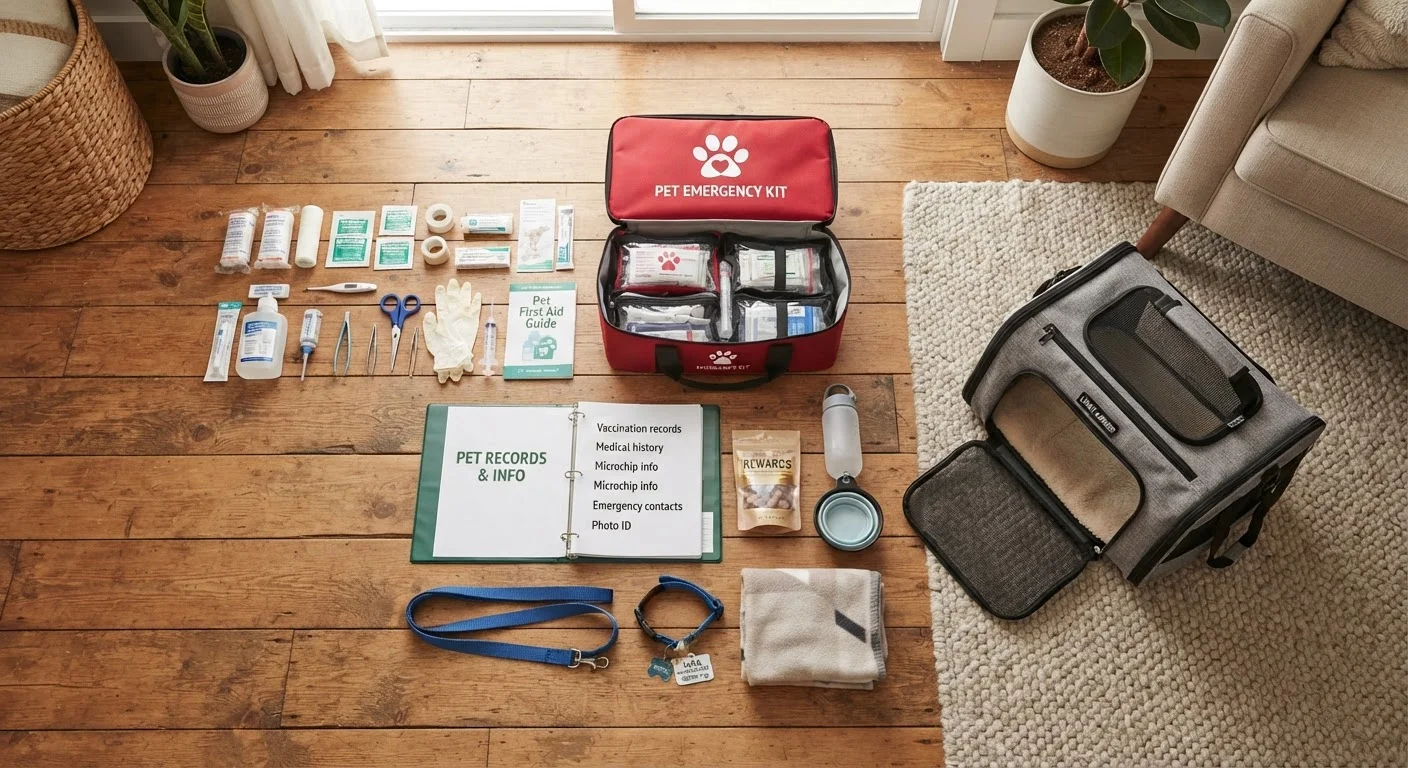
Pet first-aid kit (pre-assembled or DIY)
Provides the core supplies needed to stabilize your pet or manage minor injuries before reaching a veterinarian.
Digital rectal thermometer
Allows you to accurately check your pet's body temperature, a key indicator of fever or shock.
Secure pet carrier or crate
Ensures safe, contained transport of an injured or distressed pet to an emergency facility.
Physical or digital medical records folder
Centralizes your pet's health history so it can be shared instantly with any treating veterinarian.
Waterproof document sleeve or binder
Protects paper copies of records, vaccination certificates, and medication lists from damage.
Pet ID tag and updated microchip registration
Ensures your pet can be identified and returned to you if separated during or after an emergency.
For more on the foundational habits that support confident pet ownership day-to-day, see the complete overview of everyday pet care.
Common Gaps and How to Close Them
Most pet owners have some of this figured out — but even experienced owners tend to overlook a few critical areas. The most frequent gaps include outdated vaccine records, no written list of current medications, and uncertainty about whether the regular vet offers emergency after-hours support.
Don't Rely on Memory for Poison Emergencies
If you suspect your pet has ingested something toxic, time matters enormously — and trying to identify the substance from memory or guess at quantities can delay effective treatment. Keep packaging from household chemicals, plants, and medications accessible, and never attempt to induce vomiting in your pet without explicit instruction from a veterinarian or poison control specialist. Some substances cause more harm when brought back up.
Outdated Records Can Slow Emergency Care
Emergency veterinarians rely on accurate medical history to make fast, safe decisions. If your records haven't been updated after a recent diagnosis, medication change, or procedure, they may have incomplete or misleading information. Set a reminder to review your pet's records at least once a year — ideally after each routine vet visit.
Another commonly missed step: talking through a transport plan with your household. If you live alone or don't drive, know in advance who you can call to help move your pet to an emergency clinic. A stressed, injured animal is difficult to transport safely without help.
Financial readiness is also part of the picture. Emergency vet visits can be costly and unexpected. While this checklist doesn't cover specific financial products, it's worth knowing that having an emergency fund is a sound financial practice that can apply to pet care costs as much as anything else. Pet insurance is another option worth researching in general terms with your veterinarian.
This article is for general informational and educational purposes only and is not a substitute for professional veterinary advice. Always consult a licensed veterinarian for guidance specific to your pet's health needs. In a life-threatening emergency, contact your nearest emergency animal hospital immediately.
The content on this site is for informational purposes only and is not a substitute for professional advice. Always consult a qualified professional for guidance specific to your situation.