

Start here
What a Fitness Tracker Actually Does
Next
The Key Metrics Explained Simply
Then
How Accurate Is the Data?
When you're ready
What to Realistically Expect as a First-Time User
Before you commit
Privacy and Data: What You Should Know
What a Fitness Tracker Actually Does
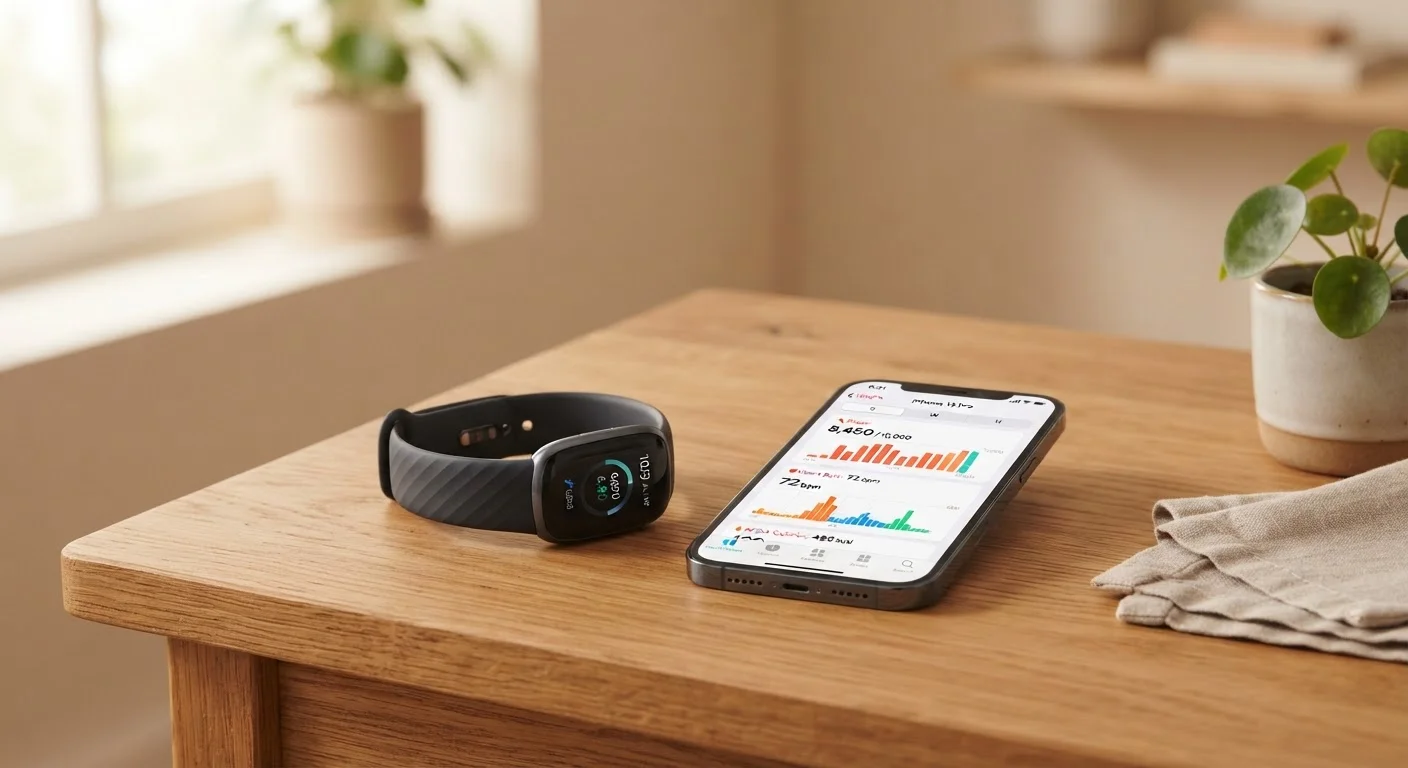
A fitness tracker is a wearable device — usually worn on the wrist — that uses built-in sensors to collect data about your body and movement throughout the day. The core hardware in most trackers includes an accelerometer (which detects motion and orientation), an optical heart rate sensor (which shines light through your skin to estimate pulse), and sometimes a GPS chip for recording outdoor routes.
These sensors feed raw data into algorithms — software formulas — that translate motion patterns into readable outputs like step counts, active minutes, heart rate readings, and sleep summaries. The device is essentially making educated estimates, not taking direct biological measurements. Understanding that distinction helps set realistic expectations from the start.
Fitness trackers are useful tools for building awareness of your daily movement patterns. They are not medical instruments. If you're curious about how physical activity is defined and measured more broadly, this plain-English breakdown of what counts as physical activity offers helpful context.
Accelerometer
A sensor inside the tracker that detects movement and orientation. It measures the speed and direction of motion to estimate steps and activity type.
Optical heart rate sensor
A sensor that uses small LED lights to shine through the skin and detect changes in blood flow, allowing the device to estimate your heart rate.
Algorithm
A set of software instructions that processes raw sensor data and converts it into readable metrics like step counts or calorie estimates.
Resting heart rate
Your heart rate when you are calm and not exercising. It is often measured during sleep and used as a baseline for comparing activity levels.
GPS (Global Positioning System)
A technology that uses satellite signals to pinpoint your location. Trackers with GPS can map outdoor routes and measure distance more accurately than accelerometers alone.
The Key Metrics Explained Simply
Most fitness trackers surface a common set of measurements. Here is what each one actually represents:
- Steps: The accelerometer detects wrist movement patterns that resemble walking strides. This works reasonably well for walking but can miscount during activities with different arm motions — like cycling or weightlifting.
- Heart rate: Optical sensors estimate beats per minute by measuring blood flow changes under the skin. Accuracy tends to be better at rest than during intense or high-impact activity.
- Calories burned: This is a calculated estimate using your step data, heart rate, and personal details you enter (age, weight, height). Treat it as a rough guide rather than a precise figure.
- Sleep tracking: Trackers use movement and heart rate patterns to estimate when you fall asleep, wake up, and move through sleep stages. This is an inference, not a clinical measurement.
- Active minutes / exercise minutes: Time spent at elevated heart rate or sustained movement, intended to reflect moderate-to-vigorous activity periods.
For a deeper dive into what specific metrics like heart rate zones and resting heart rate actually mean, see this guide to fitness tracking metrics worth understanding.
How Accurate Is the Data?
Accuracy varies by metric, activity type, and how well the device fits. Here is a realistic summary based on what independent research has generally found:
| Metric | Typical Accuracy Level | Key Caveat |
|---|---|---|
| Step count | Moderate | Better for walking; less reliable for cycling, driving, or fine hand movements |
| Resting heart rate | Reasonably good | Accuracy drops significantly during high-intensity workouts |
| Calorie burn | Low to moderate | Errors of 20–40% are commonly observed in studies |
| Sleep duration | Moderate | Stage estimates (REM, deep sleep) are much less reliable than total time |
| GPS distance | Generally good | Can drift in dense urban areas or under heavy tree cover |
Get more from your data over time
Rather than focusing on daily numbers, review your tracker's weekly or monthly summaries. Trends across multiple days reveal far more meaningful patterns than any single reading. Most companion apps include summary views specifically designed for this kind of longer-term perspective.
The bottom line: fitness tracker data is best used to identify patterns and trends over time — not to treat individual readings as precise facts. A week of sleep data is more informative than any single night's reading.
What to Realistically Expect as a First-Time User
The first few weeks with a tracker are often a phase of calibration — both technical and personal. Devices may take several days to establish baselines for your resting heart rate and sleep patterns. Some metrics improve with consistent wear.
Many first-time users find the most immediate value in awareness: realizing how sedentary a workday actually is, or noticing that sleep quality dips after certain habits. This behavioral feedback loop is where trackers tend to deliver genuine value — not in the precision of any single number.
Trackers are not diagnostic tools
No consumer fitness tracker is approved as a medical device for diagnosing health conditions. Features like irregular heart rhythm alerts are designed to prompt further evaluation — not to serve as a diagnosis. Always follow up concerning readings with a licensed healthcare professional rather than self-treating based on tracker data.
It is also worth recognizing what a tracker cannot do. It will not motivate you independently, diagnose problems, or replace professional guidance. If you notice worrying patterns — persistent elevated resting heart rate, severely disrupted sleep — treat that as a prompt to speak with a qualified healthcare professional, not as a self-diagnosis tool.
Fitness tracking pairs well with broader wellness habits. For example, functional fitness training focuses on movements that mirror everyday tasks — the kind of activity a tracker can help you monitor over time.
Privacy and Data: What You Should Know
When you use a fitness tracker, your health and activity data is typically transmitted to and stored on the device manufacturer's cloud servers. This data can include heart rate readings, sleep patterns, location history (if GPS is enabled), and personal details you entered during setup.
Key questions to consider before using any device:
- What data is collected? Review the privacy policy — look for what categories of data are gathered and retained.
- Is it shared with third parties? Some platforms share anonymized or aggregated data with research partners or advertisers. Check opt-out options.
- How is it secured? Look for mention of encryption in transit and at rest.
- Can you delete your data? Many jurisdictions give consumers the right to request data deletion. Confirm whether this option exists.
Health data is sensitive. Treat your tracker's app permissions with the same care you would any financial or medical account. This is general guidance — for decisions specific to your situation, consult relevant professionals.
This article provides general information about consumer fitness trackers and is not medical advice. If you have questions about your health, consult a qualified healthcare professional.
Frequently Asked Questions
Calorie estimates from wrist-worn trackers are rough approximations. Research suggests errors of 20–40% are common, with variation depending on the activity type and the individual's body. Use calorie data for general trend awareness rather than precise tracking.
Consumer fitness trackers are not medical devices and are not cleared for diagnosing health conditions. Some include features like irregular heart rhythm notifications, but these are screening prompts — not diagnoses. Always consult a qualified healthcare professional about any health concern.
Most trackers infer sleep stages by combining movement data (via an accelerometer) with heart rate patterns. This is an estimate, not a clinical sleep study. The data can be useful for spotting trends, but it should not be used to self-diagnose sleep disorders.
Most trackers require a paired smartphone app to view detailed data, sync settings, and receive software updates. Basic functions like step counting often work without a phone, but full features generally depend on the companion app.
Battery life varies widely by device and features used. Basic band-style trackers often last five to seven days, while models with always-on GPS or display screens may need daily charging. Check manufacturer specifications before purchasing.
Health data collected by trackers is typically stored on the manufacturer's cloud servers and governed by their privacy policy. Data sharing practices vary significantly between companies. Read the privacy policy and app permissions carefully before using any device.
The content on this site is for informational purposes only and is not a substitute for professional advice. Always consult a qualified professional for guidance specific to your situation.