

Our Verdict
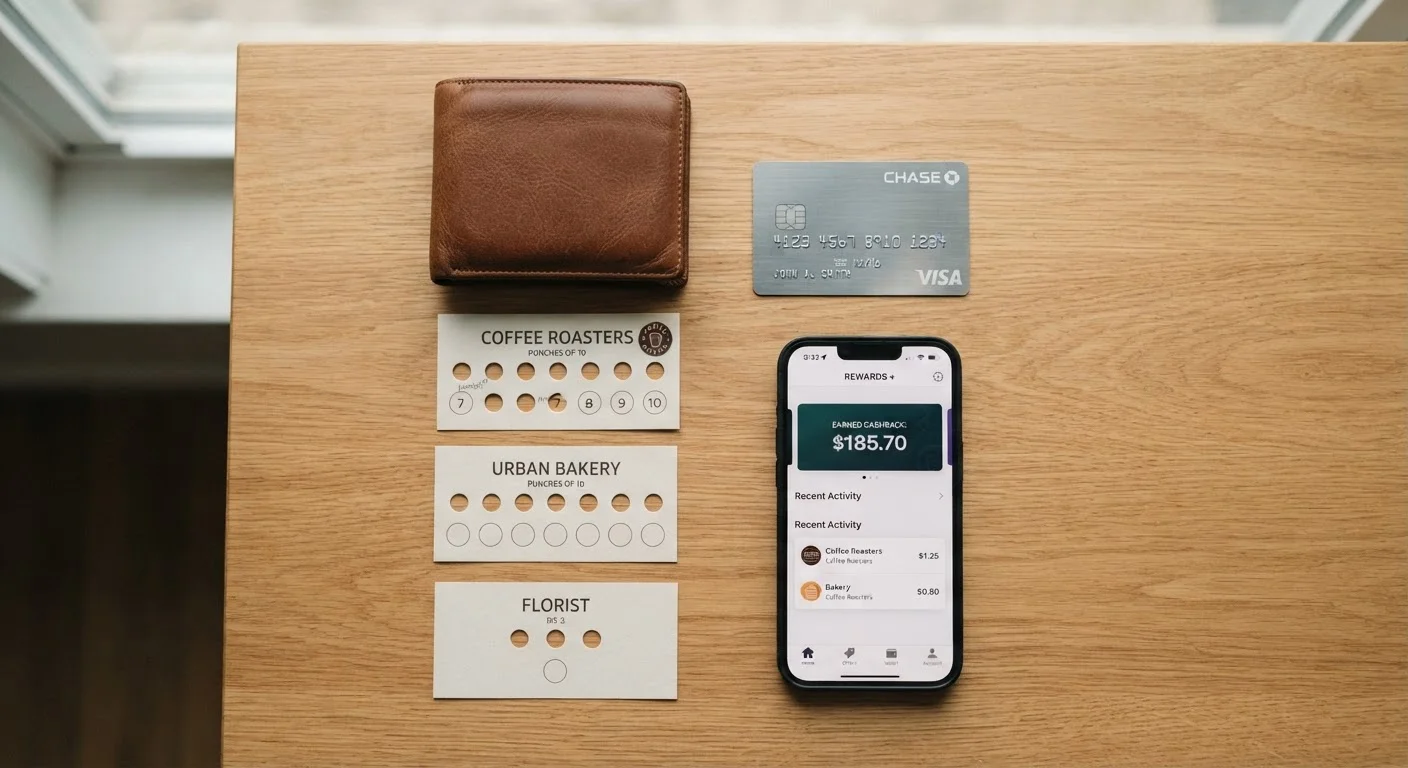
No single rewards system is universally superior — each fits a different spending style and financial situation. Loyalty programs pay off for habitual shoppers at specific retailers, reward cards suit people who pay their balance in full each month, and cashback apps work best as a low-effort supplement. The biggest gains come from pairing the right tool to your actual habits rather than chasing the most impressive-sounding offer.
| Best for | Recommended |
|---|---|
| Frequent shoppers at one or two specific retailers | Store Loyalty Programs |
| Those who pay their credit card balance in full each month | Reward Credit Cards |
| Shoppers who want passive, low-effort savings with no credit impact | Cashback Apps |
| Motivated savers who can track multiple tools without overspending | A combination of all three |
How Each System Actually Works
Consumer rewards fall into three distinct categories, and confusing them leads to missed value — or worse, spending more than intended to earn benefits that barely cover the cost.
Store loyalty programs are operated directly by a retailer and typically require you to create an account or carry a membership card. Every qualifying purchase earns points, stamps, or tier progress. Redemption is usually locked to that same retailer, and points may expire if your account goes dormant.
Reward credit cards are issued by banks or credit unions and earn points, miles, or cashback on purchases charged to the card — regardless of where you shop, in most cases. The value depends entirely on how you redeem (statement credits, travel, gift cards) and whether you carry a balance, since interest charges can wipe out any reward earned.
Cashback apps — such as browser extensions or mobile apps — give you a percentage of your purchase back after you click through or scan a receipt. They sit on top of your existing payment method and don't require a new credit account. They function as a rebate layer rather than a primary reward mechanism.
| Store Loyalty Programs | Reward Credit Cards | Cashback Apps | |
|---|---|---|---|
| Where rewards apply | One retailer or chain | Most merchants accepting the card | Participating online or in-store retailers |
| Requires credit account | No | Yes | No |
| Typical reward rate | Varies by tier/spend | 1–5% depending on category | 1–5% on select items |
| Expiration risk | Points may expire with inactivity | Usually no expiration if account active | Varies; some credits expire |
| Annual fee possible | Rarely | Common on premium cards | Usually free |
| Redemption flexibility | Low — store-specific | High — multiple options | Moderate — cash or gift cards |
| Setup effort | Low | Moderate (credit application) | Low |
The Hidden Costs and Restrictions to Watch For
Each system comes with fine print that affects real-world value. Understanding these constraints before you commit saves frustration later.
Don't Let Rewards Drive Spending Decisions
Retailers and card issuers design rewards programs to increase purchase frequency and transaction size — not purely to benefit consumers. If a loyalty program is nudging you to spend more to reach the next tier, or a limited-time bonus category is influencing what you buy, it's worth pausing. Rewards should follow your natural spending, not redirect it. Overspending to earn a small percentage back is always a net loss.
With loyalty programs, the main pitfalls are point expiration, blackout categories, and redemption minimums. A program might require 500 points before you can redeem anything, and if points expire after 12 months of inactivity, casual shoppers often lose accrued value without realizing it.
With reward credit cards, the cost structure is more consequential. Cards that offer higher earn rates frequently carry annual fees ranging from modest to substantial. More critically, carrying a balance from month to month generates interest that almost always exceeds any rewards earned. This makes reward cards a net negative for anyone who doesn't pay in full each cycle. For more on how to think about your broader financial picture, see this guide to balancing savings and investing.
With cashback apps, the friction is usually low, but so are the returns — often 1–5% on select items or categories, with minimum payout thresholds before you can withdraw. Some apps also share purchase data with third parties, which is worth reviewing in their privacy policy before signing up.
Stacking Rewards: When Combining Makes Sense
The most effective approach for many shoppers isn't picking one system — it's knowing when multiple systems can apply to the same purchase without requiring extra spending.
For example: a retailer loyalty program can often be used simultaneously with a reward credit card payment and a cashback app rebate on the same transaction. Each layer adds a small percentage, and together they can meaningfully reduce your effective cost on everyday purchases like groceries, household goods, or electronics.
Check Before You Check Out
Before completing any purchase, take 30 seconds to verify whether your loyalty account is linked, your reward card is the payment method, and a cashback portal is active. Setting this as a habit — especially for larger purchases — is where most of the compounded value actually comes from. Many cashback apps also have browser extensions that alert you automatically when a deal is available.
That said, stacking only pays off when you're buying things you'd purchase anyway. Chasing rewards by buying items you don't need — or by visiting stores that aren't convenient — reverses the math. Being aware of return policies matters here too, since some cashback apps void rebates on returned items.
It also helps to know your consumer rights when disputes arise, particularly when a retailer delays or denies loyalty points after a qualifying purchase.
Choosing the Right Fit for Your Habits
The most useful rewards tool is the one that matches how you already spend — not the one with the flashiest marketing.
- If you're a habitual shopper at one grocery chain or pharmacy, a store loyalty program likely delivers solid value with minimal effort. Sign up once and let your routine do the work.
- If you pay your credit card balance in full every month and want broad flexibility, a reward card can return meaningful value on everyday spending across many categories. Review the annual fee honestly against your expected earn rate before applying.
- If you want to add savings without opening new accounts or changing your spending patterns, a cashback app is a low-commitment starting point — especially for online shopping.
Regardless of which path you choose, tracking what you actually redeem (not just what you earn) is the truest measure of value. Many consumers accumulate points that never get used, which means the benefit exists only on paper. Think of rewards as a modest supplement to smart spending decisions, not a strategy for getting something for nothing. For context on building broader financial habits, the principles in this comparison of savings account types offer a useful parallel: the best financial tool is the one you'll actually use consistently.
The content on this site is for informational purposes only and is not a substitute for professional advice. Always consult a qualified professional for guidance specific to your situation.