

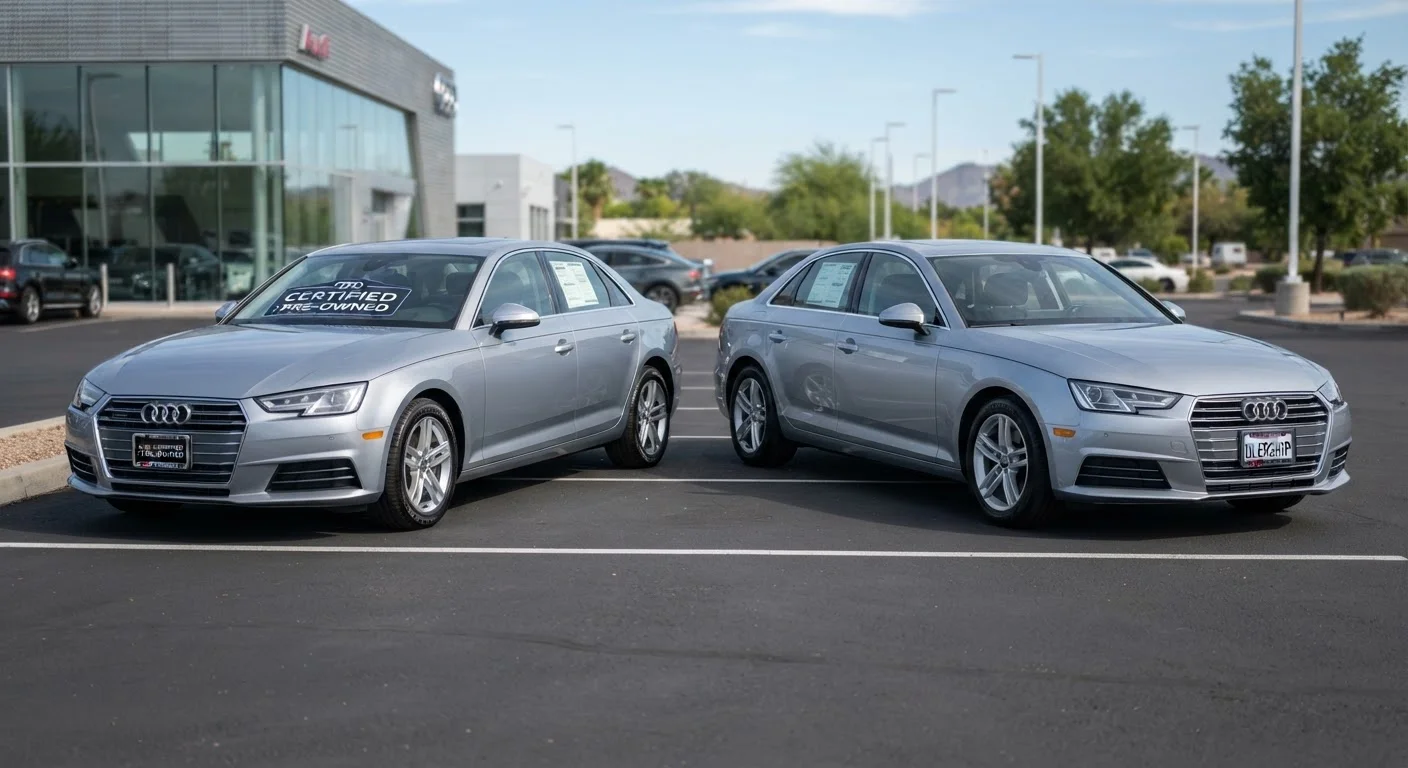
Option A
Certified Pre-Owned (CPO)
The manufacturer- or dealer-backed used car with defined standards.
Best for: Buyers who want used-car pricing with some warranty protection and documented quality checks.
Option B
Standard Used Car
The unfiltered pre-owned market - widest selection, widest risk range.
Best for: Budget-focused buyers or those comfortable evaluating a vehicle independently.
What Makes a Car "Certified Pre-Owned"?
The term Certified Pre-Owned (CPO) gets used loosely, but it has a specific meaning in practice. To carry a CPO label, a vehicle must pass a multi-point inspection - typically ranging from 100 to 200 checkpoints depending on the program - and meet defined criteria for age and mileage. Most manufacturer-backed CPO programs restrict eligibility to vehicles under five or six years old with fewer than 80,000 miles, though these thresholds vary by brand.
Critically, there are two types of CPO programs: manufacturer-certified and dealer-certified. Manufacturer programs are administered by the automaker, meaning the warranty is backed by the company that built the car. Dealer-certified programs are set by the individual dealership and may use the same language but carry far less standardized protection. Before accepting a CPO designation at face value, ask specifically who is backing the certification and warranty.
CPO vehicles typically include some form of limited warranty - most commonly powertrain coverage - along with benefits such as roadside assistance and sometimes a trial period for connected services. These warranties are layered on top of any remaining factory warranty, which may still be transferable.
"Dealer-Certified" Is Not the Same as Manufacturer CPO
A dealer can call any vehicle "certified" using their own internal checklist - there is no federal standard governing the term. Manufacturer CPO programs, by contrast, are administered by the automaker and carry defined warranty terms. When evaluating a CPO offer, ask for the written program details and confirm whether the warranty is backed by the manufacturer or the dealership alone. The difference matters significantly if you need to make a claim.
What You Get with a Standard Used Car
A standard used car is any pre-owned vehicle sold without a formal certification program attached. This includes private-party sales, auction vehicles, and dealer inventory sold "as-is." There is no required inspection, no minimum condition standard, and - unless the seller voluntarily provides one - no warranty.
That lack of structure cuts both ways. On one hand, it means the market is enormous. Vehicles of any age, mileage, and condition are available, and price points span a much wider range. On the other hand, the buyer shoulders the evaluation burden. A vehicle history report (from services like Carfax or AutoCheck) and a pre-purchase inspection by an independent mechanic become essential tools rather than optional extras.
As-is sales are legal in most states, meaning the seller has no legal obligation to disclose undisclosed defects they weren't aware of - and in some cases, even defects they were. Understanding what you're agreeing to before signing is essential. See our pre-purchase inspection checklist for a practical walkthrough of what to evaluate in person.
| Criterion | Certified Pre-Owned | Standard Used Car |
|---|---|---|
| Inspection required | Yes - multi-point, 100-200 checks | No - seller's discretion |
| Warranty included | Yes - limited, varies by program | Rarely - often sold as-is |
| Age/mileage limits | Yes - typically under 6 yrs / 80k mi | None - any age or mileage |
| Price relative to market | Higher - premium for certification | Lower - no certification cost |
| Who backs the guarantee | Manufacturer or dealer (varies) | No one - buyer beware |
| Selection breadth | Narrower - eligibility filters apply | Widest - entire used market |
| Financing incentives | Sometimes - OEM promotional rates | Standard market rates only |
The Real Cost Difference
CPO vehicles carry a price premium over comparable non-certified used cars. Industry data has historically shown CPO vehicles priced several hundred to a few thousand dollars higher than equivalent non-certified inventory - that gap reflects the cost of inspection, reconditioning, and warranty coverage built into the asking price.
Whether that premium is worth it depends on the vehicle's condition, the specific warranty terms, and how long you plan to own the car. A CPO vehicle with two years of powertrain coverage remaining may save you money if a major repair arises within that window. A standard used car with documented service records and a clean independent inspection may deliver similar confidence at a lower cost.
$1,000-$3,000+
Typical CPO price premium over comparable non-certified used vehicles
Industry estimates vary, but CPO vehicles generally carry a meaningful premium that reflects reconditioning and warranty costs built into the price.
100-200
Inspection checkpoints in a typical manufacturer CPO program
The number of inspection points varies by automaker; manufacturer programs tend to be more rigorous and standardized than dealer-run alternatives.
For a fuller picture of how pricing, negotiation, and documentation work across the entire transaction, see our guide to the full car-buying lifecycle.
Insurance, Financing, and Practical Considerations
From an insurance standpoint, CPO and standard used cars are treated similarly - your premium is based on the vehicle's age, value, trim level, your driving history, and other factors, not on whether the car carries a CPO badge. That said, a CPO vehicle's slightly higher value may result in marginally higher collision and comprehensive premiums. For a clear breakdown of coverage types and how they apply to used vehicles, see our auto insurance coverage explainer.
Financing is also worth considering. Some automakers offer promotional financing rates - sometimes lower APRs - specifically for CPO purchases through their captive finance arm. Standard used-car loans are available through banks, credit unions, and dealerships regardless of certification status, so the rate differential will depend on your credit profile and the lender.
Before visiting a lot, brush up on how to read a used car listing carefully - whether a vehicle is CPO or not, the listing details reveal a great deal about what you're walking into.
This article is for general informational purposes only and does not constitute financial, legal, or purchasing advice. Coverage terms, warranty details, and program eligibility vary by manufacturer, dealer, and program. Always review actual program documents and consult a licensed professional for decisions specific to your situation.
The content on this site is for informational purposes only and is not a substitute for professional advice. Always consult a qualified professional for guidance specific to your situation.