

Liability Coverage: Your Financial Shield Against Others' Losses
Liability insurance is the foundation of any auto policy and is legally required in nearly every U.S. state. It pays for harm you cause to other people - not yourself or your vehicle.
It comes in two parts:
- Bodily Injury Liability (BI): Covers medical expenses, lost wages, and legal costs for people you injure in an at-fault accident.
- Property Damage Liability (PD): Covers repairs to another person's vehicle or property you damage.
Liability limits are expressed as three numbers - for example, 25/50/25 - representing per-person bodily injury ($25,000), per-accident bodily injury ($50,000), and property damage ($25,000) in thousands. State minimums are a legal floor, not a recommended target. A serious accident can exceed minimum limits quickly, leaving you personally responsible for the difference. For a broader look at how all these pieces fit together, see The Auto Insurance Landscape, Start to Finish.
Match Liability Limits to Your Assets
State minimums are a legal requirement, not a safety net. If your liability limits are lower than your net worth, you could be personally sued for the difference after a serious accident. A common rule of thumb is to carry limits at least equal to the value of your savings and assets - discuss your specific situation with a licensed insurance professional.
Collision and Comprehensive: Protecting Your Own Vehicle
These two coverages are often sold together and are typically required by lenders when you finance or lease a vehicle.
Collision coverage pays to repair or replace your car after an accident with another vehicle or object - a guardrail, a pole, another car - regardless of who was at fault. Your deductible applies.
Comprehensive coverage handles losses that aren't collisions: theft, vandalism, fire, flooding, hail, and animal strikes are common examples. It's sometimes called "other than collision" coverage for that reason.
Neither coverage pays more than the vehicle's actual cash value (ACV) at the time of loss, minus your deductible. For a detailed side-by-side look at how these two work, see Collision vs. Comprehensive Coverage.
1 in 8
U.S. drivers estimated to be uninsured
According to the Insurance Research Council, approximately 12.6% of motorists had no auto insurance in a recent study year.
$5,000+
Average cost of a crash-related ER visit
The National Safety Council estimates that medically consulted motor vehicle injuries cost significantly more than most minimum MedPay or PIP limits.
Medical Coverages: PIP, MedPay, and What They Actually Pay
Injuries don't always fall cleanly on the at-fault driver's liability policy. Medical coverages on your own policy fill that gap.
Personal Injury Protection (PIP) is required in no-fault states and covers medical expenses for you and your passengers after an accident - regardless of fault. PIP often extends to lost income, childcare costs, and other non-medical expenses resulting from the injury.
Medical Payments (MedPay) is a narrower option available in most states. It covers medical and funeral expenses for you and your passengers but does not extend to lost wages or other economic losses.
Both coverages can apply even if you're hit as a pedestrian or cyclist, depending on your policy's terms. Always read your policy documents carefully, and consult a licensed agent if you're unsure how these interact with your health insurance.
Uninsured and Underinsured Motorist Coverage: The Gap-Filler
Roughly one in eight drivers on U.S. roads carries no auto insurance, according to the Insurance Research Council. Uninsured motorist (UM) and underinsured motorist (UIM) coverages protect you when one of them causes an accident.
- Uninsured Motorist Bodily Injury (UMBI): Pays your medical costs and related losses when the at-fault driver has no liability insurance.
- Uninsured Motorist Property Damage (UMPD): Covers repairs to your vehicle when the at-fault driver is uninsured (availability varies by state).
- Underinsured Motorist (UIM): Steps in when the at-fault driver's liability limits are too low to cover your total losses.
Some states require this coverage; others make it optional. Given the real prevalence of uninsured drivers, carrying adequate UM/UIM limits is a practical safeguard worth discussing with a licensed insurance professional.
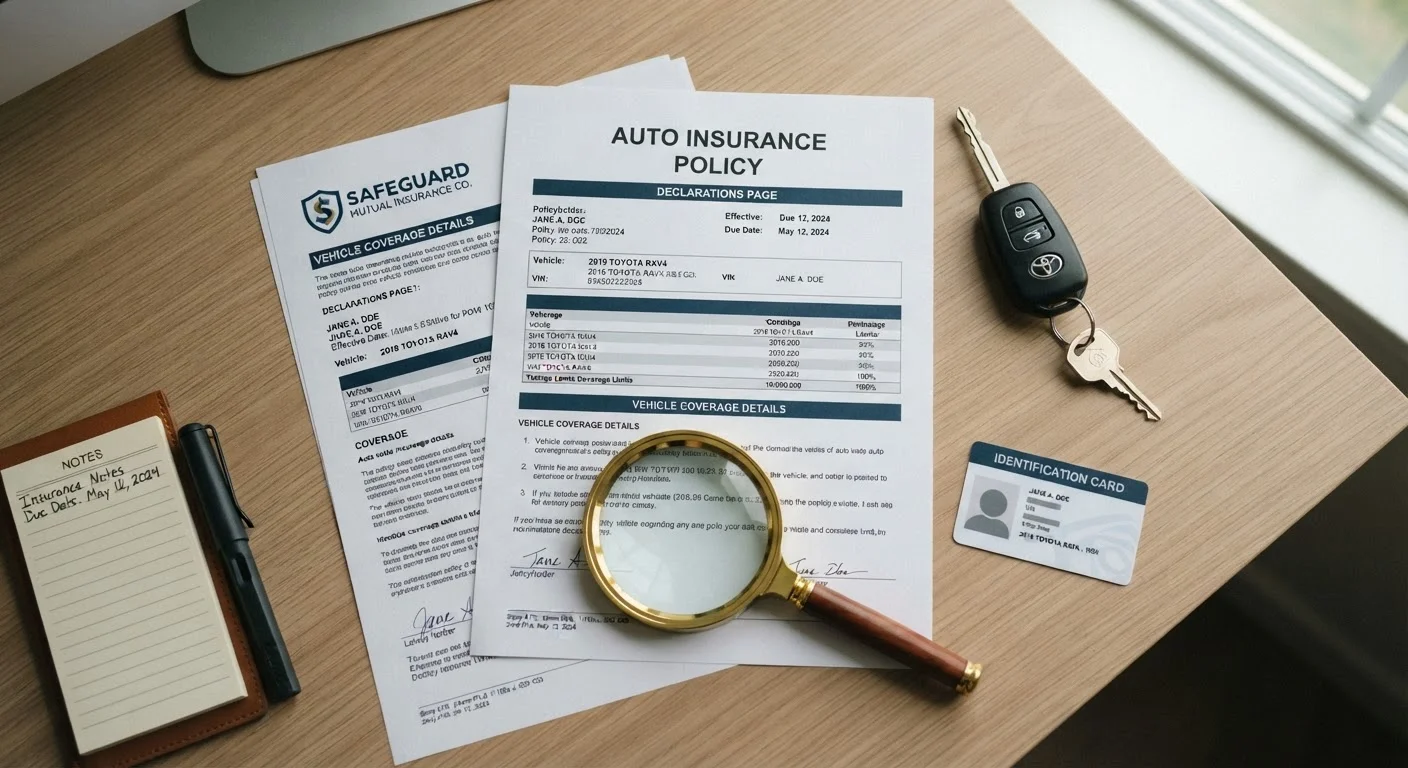
For unfamiliar policy terms you encounter while reviewing your coverage, our auto insurance glossary defines the most common ones in plain language. Once you know what you're covered for, reading your declarations page will show you exactly how your limits and coverages are documented.
Coverage Names Can Vary by Insurer
Different insurance companies may use slightly different names for similar coverages - for instance, "medical payments" versus "MedPay," or minor variations in how add-ons are labeled. Always refer to your actual policy documents rather than product names alone. If something is unclear, ask your insurer or agent for a written explanation before assuming coverage exists.
This article provides general information about auto insurance coverage types and is not personalized insurance, financial, or legal advice. Coverage availability, requirements, and terms vary by state and insurer. Consult a licensed insurance agent or adviser for guidance specific to your situation.
Frequently Asked Questions
Most states require at least liability insurance, which covers bodily injury and property damage you cause to others. Some states also mandate Personal Injury Protection or uninsured motorist coverage. Requirements vary significantly - check your state's Department of Motor Vehicles or insurance commissioner for current minimums.
No. Liability insurance only covers damage and injuries you cause to other people and their property. To cover repairs to your own vehicle after an accident, you need collision coverage.
A deductible is the amount you pay out of pocket before your insurer covers the rest of a claim. For example, with a $500 deductible on a $3,000 repair, you pay $500 and the insurer pays $2,500. Liability coverage typically has no deductible.
It depends on the vehicle's current market value versus the cost of the premium plus deductible. If the car's value is low, the maximum payout may not justify the added cost. A licensed insurance agent can help you evaluate this trade-off for your specific situation.
Both cover medical expenses after an accident, but PIP is broader - it can also cover lost wages and certain non-medical costs. MedPay is limited strictly to medical and funeral expenses. PIP is required in no-fault states; MedPay is typically optional.
Uninsured motorist bodily injury coverage pays for your medical bills and related losses if an at-fault driver has no insurance. Uninsured motorist property damage pays for your vehicle repairs in that scenario. Underinsured motorist coverage kicks in when the at-fault driver's limits are too low to cover your losses.
The content on this site is for informational purposes only and is not a substitute for professional advice. Always consult a qualified professional for guidance specific to your situation.