

Why Fluid Checks Matter
Your car relies on a network of fluids to lubricate moving parts, regulate temperature, transfer force, and maintain visibility. When any one of them drops below the recommended level - or degrades in quality - it puts stress on components that are expensive to replace. The good news is that checking most fluids takes less time than a coffee stop and requires nothing more than a clean rag and your owner's manual.
Neglecting fluid levels is one of the most common ways drivers unknowingly shorten a vehicle's life. For a broader look at overlooked habits that cause premature wear, see habits that quietly shorten a car's lifespan. And if you want to turn these checks into a documented routine, keeping a car maintenance log explains exactly what to record and why it pays off.
What you will need
What You Need Before You Start
Gather your supplies, park on a flat surface, and let the engine cool for at least 10-15 minutes before opening the hood. Hot components and pressurized systems can cause burns. Once you're set, pop the hood and locate the fluid reservoirs - most modern vehicles label them clearly with icons.
Clean lint-free rag
Wipe dipsticks clean before taking a reading to ensure an accurate level check.
Owner's manual
Identifies the correct fluid type, reservoir locations, and acceptable level ranges for your specific vehicle.
Flashlight or phone torch
Illuminates dark under-hood areas so you can clearly see fluid color and reservoir markings.
Latex or nitrile gloves
Protects hands from contact with brake fluid and coolant, both of which can irritate skin.
Step-by-Step: Checking Each Fluid
Work through each fluid in order. If anything looks significantly low, discolored, or smells burnt, note it and consult a qualified mechanic promptly. For brake fluid especially, do not delay - it is directly linked to stopping ability.
Check Engine Oil
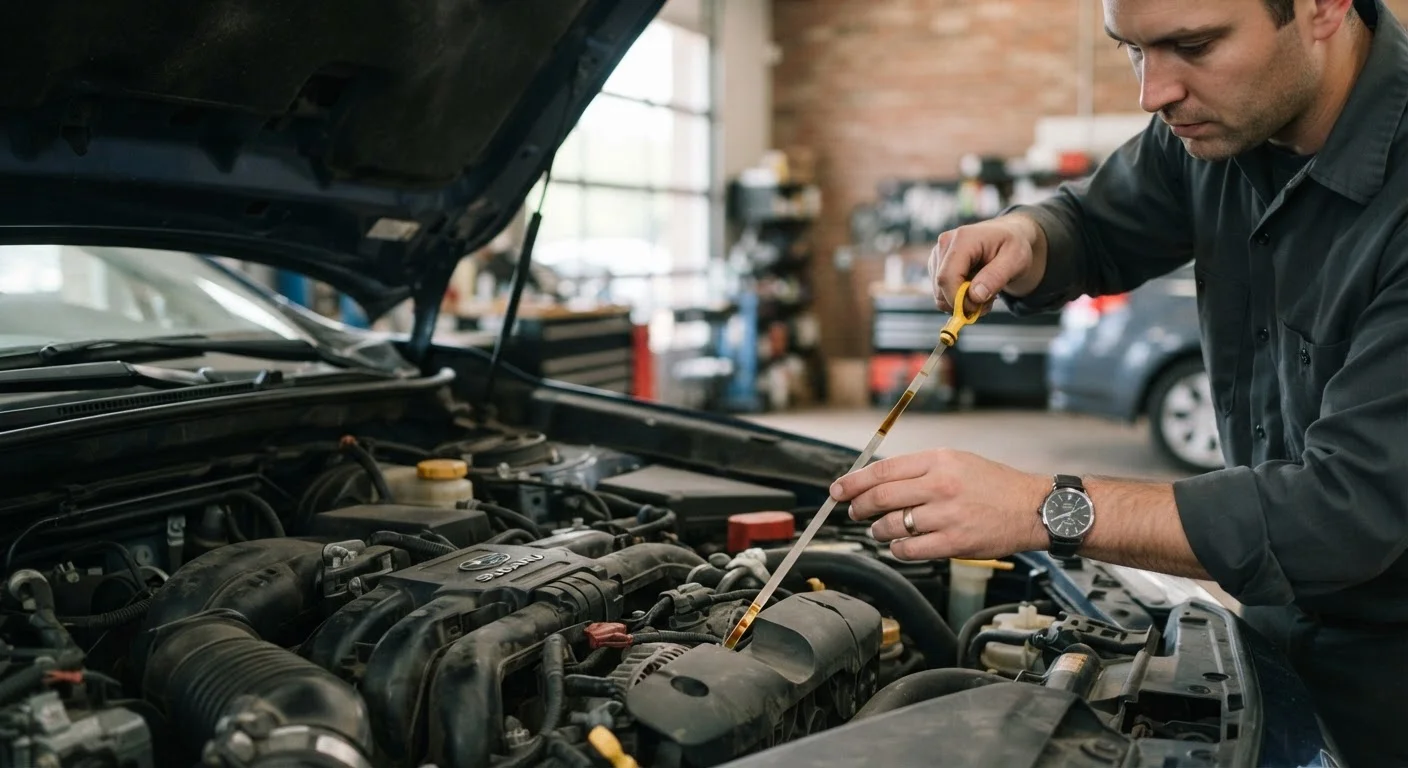
Locate the oil dipstick (usually a brightly colored ring-pull near the front of the engine). Pull it out, wipe it clean with your rag, reinsert it fully, then pull it out again. The oil film should sit between the two marks labeled MIN and MAX. Note the color: amber is healthy; black and gritty means a change is due. For guidance on how often that change should actually happen, see oil change intervals explained.
Check Coolant (Antifreeze)
Find the coolant overflow reservoir - a translucent plastic tank near the radiator. Check the level against the LOW and FULL markings on the side. Do not open the radiator cap on a hot engine; pressure buildup can cause serious burns. If the reservoir is empty rather than just low, that warrants a mechanic visit to rule out a leak.
Check Brake Fluid
The brake fluid reservoir is a small capped container on top of the brake master cylinder, typically near the firewall on the driver's side. The reservoir is usually translucent, so you can check the level without removing the cap. It should fall between the MIN and MAX lines. If it's at or below minimum, have a mechanic inspect the brakes before driving further.
Check Transmission Fluid
Many automatic transmissions have a dipstick similar to the oil dipstick - check your owner's manual for its location, as some newer vehicles require a mechanic to inspect it. For dipstick-equipped transmissions, the engine often needs to be warm and running (in Park) for an accurate read. Fluid should be pink or red and smell faintly sweet. A dark color or burnt smell means service is overdue.
Check Power Steering Fluid
If your vehicle has hydraulic power steering (electric systems don't use fluid), the reservoir is typically near the front of the engine with a steering wheel icon on the cap. Check the level against markings on the reservoir or dipstick built into the cap. Low power steering fluid can make steering feel heavy and signals a potential leak.
Check Windshield Washer Fluid
This is the one fluid check that carries no mechanical risk - it's simply water and cleaning solution. Find the reservoir with the windshield/spray icon, and top it off if needed. Use a proper washer fluid formulated for your climate; plain water can freeze in winter and doesn't clean as effectively.
When Low Means Stop Driving Now
Most low fluid situations are gradual and allow time to schedule a service appointment. Brake fluid is the exception. If your brake pedal feels soft or spongy and fluid is low, treat it as an immediate safety concern - avoid driving until the system has been inspected by a qualified mechanic.
Reading What the Fluids Are Telling You
Fluid level is only part of the picture. Condition matters just as much. Engine oil should be amber to light brown; black, gritty oil is overdue for a change. Coolant should be brightly colored (green, orange, or pink depending on type) and free of debris. Brake fluid should be nearly clear to light yellow - dark brown fluid suggests it has absorbed moisture and may need flushing. Transmission fluid should be pink or red with a slightly sweet smell; a burnt odor is a red flag.
If your dashboard is already signaling a problem, what your car's warning lights are actually telling you can help you prioritize. And since fluid condition changes with temperature extremes, seasonal car prep is worth reviewing before winter and summer each year.
Build a Simple Fluid-Check Routine
Pick a regular interval - once a month or every other fill-up - and check all six fluids at once. It takes about 10 minutes and catches small problems before they become expensive ones. Writing down what you find, along with your mileage, gives you a clear record of any trends over time.
The content on this site is for informational purposes only and is not a substitute for professional advice. Always consult a qualified professional for guidance specific to your situation.