

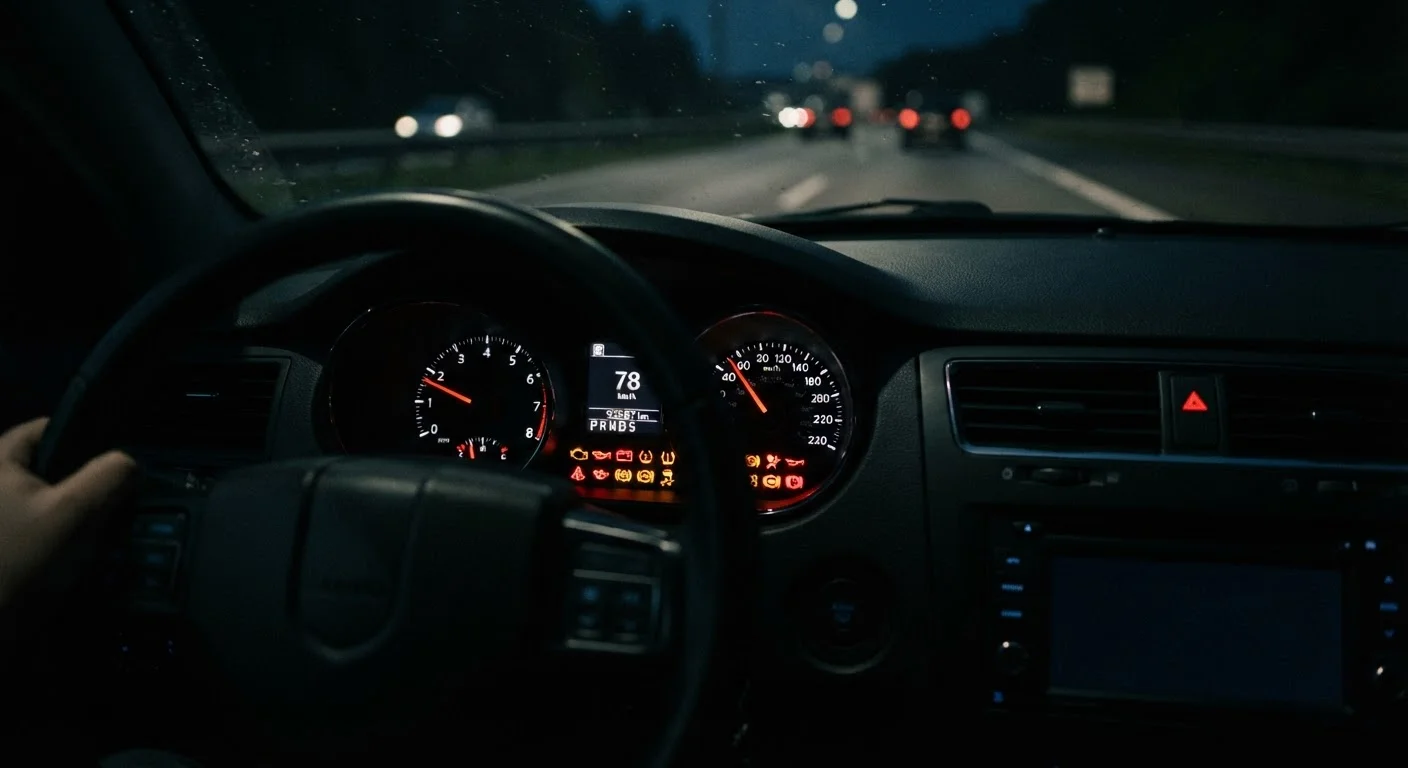
The Color Code: Red, Amber, and Green
Before diving into individual symbols, understand the universal language of warning light colors. Red means stop or act immediately - these lights indicate conditions that can cause serious engine damage or create a safety hazard if ignored. Amber or yellow lights are caution signals: something needs attention soon, but you're not necessarily in imminent danger. Green or blue lights are informational, confirming that a system (headlights, high beams, cruise control) is active.
Most drivers know to worry about a red light, but many dismiss amber warnings for weeks - which is exactly how a manageable repair turns into an expensive one.
| Number of warning light colors | 3 primary (red, amber/yellow, green/blue) |
| OBD-II required since | 1996 (all US passenger vehicles) (US EPA and CARB regulation) |
| TPMS mandated on US vehicles | 2008 model year and newer (NHTSA TREAD Act) |
| TPMS trigger threshold | 25% below recommended tire pressure (NHTSA standard) |
| Flashing check engine light means | Active misfire - stop driving promptly |
| Recommended pressure location | Driver's door jamb sticker (not tire sidewall) |
The Most Common Warning Lights Explained
Check Engine (MIL)
The malfunction indicator light - that amber engine outline - is triggered by the vehicle's onboard diagnostics (OBD-II) system when it detects a fault in the emissions or powertrain system. A steady light often points to something like a loose gas cap, a faulty oxygen sensor, or a misfiring cylinder. A flashing check engine light is more urgent: it typically signals an active misfire that can damage the catalytic converter. Pull over safely if it flashes.
You can't diagnose the cause by eye alone. An OBD-II code reader - available at auto parts stores or through a mechanic - retrieves the diagnostic trouble code (DTC) that explains what triggered it.
Oil Pressure Warning
A red oil can symbol means your engine's oil pressure has dropped dangerously low. This is not an oil-level reminder - it's a pressure alert. Pull over and shut off the engine promptly. Driving with low oil pressure can destroy engine bearings within minutes. Check the oil level with the dipstick; if it's adequate, the issue may be a failing oil pump or pressure sensor, which requires professional diagnosis.
For a broader look at fluid maintenance, see our guide on fluid checks every driver should know how to do.
Temperature Warning
A red thermometer icon indicates the engine is overheating. Turn off the AC, pull over when safe, and shut off the engine. Do not remove the radiator cap while hot. Continuing to drive risks warping the cylinder head - a repair that can cost thousands.
Battery / Charging System
An amber or red battery symbol means the charging system isn't maintaining proper voltage. The alternator, battery, or a worn drive belt may be the cause. Your car may keep running for a short time on battery reserve alone, but don't delay - electrical failure can strand you without warning.
TPMS (Tire Pressure Monitoring System)
An amber symbol showing a flat tire cross-section with an exclamation point means one or more tires are significantly underinflated (typically 25% or more below the recommended pressure). Check all four tires with a gauge and inflate to the pressure listed on the driver's door jamb sticker - not the number on the tire sidewall. Learn more about what proper inflation means for safety in our article on tire pressure and why it affects more than just your fuel economy.
OBD-II
On-Board Diagnostics II - a standardized vehicle self-diagnostic system required on all US cars sold after 1996. It monitors emissions and powertrain systems and stores fault codes readable by a scan tool.
Malfunction Indicator Light (MIL)
The official name for the check engine light. It illuminates when the OBD-II system detects a fault that affects emissions performance or engine function.
Diagnostic Trouble Code (DTC)
A standardized alphanumeric code stored by the OBD-II system when a fault is detected. A mechanic or code reader retrieves DTCs to identify the specific cause of a warning light.
TPMS
Tire Pressure Monitoring System - a federally mandated system on US vehicles since 2008 that alerts the driver when tire pressure drops significantly below the recommended level.
Catalytic Converter
An emissions control device in the exhaust system that converts harmful pollutants into less harmful gases. It can be damaged by prolonged engine misfires.
Alternator
A generator driven by the engine that recharges the battery and powers the vehicle's electrical systems while the engine is running.
When to Drive On vs. When to Pull Over Immediately
Not every warning light demands a roadside stop, but knowing which ones do can protect your engine - and your safety.
| Light | Action |
|---|---|
| Flashing check engine | Pull over safely; stop driving |
| Oil pressure (red) | Pull over immediately; shut off engine |
| Engine temperature (red) | Pull over; let engine cool before any inspection |
| Battery/charging | Drive to a shop promptly; limit electrical use |
| Steady check engine (amber) | Schedule service within a few days |
| TPMS (amber) | Check pressure at the next safe stop |
| Brake system warning | Test brakes gently; if spongy or fading, stop immediately |
When a warning light appears on a used vehicle you're considering purchasing, treat it as a red flag. Our article on reading a used car listing explains other signals that reveal a vehicle's true condition.
Your Owner's Manual Is the Definitive Reference
Vehicle manufacturers sometimes use proprietary symbols not covered in generic guides. Your owner's manual - or your automaker's digital equivalent - lists every warning light specific to your trim level and model year. Keep it in the glove compartment or bookmark the digital version. When in doubt, a licensed mechanic can retrieve diagnostic codes and give you a clear picture of what's happening.
This article is for general informational purposes only. Always consult a qualified mechanic for diagnosis and repair of vehicle warning lights. If you are uncertain about a warning light's meaning, refer to your vehicle's owner's manual or seek professional guidance before continuing to drive.
The content on this site is for informational purposes only and is not a substitute for professional advice. Always consult a qualified professional for guidance specific to your situation.