

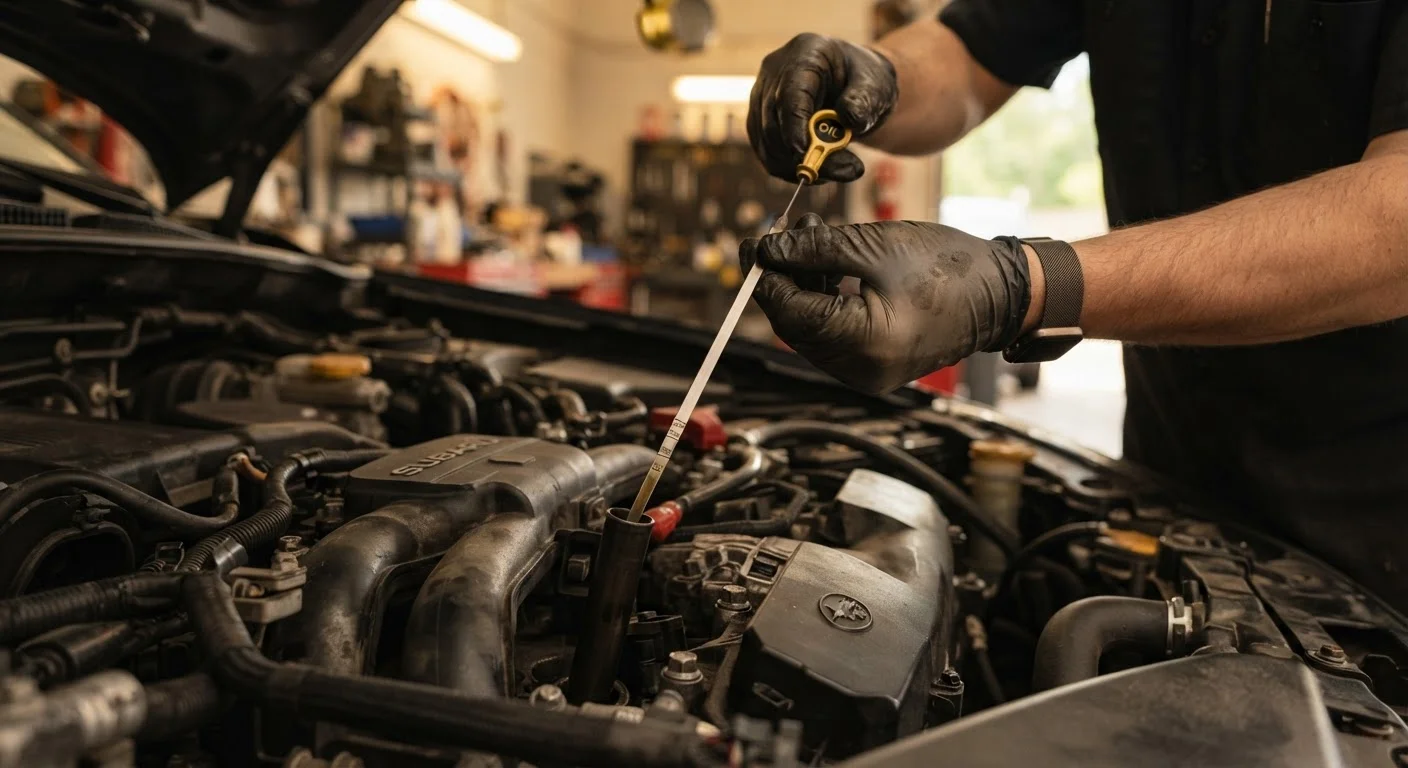
Where the 3,000-Mile Myth Came From
For decades, quick-lube shops and oil filter packaging reinforced the 3,000-mile guideline so consistently that it became automotive folklore. It was a reasonable rule of thumb when conventional oil and older engine tolerances were the norm. But vehicle technology has outpaced it. Today's engines operate with tighter clearances, better filtration, and oils engineered to last considerably longer. The California Department of Resources Recycling and Recovery has publicly stated that the 3,000-mile interval causes millions of gallons of oil to be changed prematurely each year - a waste of both consumer money and environmental resources.
The bottom line: the interval that applies to your car is in your owner's manual, not on a sticker in your windshield corner.
Myth
You should change your oil every 3,000 miles, no matter what.
Fact
Most modern vehicles are engineered for 5,000- to 10,000-mile intervals, and some exceed that with full synthetic oil.
The 3,000-mile guideline dates to an era of older engine designs and conventional motor oil. Advances in both engine metallurgy and oil chemistry have extended effective service life significantly. Many automakers now specify 7,500- or even 10,000-mile intervals in their owner's manuals for typical driving. Following the old rule on a modern vehicle isn't dangerous - you're simply spending money on service you don't yet need.
Myth
Oil turns black, so it must be dirty and needs changing immediately.
Fact
Dark oil is doing its job - suspending combustion byproducts - and color alone is not a reliable indicator of whether oil needs changing.
Engine oil contains detergent additives designed to pick up soot, metal particles, and other contaminants and hold them in suspension. That's exactly why oil darkens quickly after a change. What matters is whether the oil's protective additives are depleted, not its color. A proper assessment involves checking viscosity, acid levels, and additive breakdown - none of which are visible to the naked eye. Rely on your oil life monitoring system or manufacturer intervals instead of eyeballing it.
Myth
Synthetic oil causes leaks in older engines, so you should stick with conventional.
Fact
Modern full synthetic oil does not cause seals to leak; this belief stems from an early formulation issue that has long since been corrected.
Early synthetic formulations in the 1970s and 1980s used esters that could swell or degrade certain rubber seal compounds, sometimes surfacing existing leaks. Today's synthetic oils are fully compatible with modern and most vintage seals. If an older engine is already leaking, switching oil types won't create the problem - but it may reveal a pre-existing seal issue that was being masked by sludge buildup. A qualified mechanic can evaluate seal condition before any switch.
Myth
All oil change intervals are the same regardless of how you drive.
Fact
"Severe" driving conditions - short trips, towing, extreme temperatures - shorten effective oil life and may require more frequent changes.
Owner's manuals typically define two service schedules: normal and severe. Severe conditions include frequent short trips under five miles, stop-and-go city driving, towing or hauling heavy loads, dusty environments, and extreme heat or cold. These conditions prevent the engine from fully reaching operating temperature or put additional stress on oil, breaking it down faster. If your driving fits the severe category, the shorter interval in your manual applies - not the longer one. Many oil life monitoring systems account for driving patterns automatically.
Myth
If you use synthetic oil, you never have to change it.
Fact
Synthetic oil lasts longer than conventional, but it still degrades and must be changed at manufacturer-recommended intervals.
Synthetic oil resists thermal breakdown and oxidation better than conventional oil, but its additive package - which handles corrosion protection, detergency, and viscosity stability - does wear out over time. Skipping changes entirely allows acids, moisture, and contaminants to accumulate, which can lead to sludge and accelerated engine wear. "Extended life" simply means longer intervals, not indefinite service. Check your manual for the exact specification.
How to Read Your Owner's Manual and Oil Life Monitor
Your owner's manual lists two things: the correct oil specification (viscosity and certification, such as 5W-30 meeting API SP) and the service interval. If your vehicle was built in roughly the last 15 years, it likely also has an oil life monitoring system - a dashboard indicator that calculates remaining oil life based on engine revolutions, temperature cycles, and load. This is not the same as an oil level warning light. The monitor tells you when to change; the dipstick tells you how much oil is present.
Use both together. Check your oil level monthly with the dipstick - our guide to fluid checks walks through how to do this correctly - and let the monitor or manual interval determine when a change is actually due.
Don't Confuse Oil Level With Oil Condition
An engine can be low on oil and still show a healthy oil life percentage on the monitor. These are two separate measurements. Always check the physical dipstick between changes - especially if your engine is known to consume oil between services. Running an engine low on oil, even briefly, can cause lasting wear.
Staying on top of your change history also pays off at resale time. A documented maintenance record is one of the most effective ways to demonstrate a vehicle's reliability to a future buyer. See how to keep a car maintenance log for a practical system.
The Real Cost of Getting It Wrong
Changing oil too often costs you money but won't hurt the engine. Changing it too infrequently is where real damage occurs. Degraded oil loses its ability to lubricate and cool metal components, leading to accelerated wear on bearings, camshafts, and cylinder walls. In severe cases, sludge buildup can block oil passages entirely - a repair that often costs more than the vehicle is worth.
Neglected oil changes are one of the habits that quietly shorten a car's lifespan, along with other easily overlooked maintenance gaps. The goal isn't to change oil as often as possible - it's to change it at the right time, with the right product, every time.
5,000-10,000 mi
Typical modern oil change interval
Most automakers specify this range for conventional or synthetic oil under normal driving conditions in post-2000 vehicles.
$0
Engine benefit from extra-early changes
Automotive engineers and state resource agencies broadly agree that changing oil before the recommended interval provides no measurable engine protection benefit.
The content on this site is for informational purposes only and is not a substitute for professional advice. Always consult a qualified professional for guidance specific to your situation.