

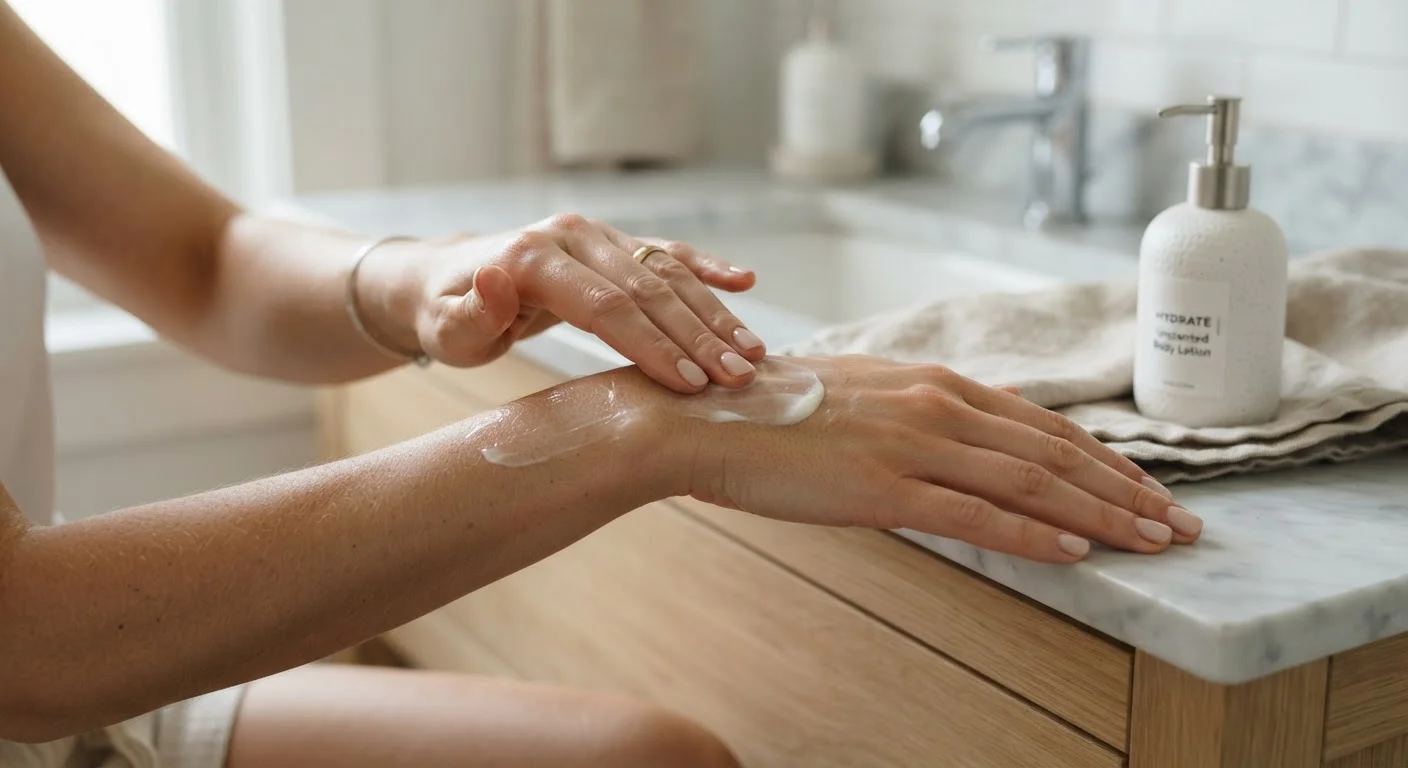
The Real Reason Your Lotion Seems to Stop Working
You found a body lotion you liked, used it faithfully for a few weeks, and then - nothing. Your skin feels just as dry as before. It's tempting to conclude the formula has lost its effectiveness or that your skin has "gotten used to" it. Neither is quite accurate.
Lotion doesn't build tolerance the way some medications can. What typically changes is the condition of your skin, your application habits, or environmental factors - not the lotion itself. Understanding what's actually happening is the first step toward fixing it, often without spending a cent on something new.
The mistakes below are the most common culprits. Most are easy to correct once you know what to look for. For a deeper look at how moisturizers actually function at the ingredient level, see our guide on humectants, emollients, and occlusives explained.
Applying lotion to completely dry skin instead of damp skin.
Why it happens: Most people moisturize as part of a dressing routine, long after they've towel-dried and moved on. The connection between skin hydration and lotion absorption isn't widely taught.
Skipping exfoliation, allowing dead skin cells to accumulate.
Why it happens: Exfoliation is often associated with facial care, and many people never extend the habit to their body. Without it, a layer of dead cells builds up and physically blocks lotion from reaching living skin.
Using the same formula year-round without adjusting for seasonal changes.
Why it happens: A lotion that performed well in summer humidity may be outmatched by winter's low indoor humidity and cold air, which strip moisture more aggressively.
Applying too little product, or rubbing it in so quickly it evaporates.
Why it happens: People often treat body lotion like hand sanitizer - a quick rub until it disappears. In reality, effective moisturizing requires enough product to form a thin, even film across the skin.
Using harsh soaps or long, hot showers that undo moisturizing efforts.
Why it happens: Hot water and soap strip the skin's natural lipid barrier. Applying lotion afterward helps, but if the stripping is severe enough, even a good lotion is playing catch-up.
What to Change Before Reaching for a New Product
Most lotion "failures" come down to application timing, skin prep, and seasonal blind spots - not a mismatch in formula. Before concluding you need a heavier product, run through the checklist below.
2 min
Post-shower window for best lotion absorption
Dermatologists broadly recommend applying moisturizer within two minutes of bathing to lock in surface moisture before it evaporates.
~28 days
Skin cell turnover cycle
The outer layer of skin renews roughly every four weeks; without exfoliation, dead cells accumulate and reduce how effectively topical products penetrate.
Apply within two minutes of bathing. This is the single highest-impact change most people can make. Damp skin absorbs humectants far more readily than skin that has been dry for hours. If your current lotion feels ineffective, try this alone for a week before drawing any conclusions.
Exfoliate weekly. A gentle physical or chemical exfoliant removes the layer of dead cells that acts as a barrier between your lotion and the skin underneath. Our weekly body care routine guide explains how to build this step in without overdoing it.
Account for your environment. Indoor heating in winter and air conditioning in summer both reduce ambient humidity, pulling moisture from the skin's surface. Your lotion hasn't changed, but the conditions it's working against have. This is one of several points explored in our article on dry skin myths.
Don't Ignore Persistent or Worsening Dryness
If your skin remains severely dry, cracks, itches intensely, or shows signs of inflammation even after improving your routine, those symptoms may go beyond typical dryness. Conditions such as eczema or psoriasis require a different approach than standard moisturizing. A dermatologist can help distinguish between general dryness and something that needs targeted treatment.
If you've addressed application habits and your skin still feels persistently dry, irritated, or inflamed, that's worth discussing with a dermatologist. General dryness is common, but persistent symptoms can sometimes signal an underlying condition that moisturizer alone won't resolve.
This article is for general informational purposes only and is not a substitute for professional skincare or medical advice. If you have concerns about your skin health, consult a qualified dermatologist or healthcare provider.
The content on this site is for informational purposes only and is not a substitute for professional advice. Always consult a qualified professional for guidance specific to your situation.