

Why Undertones Trip People Up
Shopping for foundation should, in theory, be straightforward: find your shade and you're done. In practice, many people leave the store with a product that looks noticeably off on their face - too orange, too pink, or strangely gray. The culprit is almost always undertone, not shade depth.
The confusion arises because most people focus on how light or dark their skin appears, which is actually a separate variable called skin depth or surface tone. Undertone operates on a different axis entirely. Two people can share the same fair surface tone but have completely different undertones - and a foundation that looks flawless on one will look wrong on the other.
Once you understand the distinction, a lot of previously baffling makeup decisions start to make sense. It also helps decode some of the terminology you'll encounter on product packaging - something our guide to reading makeup labels covers in more depth.
Undertone Is Not the Same as Ethnicity
Undertone is sometimes mistakenly assumed to correlate with racial or ethnic background. In reality, warm, cool, and neutral undertones occur across all ethnicities and skin depths. Someone with South Asian heritage may have a cool undertone; someone with Northern European heritage may have a warm one. Basing undertone assumptions on ethnicity rather than direct observation leads to inaccurate matches.
The Three Undertone Categories
Most undertone systems use three broad categories:
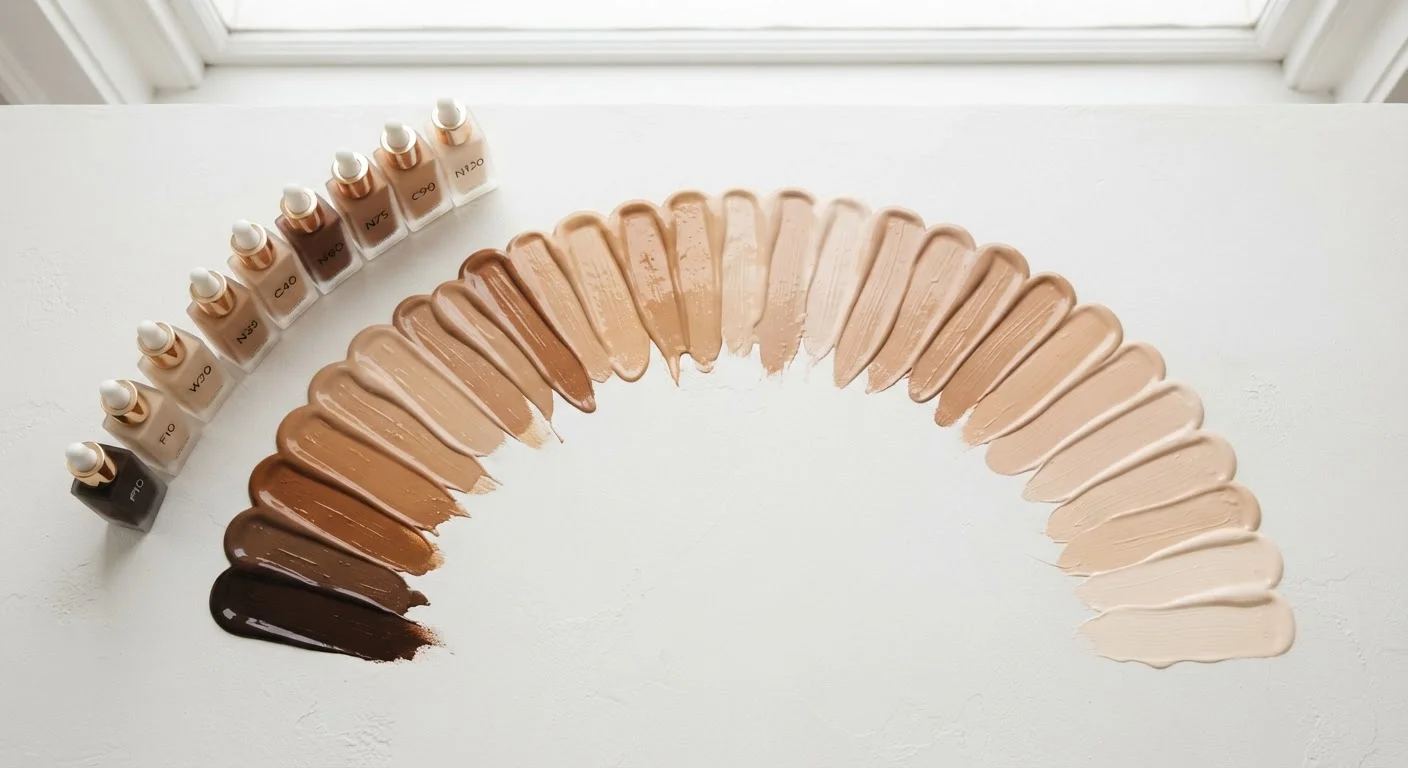
- Warm: Yellow, golden, or peachy hues beneath the skin. Common descriptors on foundations include 'W,' 'Y,' or 'Golden.'
- Cool: Pink, red, or bluish-purple hues beneath the skin. Foundation labels may use 'C,' 'P' (for pink), or 'Rose.'
- Neutral: A balance of warm and cool tones without a strong lean in either direction. Often labeled 'N' or simply 'Neutral.'
It's worth noting that these are categories, not rigid boxes. Many people sit closer to the boundary between warm and neutral, or cool and neutral, which is why some find undertone identification tricky. There is also a fourth descriptor - olive - used specifically for skin that has green or yellow-green undertones, common in Mediterranean, South Asian, and some East Asian complexions. Olive skin often reads as neutral-to-warm but can turn greenish-gray in the wrong foundation.
~40%
Shoppers who return or discard mismatched foundation
Industry estimates suggest a significant portion of foundation purchases are returned or go unused due to shade mismatch, with undertone being a primary factor cited by makeup artists and retail consultants.
3
Core undertone categories used in most makeup systems
Warm, cool, and neutral are the standard undertone classifications used across the makeup industry, though some brands add olive as a fourth distinct category.
How to Identify Your Own Undertone
Several at-home methods can help narrow down your undertone. None is definitive on its own, but used together they paint a reliable picture.
The Vein Test
In natural daylight, look at the veins on your inner wrist. Greenish veins suggest warm undertones (the yellow in your skin mixes with blue veins to appear green). Blue or purple veins suggest cool undertones. Veins that appear both blue and green - or that you simply can't categorize - point toward neutral.
The White Paper Test
Hold a plain white sheet of paper next to your bare face in natural light. If your skin looks yellowish or golden by comparison, you likely lean warm. A pinkish or rosy cast suggests cool. If your skin simply looks the same as neutral white, you may be neutral.
The Jewelry Test
Think about which metal you instinctively reach for, or notice which looks more harmonious against your skin. Gold jewelry typically flatters warm undertones; silver flatters cool ones. If both look equally good, neutral is a strong candidate.
Understanding your undertone connects naturally to knowing your skin type - another piece of the foundation-matching puzzle covered in our skin type identification guide.
Test Foundation in Natural Light
Store and bathroom lighting is often warm or fluorescent, which can make an undertone mismatch less obvious at the point of application. Always step outside or near a window after applying a test shade and wait two to three minutes before evaluating the match. This is the most reliable way to see the true undertone interaction on your skin.
Putting It Into Practice
Knowing your undertone matters most when selecting base products like foundation, tinted moisturizer, concealer, and setting powder. If you're navigating those product categories for the first time, our foundation vs. tinted moisturizer vs. BB cream guide explains how each formula behaves differently on skin.
When testing a foundation shade, apply a small amount along your jawline - not your wrist or hand, which often have a different undertone than your face. Let it sit for a few minutes, then step into natural light. A good match disappears into the skin; a mismatch will pull noticeably warm, cool, or chalky.
If you're between undertones, lean toward a neutral shade first. Neutral foundations are generally the most forgiving, and from there you can adjust slightly warmer or cooler as needed. Once your base is matched correctly, everything layered on top - blush, contour, highlighter - tends to fall into place more naturally, making blending techniques more effective overall.
Frequently Asked Questions
Skin tone refers to the surface color of your skin - ranging from fair to deep - and can change with sun exposure or seasons. Undertone is the subtle hue beneath the surface that stays constant. Both matter when choosing foundation, but undertone is the more critical factor for a natural-looking match.
Look at the veins on your inner wrist in natural light. Green-tinted veins generally suggest a warm undertone, while blue or purple veins suggest a cool undertone. If you can't clearly tell, you may have a neutral undertone. The jewelry test - gold flattering you more than silver, or vice versa - can also offer a useful clue.
Absolutely. Undertone and depth of skin tone are independent of each other. Someone with a deep complexion can have a cool, warm, or neutral undertone, just as someone with a fair complexion can. The full range of undertones exists across all skin tones and ethnicities.
An orange cast typically means the foundation has a warmer undertone than your skin. An ashy or gray cast usually means the shade runs too cool or too light. Oxidation - where foundation reacts with skin oils and darkens slightly - can also intensify the wrong undertone, making the mismatch more obvious as the day progresses.
A neutral undertone means your skin has roughly equal amounts of warm and cool tones, without one dominating. People with neutral undertones generally have flexibility when choosing foundation, as both warm-leaning and cool-leaning shades tend to blend reasonably well. Look for shades described as 'neutral' or 'N' on product labels.
Yes, undertone can guide choices beyond foundation. Cool undertones tend to harmonize with berry, mauve, and rosy shades in blush and lipstick. Warm undertones often pair well with peach, coral, and bronze tones. That said, these are general guidelines - personal preference and skin depth also shape what looks harmonious.
The content on this site is for informational purposes only and is not a substitute for professional advice. Always consult a qualified professional for guidance specific to your situation.