

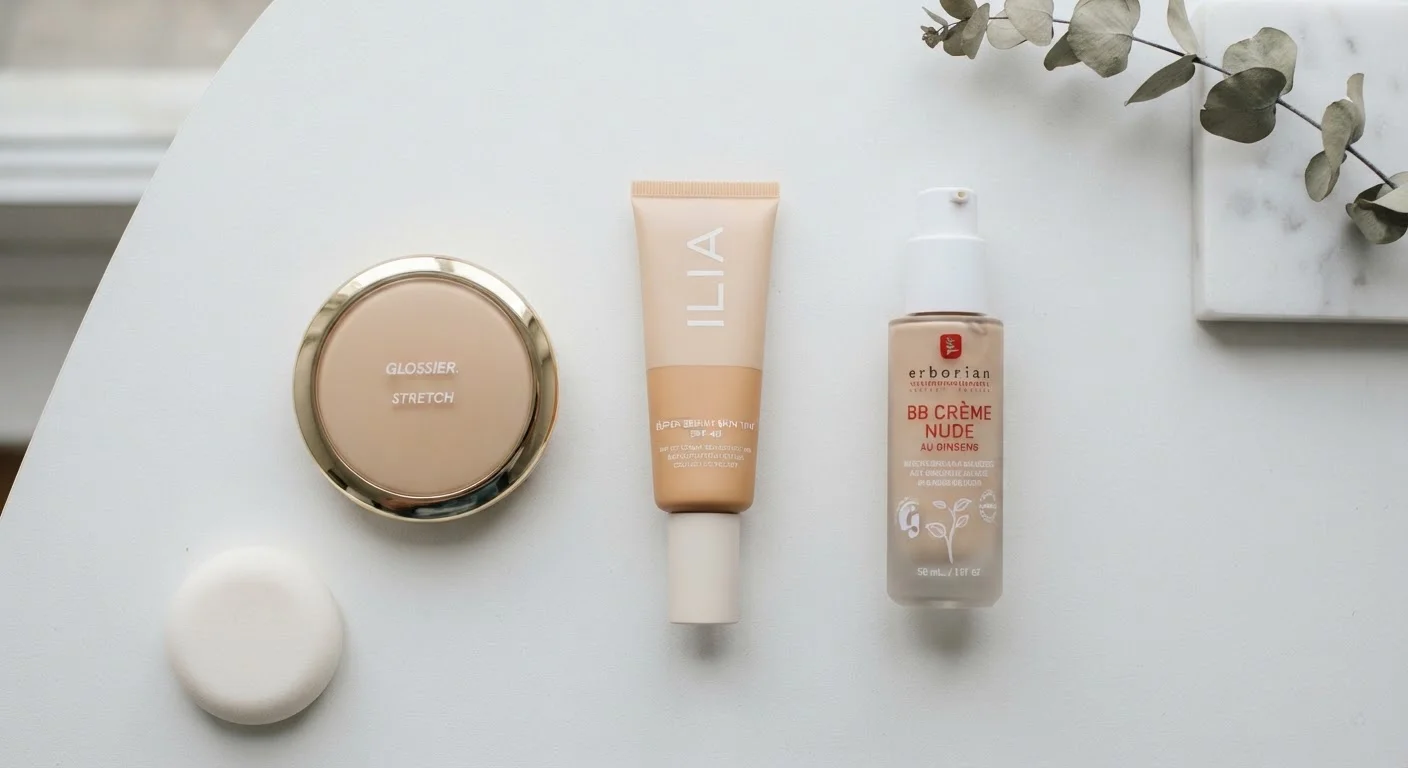
Our Verdict
Foundation, tinted moisturizer, and BB cream are not interchangeable - they exist on a spectrum from skincare-forward to full coverage. Understanding where each falls on that spectrum helps you match the product to your skin's needs and the day's demands rather than defaulting to what's most familiar.
| Best for | Recommended |
|---|---|
| Those wanting the most control over skin tone and coverage | Foundation |
| Those prioritizing a quick, natural finish with added hydration | Tinted Moisturizer |
| Those seeking a single multi-tasking base with SPF and light coverage | BB Cream |
Why the Distinction Matters
Walk through any beauty aisle and you'll find foundation, tinted moisturizer, and BB cream shelved close together, often in nearly identical packaging. The confusion is understandable - all three apply to the face, come in skin-tone shades, and produce a more even complexion. But the similarities end there.
Each product was designed with a different primary goal, and choosing the wrong one for your skin type or the occasion can leave you with a finish that feels heavy, sheer when you wanted coverage, or skin that breaks out from an overly occlusive formula. Decoding what makeup labels actually mean is the first step toward making smarter choices at the shelf.
This breakdown treats each product on its own terms so you can build a base routine that works for your skin rather than against it.
Foundation: Coverage-First Formulation
Foundation is engineered to even out skin tone and provide consistent, buildable coverage. It typically contains a higher concentration of pigment than the other two products, which is why it can effectively minimize the appearance of redness, discoloration, and uneven texture.
Foundations come in a wide range of formulas - liquid, powder, stick, and serum - each suited to different skin types and finishes. Liquid foundations with a matte finish, for example, tend to suit oilier skin, while dewy or satin formulas work better for dry or normal skin types. How powder and liquid formulas behave across different skin types is worth understanding before committing to a formula.
Because coverage is the priority, foundation generally does not contain meaningful skincare actives. It is a cosmetic product first. For that reason, proper skin prep underneath matters significantly - skincare steps before applying makeup directly affect how foundation applies and wears throughout the day.
| Foundation | Tinted Moisturizer | BB Cream | |
|---|---|---|---|
| Primary purpose | Even skin tone, conceal imperfections | Hydrate and add sheer color | Multi-task: hydrate, cover, protect |
| Coverage level | Light to full (buildable) | Sheer to light | Light to medium |
| Skincare benefits | Minimal to none | Moisturization | Moisturization and often SPF |
| Best skin types | All types (formula-dependent) | Dry to normal | Normal to combination |
| Application effort | Moderate - blending required | Low - blends quickly | Low to moderate |
| Best occasions | Events, professional settings | Casual, everyday wear | Quick everyday routine |
Tinted Moisturizer: Skincare With a Hint of Color
Tinted moisturizer starts from a completely different design brief: it is a moisturizer first, with pigment added as a secondary feature. The result is a product that delivers hydration and provides a sheer, skin-like wash of color rather than coverage in the traditional sense.
Because the pigment load is low, tinted moisturizers do not conceal blemishes, hyperpigmentation, or significant discoloration - and they are not meant to. Their value lies in creating a natural, fresh-faced finish quickly, with minimal effort. They blend easily, are forgiving to apply, and typically feel lightweight on the skin.
Layer Strategically, Not Heavily
You don't have to commit entirely to one product. Many people use a tinted moisturizer or BB cream all over for a light base and then spot-apply a small amount of foundation or concealer only where more coverage is needed. This approach keeps the overall finish natural while still addressing specific areas of concern.
Those with dry skin often find tinted moisturizer more comfortable for daily wear than heavier formulas. If you want more coverage in specific areas, applying concealer on top is a common approach - understanding how concealers differ from correctors helps clarify which one you'd be reaching for.
BB Cream: The Middle Ground
BB cream - short for Beauty Balm - originated in Korean skincare culture and was reformulated for Western markets in the early 2010s. It occupies the space between a tinted moisturizer and a light-coverage foundation by combining multiple functions in a single product: moisturization, a small amount of coverage, and often SPF protection.
Coverage from a BB cream is generally light to medium and, unlike foundation, is not easily built to full coverage without the formula looking heavy or cakey. What BB cream does well is simplify a routine - it is particularly useful when you want some skin-evening effect alongside sun protection without layering multiple products.
The SPF included in most BB creams is a meaningful benefit, though dermatologists generally note that the amount of product typically applied may not deliver the full SPF indicated on the label. For comprehensive sun protection, a dedicated sunscreen applied underneath remains the more reliable approach. Understanding physical vs. chemical sunscreen can help you decide which type to layer underneath.
Choosing the Right Base for Your Routine
The clearest way to choose between these three products is to identify what you actually need from your base on any given day. Coverage requirement is the primary factor, followed by skin type and how much time you want to spend applying and blending.
For events, professional settings, or days when skin tone consistency matters most, foundation gives you the most control. For weekend errands, casual days, or when skin is already in good condition, tinted moisturizer keeps things simple and comfortable. BB cream earns its place on days when you want one product to do several jobs at once without layering.
None of these is universally superior - they each solve a different problem. Building the blending skills that make any base product look polished matters regardless of which formula you choose. The best result comes from matching the product's strengths to what your skin actually needs.
This article is for general informational purposes only and does not constitute medical or dermatological advice. Consult a qualified dermatologist or healthcare professional with any concerns about your skin health.
The content on this site is for informational purposes only and is not a substitute for professional advice. Always consult a qualified professional for guidance specific to your situation.