

Why the 'More Is More' Approach Backfires
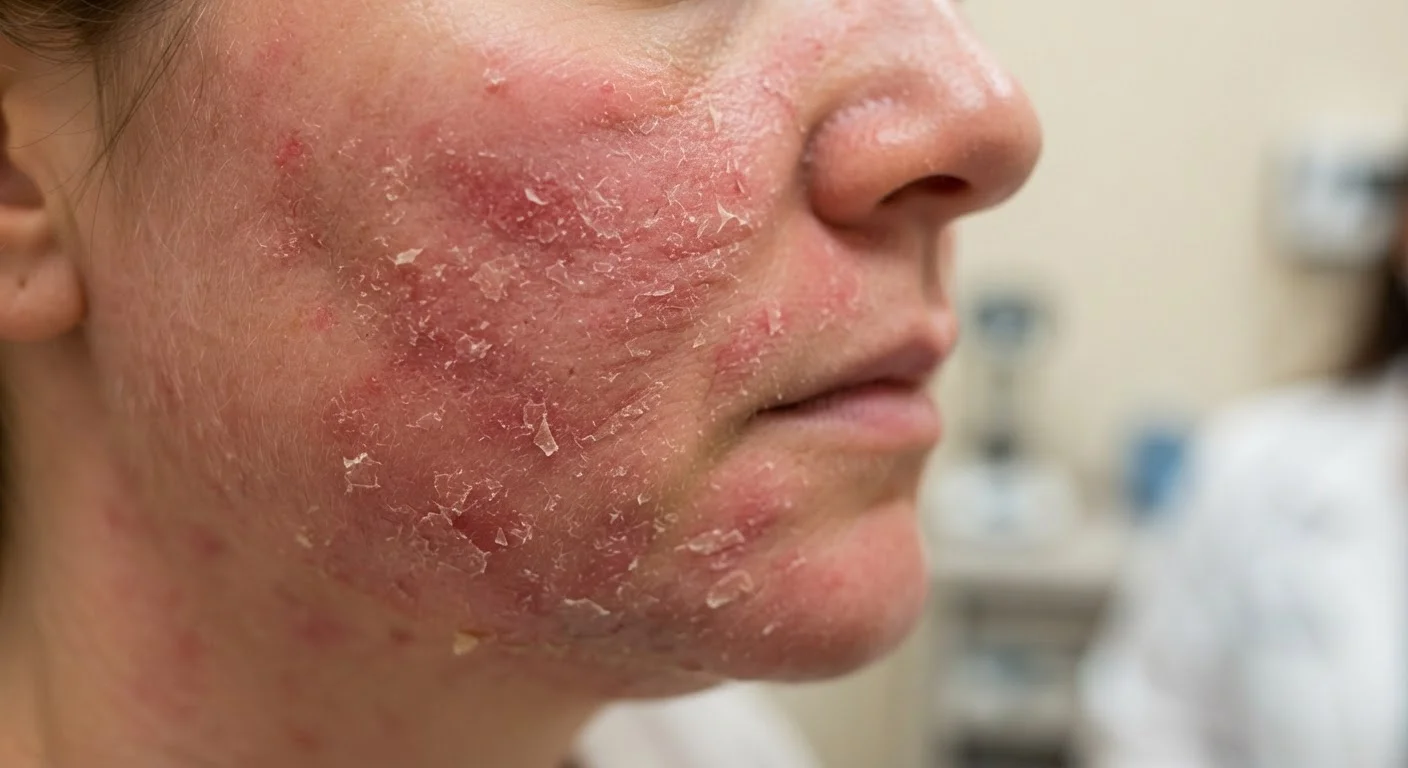
Exfoliation is genuinely useful. Removing dead surface cells can improve texture, support clearer pores, and help other skincare ingredients absorb more effectively. But the skin's outermost layer - the stratum corneum - is not simply dead debris waiting to be scrubbed away. It forms a critical part of the skin barrier, a structure that regulates moisture and defends against environmental stressors. When exfoliation is pushed beyond what the skin can handle, that barrier begins to degrade.
The result is a pattern that many people recognise but don't immediately attribute to over-exfoliation: skin that feels raw or tight, looks perpetually flushed, breaks out more than usual, or reacts to products that never caused problems before. Understanding why this happens - and how to course-correct - is covered in more depth in our guide on what the skin barrier actually does.
2-3×
Maximum recommended exfoliation frequency per week
Dermatology guidelines generally suggest most skin types tolerate chemical exfoliation no more than two to three times weekly, with sensitive skin requiring even less.
~28 days
Natural skin cell turnover cycle
The skin renews itself roughly every 28 days; exfoliation supports this cycle but cannot safely accelerate it beyond its biological pace.
The Mistakes That Cause the Most Damage
Over-exfoliation rarely results from a single dramatic error. It accumulates through well-intentioned habits - using a product daily because the label says 'gentle,' combining multiple actives without realising they overlap in function, or ignoring the skin's early signals of distress. The mistakes below are among the most common, and understanding the reasoning behind each is the most effective way to avoid them.
Exfoliating every day because results seemed to improve at first.
Why it happens: Early exfoliation often produces a visible 'glow,' leading many people to assume that more sessions will deliver more benefit. This improvement is real but temporary - it reflects surface-cell removal, not sustained skin health.
Layering multiple exfoliating ingredients in the same routine.
Why it happens: With AHAs, BHAs, PHAs, retinoids, and physical scrubs all widely available, it's easy to combine several without realising they all exfoliate through different mechanisms - creating a cumulative load the skin cannot handle.
Treating tightness, burning, or flaking as signs the product is 'working.'
Why it happens: Skincare marketing has blurred the line between effective and aggressive. Some people interpret discomfort as proof of efficacy - a misread that delays recognition of genuine barrier damage.
Skipping moisturiser after exfoliating to 'let skin breathe.'
Why it happens: A persistent myth holds that skin needs air rather than hydration after treatment. In reality, exfoliation temporarily increases transepidermal water loss, making moisturiser more important - not less - immediately after.
Applying exfoliants to already-compromised or sensitised skin.
Why it happens: People managing active breakouts or dryness often intensify their routines, believing more aggressive treatment will resolve the issue faster. This compounds the damage rather than addressing its root cause.
Don't Stack Actives Without a Plan
Combining a physical scrub, an AHA toner, and a retinoid in the same routine is a recipe for barrier damage - even if each product is used at a moderate frequency on its own. Actives compound one another's effects on the skin. Before adding any new exfoliating ingredient, check our pre-launch checklist to reduce the risk of irritation.
How to Recover and Reset Your Routine
If your skin is already showing signs of over-exfoliation, the recovery path is straightforward - but requires patience. Stop all exfoliating products immediately, including those marketed as mild or natural. For at least one to two weeks, use only a gentle, non-foaming cleanser and a fragrance-free moisturiser. Broad-spectrum SPF is non-negotiable during this period; a damaged barrier is significantly more vulnerable to UV harm.
Once the skin has visibly calmed - less redness, reduced sensitivity, no more tight or 'shiny' appearance - you can cautiously reintroduce a single exfoliant at a low frequency. Start with once per week and only increase if the skin remains comfortable over several weeks. The same principle applies to any new active ingredient. Approaching reintroduction as a deliberate process rather than a return to the previous routine helps prevent the same cycle from repeating. For a structured approach to adding actives back in, the pre-launch checklist for new actives provides a useful framework.
When to See a Dermatologist
If your skin remains persistently red, inflamed, or painful for more than two weeks after scaling back exfoliation, consult a board-certified dermatologist. Prolonged barrier disruption can predispose skin to infection and may require professional guidance to resolve. Do not attempt to self-treat with additional actives during this period.
This article provides general skincare information and education only. It is not a substitute for personalised advice from a qualified dermatologist or healthcare provider. If you have persistent skin concerns, please consult a licensed professional.
The content on this site is for informational purposes only and is not a substitute for professional advice. Always consult a qualified professional for guidance specific to your situation.