

Summary
18 items · 20-40 minutes
Why Preparation Matters Before Introducing an Active
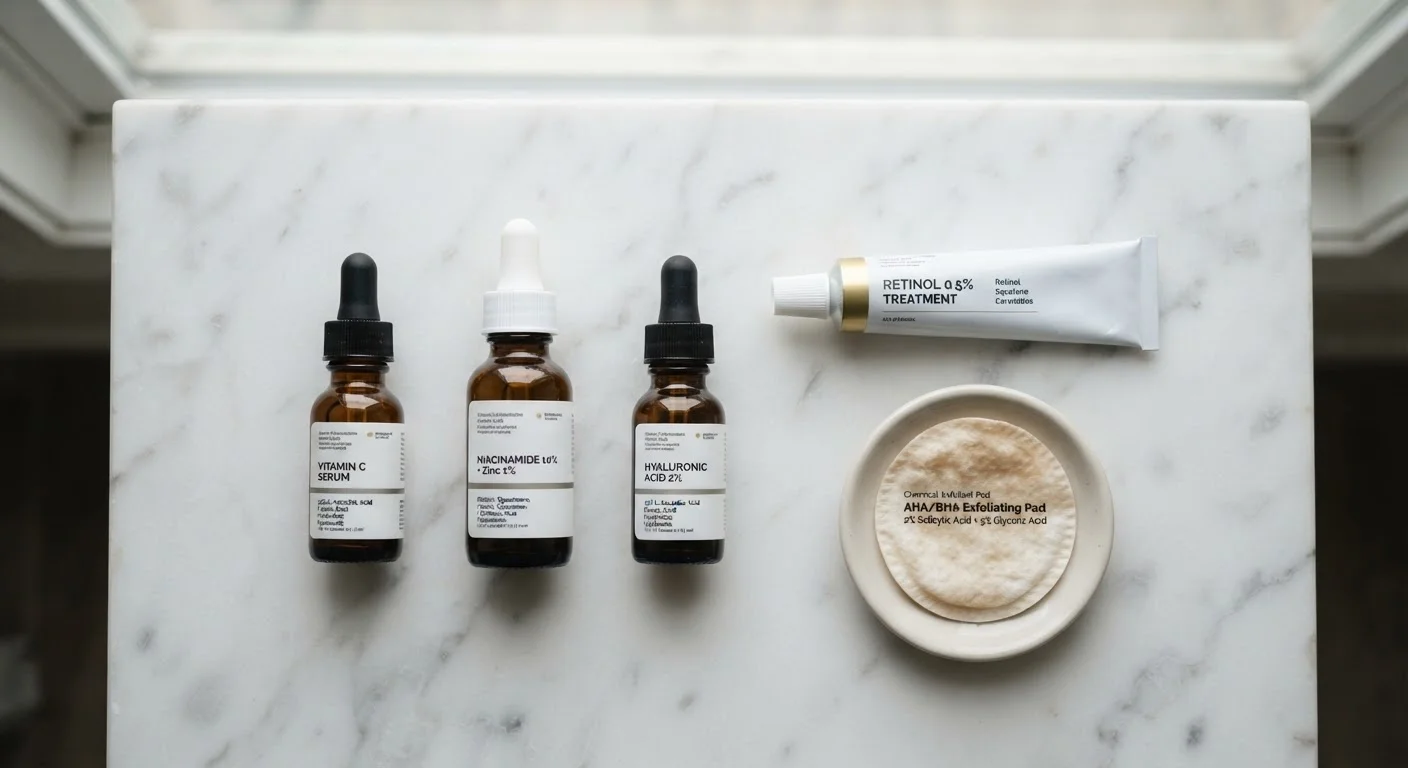
Actives - a term for ingredients with a demonstrated physiological effect on skin, such as retinoids, alpha hydroxy acids (AHAs), beta hydroxy acids (BHAs), vitamin C, and niacinamide - are among the most effective tools in a skincare routine. They are also among the most likely to cause irritation when introduced carelessly.
The problem is rarely the ingredient itself. It's the context: a compromised skin barrier, a conflicting product already in the routine, or too much too soon. A little pre-launch groundwork costs you nothing and can save you weeks of dealing with redness, flaking, or a sensitised complexion that has to heal before you can try again.
If you're still building your foundational routine, it's worth reviewing the four core steps before layering actives on top - actives work best when the basics are already solid.
Assess Your Skin's Current State
Research the Ingredient
Audit Your Existing Routine
Patch Test and Introduction Protocol
Monitor and Adjust
Tools and Resources You'll Need
You don't need anything elaborate - just a few practical items to conduct a careful, informed introduction.
Ingredient-checking app or database
Helps you cross-reference your existing products for known conflicts with the new active you're adding.
Fragrance-free, barrier-supportive moisturiser
Used to buffer new actives and soothe the skin during the adjustment period.
Broad-spectrum SPF 30+ sunscreen
Essential daily protection when using photosensitising actives such as retinoids, AHAs, or vitamin C.
Notebook or notes app
Track application dates, frequency, and any skin changes to identify patterns over the introduction period.
Timer or calendar reminder
Helps you space introduction days correctly and avoid accidentally increasing frequency too fast.
Navigating Conflicts and Knowing When to Pause
One of the most overlooked pre-launch steps is auditing your existing routine for ingredient conflicts. Some actives destabilise each other, others amplify irritation when layered, and a few simply don't belong in the same routine window. For a detailed reference, see our guide on ingredients that don't pair well.
Don't Stack Multiple New Products at Once
Adding more than one new active at the same time makes it nearly impossible to pinpoint which ingredient is responsible if a reaction occurs. This can result in abandoning an effective ingredient unnecessarily - or worse, continuing one that's causing harm. Introduce products one at a time, spaced at least four weeks apart.
Photosensitivity Is a Real, Ongoing Risk
Several widely used actives - including retinoids, most AHAs, and some forms of vitamin C - make skin more vulnerable to UV damage, not just on the day of application. Daily SPF use isn't optional while these ingredients are in your routine. Skipping it can accelerate the very concerns, such as pigmentation and uneven tone, that many actives are used to address.
It's also worth understanding what happens when actives are overused. Exfoliants, for example, are a particularly common source of barrier damage. Our article on over-exfoliating outlines the warning signs and how to recover. Once your skin is stable and your routine is running smoothly, you can think ahead to how these steps connect to your broader look - a well-prepped skin surface also makes a real difference to how makeup applies and lasts.
A Compromised Barrier Cannot Tolerate Actives
Applying a retinoid, exfoliant, or high-concentration vitamin C to skin that is already irritated, sunburned, or barrier-damaged significantly amplifies the risk of a severe reaction. The ingredient cannot distinguish between a healthy surface and a compromised one - it will act on whatever it contacts. Always restore barrier function first, even if that means pausing your routine for a week or two.
This article is for general informational and educational purposes only. It is not a substitute for advice from a licensed dermatologist or qualified healthcare professional. If you have a diagnosed skin condition, are pregnant, or experience persistent or severe skin reactions, consult a professional before changing your skincare routine.
The content on this site is for informational purposes only and is not a substitute for professional advice. Always consult a qualified professional for guidance specific to your situation.