

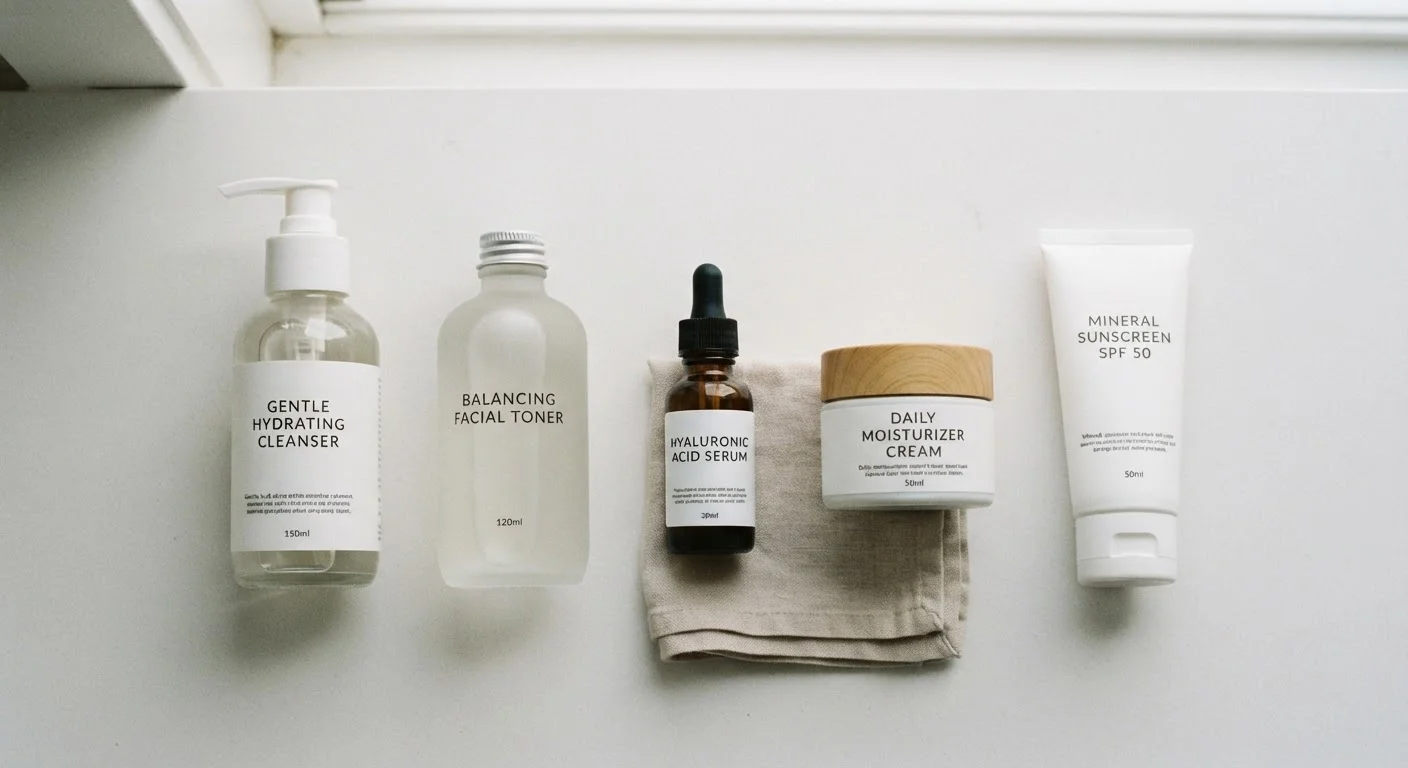
Why Order Actually Matters
Skincare layering isn't about rigid rules for their own sake - it's about physics and chemistry. Products applied to skin compete for absorption based on their molecular size, consistency, and water or oil content. When a thick cream goes on before a lightweight serum, the cream forms a partial barrier that the serum then has to penetrate. The result is reduced delivery of the ingredients you actually want to reach deeper skin layers.
The core principle is straightforward: thinnest texture to thickest, water-based before oil-based. This sequence keeps the pathway to skin clear at each step, giving every product the best conditions to do its job. If you're just starting to think about sequencing, our four-step foundational routine guide is a practical starting point.
Not Sure What an Ingredient Does?
Label terminology like 'humectant,' 'emollient,' and 'occlusive' directly affects how you should layer products. Our ingredient glossary and moisturizer mechanics guide explain these terms in plain language so you can make smarter sequencing decisions.
Tools and Products You'll Need
What you will need
Cleanser
Removes surface debris, oil, and makeup so subsequent products can reach the skin without obstruction.
Toner or Essence
Restores the skin's surface after cleansing and can prep skin to absorb subsequent layers more efficiently.
Water-based serum or treatment
Delivers concentrated active ingredients - such as vitamin C, niacinamide, or hyaluronic acid - close to the skin's surface.
Moisturizer
Seals in hydration and active ingredients while reinforcing the skin barrier.
Face oil (if used)
Applied after moisturizer to lock in moisture; oil-based products sit on top of water-based layers.
Broad-spectrum sunscreen (SPF 30 or higher)
Protects skin from UV damage; applied last in any daytime routine.
The Step-by-Step Layering Sequence
Start with a clean face
Cleansing is the non-negotiable first step. Any product applied over makeup residue, sunscreen, or excess sebum has to compete with those barriers before it can reach skin cells. Use a gentle cleanser suited to your skin type and rinse thoroughly with lukewarm water. Pat - don't rub - dry with a clean towel.
Apply any toner or essence
Toners and essences are typically the most watery products in a routine, which is why they come immediately after cleansing. They help rebalance the skin's surface environment and, in the case of hydrating toners, begin building up moisture levels before thicker products are applied. Apply with clean hands or a cotton pad and allow to absorb for 20-30 seconds.
Layer water-based serums and actives
Serums are where most active ingredients - vitamin C, niacinamide, peptides, hyaluronic acid - are concentrated. Because they have a thinner consistency and smaller molecular weight than creams, they need to go on before heavier products. If you use more than one serum, apply the thinnest first. Allow each to largely absorb before adding the next.
If you use an exfoliant (such as an AHA or BHA toner), this is also where it typically fits - after cleansing and before hydrating serums. Learn more about choosing the right exfoliant in our AHA and BHA guide.
Apply moisturizer
Moisturizer performs two broad jobs: it adds hydration and it seals in everything applied underneath it. It sits above serums in the sequence because its heavier, film-forming ingredients - emollients and occlusives - would physically block lighter actives if applied first. Apply evenly across face and neck while skin is still slightly damp from earlier steps to help lock in moisture.
Add face oil if it's part of your routine
Oils are occlusive - they sit on top of the skin and slow moisture loss rather than penetrating deeply. This is why they go after moisturizer, not before. Applying oil first creates a barrier that prevents water-based products applied afterward from absorbing properly. A few drops warmed between your palms and pressed gently onto skin is usually sufficient.
Finish with sunscreen (daytime only)
Broad-spectrum sunscreen is the final step in any morning routine without exception. UV filters - whether chemical or mineral - function as a protective layer on or just beneath the skin's surface. Anything applied on top can dilute or physically disturb that layer. Apply a generous, even amount and allow it to set for a few minutes before applying makeup if desired.
Protecting your skin barrier from UV damage is also central to long-term skin health - something our article on the skin barrier explores in more detail.
Sunscreen Must Always Come Last
Applying anything on top of sunscreen - even a moisturizer - can physically disrupt the UV-filter layer and reduce its effectiveness. In a daytime routine, SPF is always the final step. If you're new to building a foundational routine, our four-step routine guide walks through each product's role from the ground up.
Common Layering Mistakes and How to Avoid Them
Even with the right products, a few sequencing habits consistently undermine routines. The most common is applying an occlusive or oil too early, which blocks every product that follows. Another is using active ingredients without giving them time to settle - stacking products too quickly can dilute actives before they've had a chance to begin working.
Mixing certain active ingredients in the same step is also worth thinking carefully about. Some combinations interact in ways that reduce effectiveness or cause sensitivity. If you're adding a new active ingredient to an existing routine, the pre-launch checklist for new actives offers a structured way to do it with lower irritation risk.
Some Actives Should Not Be Combined
Layering certain active ingredients - such as vitamin C with niacinamide, or retinoids with AHAs - can reduce efficacy or cause irritation for some people. Before stacking actives in your routine, consult our pairing reference for common actives to understand which combinations are worth avoiding.
This article is for general informational and educational purposes only. If you have a skin condition or specific concerns, consult a qualified dermatologist or healthcare professional for personalized guidance.
The content on this site is for informational purposes only and is not a substitute for professional advice. Always consult a qualified professional for guidance specific to your situation.