

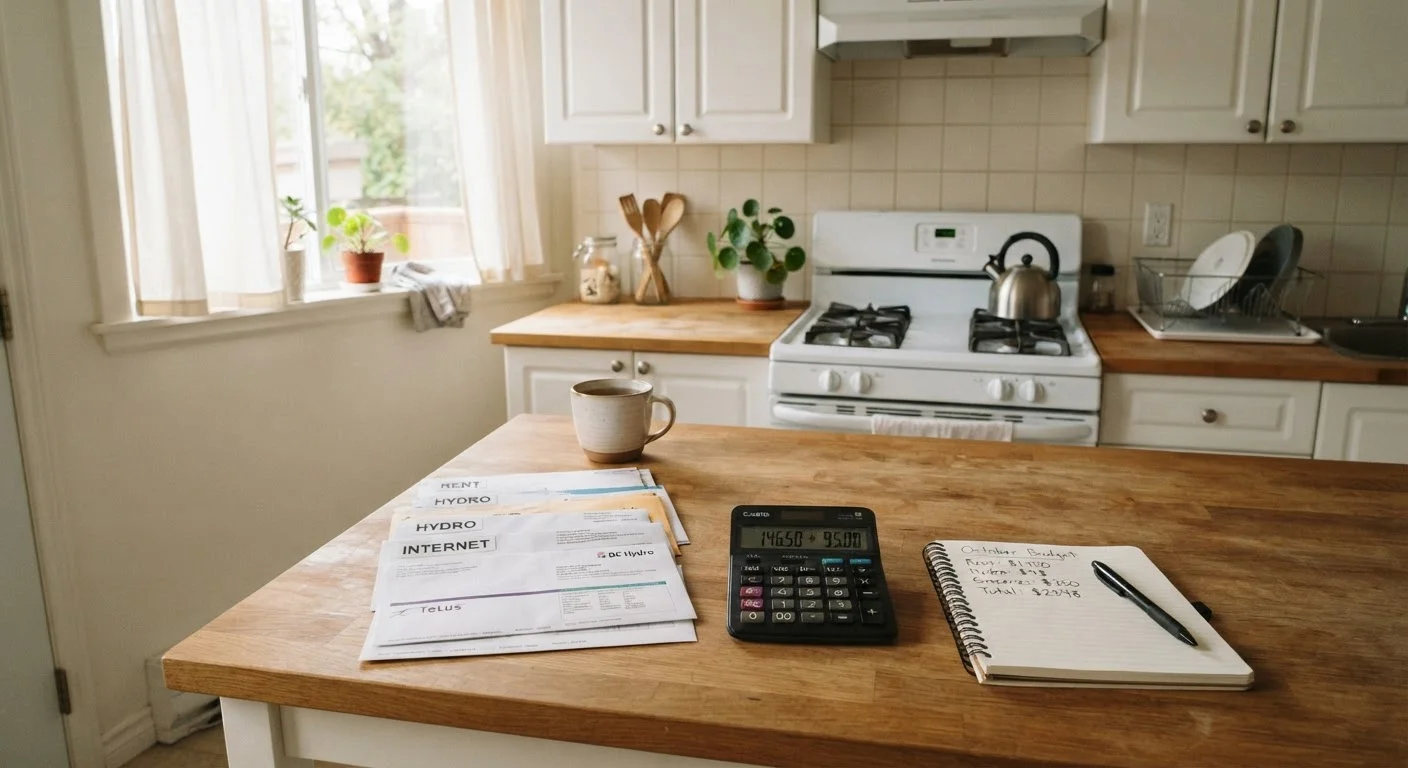
Why Advertised Rent Is Only Part of the Story
When a listing reads "$1,800/month," most renters take that at face value. But that figure rarely captures what the apartment will actually cost to live in. For the average renter, monthly housing expenses exceed the base rent by a meaningful margin once utilities, fees, and required add-ons are factored in.
This gap matters because it affects affordability calculations, lease decisions, and long-term financial stability. Budgeting only for rent — and discovering the real total after signing — is one of the most common financial mistakes renters make. The goal of this guide is to map every cost category so you can compare apartments on equal footing and avoid shortfalls.
For a broader look at how renting stacks up against owning, see Renting vs. Buying a Home: Understanding the Real Trade-Offs.
~80%
Rent as share of total housing cost
Housing cost surveys consistently show that utilities, fees, and insurance often add 15–25% on top of base rent for typical renters.
2–3x
Months of rent needed upfront
Many landlords require a security deposit plus first and last month's rent before move-in, meaning renters must have 2–3 months of rent in cash ready to sign a lease.
$15–$30
Average monthly renter's insurance cost
According to industry data, most renter's insurance policies cost between $15 and $30 per month, yet a significant share of renters go without coverage.
Upfront Costs Before You Move In
The expense clock starts well before your first night in the unit. Move-in costs commonly include:
- Security deposit: Usually equal to one or two months' rent, held by the landlord against damage or unpaid rent. State law governs how and when it must be returned.
- First and last month's rent: Many landlords require both upfront, meaning you may need the equivalent of three to four months' rent before you get your keys.
- Application and admin fees: These cover credit checks and processing. They typically range from $25 to $100 per applicant and are usually non-refundable.
- Moving costs: Truck rental, movers, packing supplies, and utility connection fees can easily add $300–$1,500 or more depending on distance and volume.
When budgeting for a new apartment, total your upfront costs as a single lump sum — not just the deposit — so you aren't caught short on move-in day.
Ask for a Full Fee Disclosure in Writing
Before signing any lease, ask the landlord or property manager for a written list of all fees, required add-ons, and any charges that may apply during the tenancy. This protects you legally and makes budgeting far more accurate. If a landlord is reluctant to provide this, treat it as a meaningful red flag.
Recurring Monthly Costs Beyond Rent
Once you're in, the monthly expenses beyond rent stack up quickly across several categories:
Utilities
Electricity, gas, water, sewer, and trash collection vary widely by climate, unit size, and building efficiency. In a poorly insulated apartment, heating costs alone can rival a car payment in winter months. Always ask the landlord or current tenant for average utility bills before signing. Some buildings include certain utilities; most do not include all of them.
Internet and Cable
Internet service is a near-universal need and typically adds $40–$80 per month. Few rentals include it in the base rent.
Parking
In urban areas, assigned parking can cost $50–$300+ per month separately from rent. If parking isn't bundled, factor this in when comparing apartments.
Renter's Insurance
Renter's insurance covers your personal property (furniture, electronics, clothing) against theft, fire, and certain water damage — and provides liability protection if someone is injured in your home. Landlord policies do not cover tenants' belongings. At roughly $15–$30 per month, it's one of the most cost-effective forms of financial protection available to renters, and many landlords now require it as a lease condition.
Pet Fees
Pet-friendly rentals commonly charge a non-refundable pet fee ($200–$500), a refundable pet deposit, and ongoing pet rent ($25–$75/month per pet). These costs vary considerably and should be confirmed in writing before signing.
How to Build a Complete Rental Budget
The most reliable approach is to request a written itemization of all fees and charges from any landlord before you sign. Then build your budget using this framework:
- List all monthly costs: Rent + estimated utilities + parking + pet rent + renter's insurance + any amenity or service fees.
- Calculate your move-in lump sum: Security deposit + first (and last) month's rent + application fees + moving costs.
- Amortize upfront costs: Divide your total move-in costs by your planned lease length in months and add that figure to your monthly total for a realistic average monthly cost.
- Build a buffer: Utility costs fluctuate seasonally. A 10–15% buffer above your estimated monthly total provides reasonable cushion.
This process lets you compare two apartments with different rent prices and fee structures side by side — an apartment at $1,700/month all-in may be more affordable than one at $1,600/month with $300 in add-ons.
For a broader framework on tracking and managing household spending, see the Budgeting Basics hub. And if you're weighing the rent-or-buy question altogether, Renting vs. Buying: How to Think Through the Decision offers a full framework for that comparison.
It's also worth being aware of the obligations that come with renting — not just the costs. Our guide on tenant responsibilities most renters don't realize they have covers what's typically expected of you under a lease.
“The rent you see advertised is your floor, not your ceiling. Savvy renters budget for the full stack of costs — including the ones that don't show up until move-in day.”
— Home & Real Estate Editorial Team, Editorial staff covering renting, buying, and homeownership costs
Frequently Asked Questions
Expect to pay a security deposit (typically one to two months' rent), first month's rent, and sometimes last month's rent upfront. Application fees, admin fees, and moving costs can add hundreds more before you unpack a single box.
It depends on the unit and landlord. Some rentals include water or trash; few include electricity, gas, or internet. Always confirm in writing which utilities are covered before you sign — and ask for average monthly costs for those you'll pay separately.
Renter's insurance averages roughly $15–$30 per month for most tenants, though premiums vary by location, coverage amount, and deductible. It covers personal belongings and liability, and is increasingly required by landlords.
Common fees include pet rent, parking fees, storage unit charges, package locker fees, amenity fees, and lease renewal or admin fees. Some landlords charge separately for trash valet or landscaping services. Ask for a full fee schedule before signing.
Rent increases are subject to notice requirements and, in some jurisdictions, rent control laws. Generally, landlords cannot raise rent mid-lease without agreement. For more detail, see our guide on <a href="/home-real-estate/renting-basics/how-rent-increases-work-and-when-theyre-legal">how rent increases work</a>.
Add your base rent to estimated utilities, parking, pet fees, renter's insurance, and any recurring amenity or service charges. Divide your upfront move-in costs by the length of your lease and add that figure to get a true monthly average.
The content on this site is for informational purposes only and is not a substitute for professional advice. Always consult a qualified professional for guidance specific to your situation.