

Our Verdict
For most dogs and overweight or multi-pet households, scheduled feeding is the more manageable and health-supportive approach. Free feeding can work for certain cats with strong self-regulation, but it requires careful monitoring and is only practical with dry food. Neither method is universally superior — what matters is consistency, accurate portioning, and regular check-ins with your vet.
Pet owners who want reliable control over their animal's intake, especially those with dogs, multiple pets, or a pet managing a health condition, will find scheduled feeding easier to sustain long-term.
What These Two Approaches Actually Mean
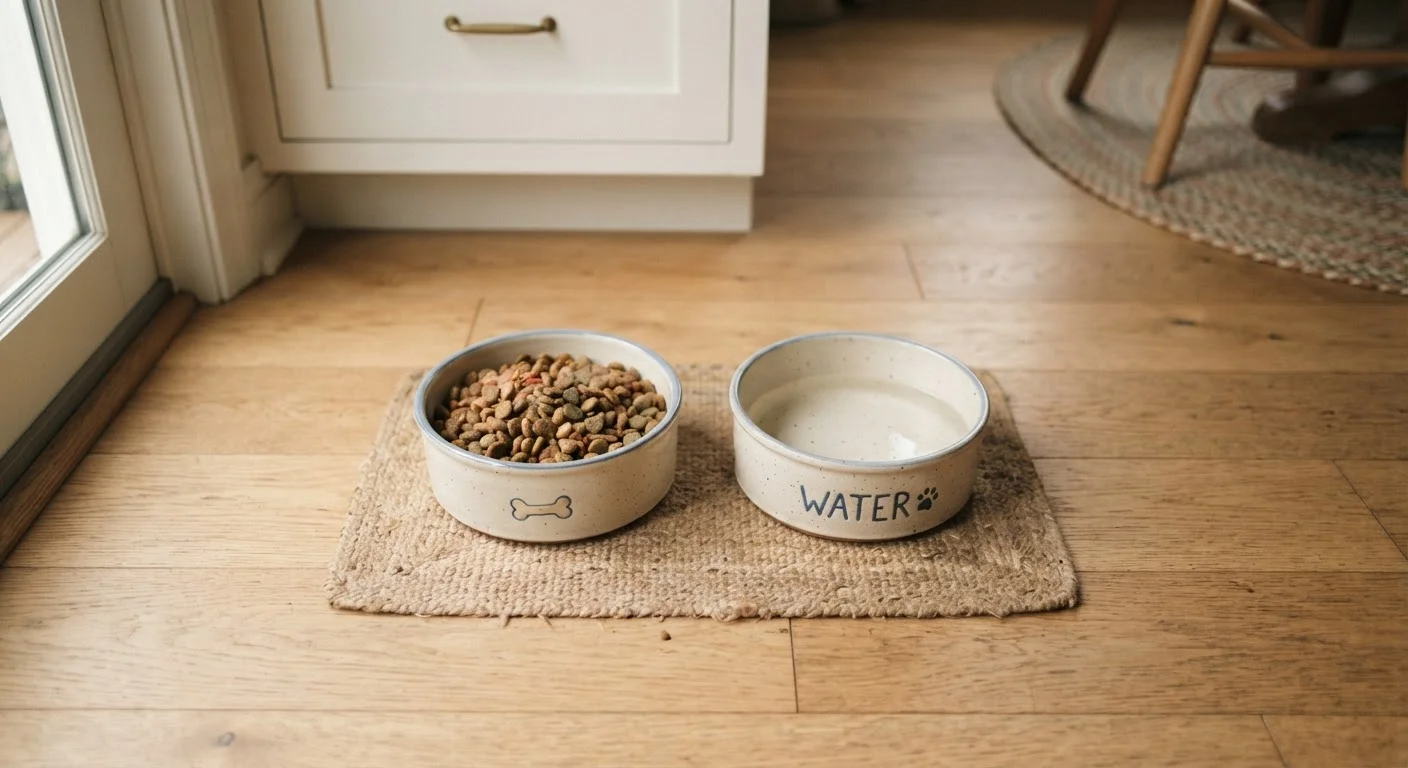
The phrase scheduled feeding means offering food at set times — usually once or twice a day — and removing whatever is not eaten after 20 to 30 minutes. Free feeding, sometimes called ad libitum feeding, means keeping food available in the bowl continuously so the pet can eat whenever it wants.
Both are common, and both have legitimate uses depending on the animal. The outcomes, however, diverge significantly over months and years, which is why it's worth thinking through each approach before defaulting to habit or convenience.
Food format matters here too. Free feeding only works reliably with dry kibble, since wet food spoils within a few hours at room temperature. If you're weighing food formats alongside feeding style, see our overview of dry food vs. wet food trade-offs for context.
The Case for Scheduled Feeding
Scheduled feeding puts the owner in the driver's seat. Because food is offered in measured amounts at predictable times, it's straightforward to track exactly how much a pet is consuming. This matters most when a pet is growing, recovering from illness, managing a chronic condition like diabetes, or simply prone to overeating.
Precise control over daily calorie intake
Measured portions at set times make it easy to match food quantity to the pet's actual energy needs, supporting healthy weight maintenance over time.
Easier to spot appetite changes early
When a pet skips a scheduled meal or eats noticeably less, it's immediately visible — a useful early signal that something may be medically wrong.
Supports routine and reduces anxiety
Predictable mealtimes create structure that dogs especially rely on. Consistent timing can reduce food-related stress and reinforce calm, settled behavior.
Works well in multi-pet households
Feeding pets separately or at supervised mealtimes prevents competition, food guarding, and one animal consuming another's ration.
Compatible with wet and dry food formats
Because the bowl is cleared after each meal, perishable wet food can be used safely without spoilage concerns that rule it out for free feeding.
Scheduled meals also reinforce daily structure. Dogs, in particular, are highly routine-oriented animals, and consistent mealtimes reduce anxiety and strengthen the owner-pet bond. That predictability extends to housetraining: dogs fed on a schedule tend to have more regular and predictable bathroom needs, which simplifies training.
In multi-pet households, scheduled feeding is usually essential. It prevents one animal from consuming another's portion, allows owners to monitor each pet's appetite — a key early indicator of illness — and reduces food-guarding behavior. For a broader look at how feeding fits into your pet's daily rhythm, building a consistent daily routine covers complementary habits worth pairing with mealtimes.
The Case for Free Feeding
Free feeding is not without merit. For some cats — particularly solitary adults who are healthy, at an appropriate weight, and tend to graze naturally — unrestricted access to food aligns with their instinct to eat small amounts throughout the day. Forcing such cats into one or two discrete meals can cause stress or gulping behavior.
Requires consistent owner availability
Serving meals at the same times each day demands schedule discipline, which can be difficult for owners with unpredictable work hours or frequent travel.
Some pets graze naturally and resist mealtimes
Cats in particular are evolved to eat multiple small meals throughout the day; abrupt transition to two discrete meals can cause stress or gulping.
Risk of overeating if portions are estimated loosely
Without a kitchen scale or measuring cup, 'eyeballed' portions frequently exceed label recommendations, undermining the main benefit of meal feeding.
Can intensify food fixation in some dogs
Dogs that already focus intensely on food may become more demanding or anxious around mealtimes when access is restricted to short windows.
Free feeding also reduces owner workload on hectic days and can ease anxiety in pets that fixate intensely on food or mealtimes. For owners who travel frequently or work long shifts, an auto-feeder stocked with measured dry food can approximate a middle ground between the two approaches.
That said, the risks are real and tend to compound quietly. Pets that overeat on a free-feeding system don't show immediate symptoms — weight creeps up gradually, and by the time it's obvious, the habit is entrenched. This is one of the common patterns discussed in our article on feeding habits that creep up on pet owners.
Auto-Feeders: A Middle-Ground Option
Programmable automatic feeders can dispense pre-measured portions at set times, combining some convenience of free feeding with the portion control of scheduled meals. They work best with dry kibble and should be cleaned regularly to prevent bacterial buildup. An auto-feeder does not replace owner observation — checking that your pet is actually eating normally remains important.
Which Pets Are Best Suited to Each Method
Species and temperament are the most reliable guides. Most veterinary and animal nutrition experts recommend scheduled feeding for dogs of all breeds and ages, because dogs rarely self-regulate calorie intake reliably. Free feeding a dog is closely associated with obesity, which in turn raises risk for joint problems, cardiovascular strain, and metabolic conditions.
Cats occupy a more nuanced space. Kittens and young adults with high energy needs often manage free feeding well. Senior cats, indoor cats with low activity levels, or those in households with other pets typically do better on scheduled or portion-controlled meals. If a cat has been diagnosed with diabetes, hyperthyroidism, or kidney disease, a veterinarian's guidance on feeding frequency and timing is essential — not optional.
Whatever approach you choose, incorporating feeding into a broader preventive health habit is worthwhile. A year-round preventive care routine includes weight monitoring as one of the most valuable and underused tools in everyday pet health. Tracking your pet's body condition — not just body weight — at regular intervals is something both feeding methods require, though it is much easier to do consistently with scheduled meals.
59%
U.S. pets estimated to be overweight or obese
According to the Association for Pet Obesity Prevention's annual surveys, more than half of dogs and cats in the United States are classified as overweight or obese by their veterinarians.
2–3×
Increased diabetes risk in obese cats
Veterinary internal medicine literature consistently identifies obesity as a major modifiable risk factor for feline diabetes mellitus, with obese cats facing substantially higher likelihood of diagnosis.
This article provides general pet care information and is not a substitute for advice from a licensed veterinarian. If you have concerns about your pet's weight, eating habits, or health, consult a qualified professional.
The content on this site is for informational purposes only and is not a substitute for professional advice. Always consult a qualified professional for guidance specific to your situation.